The Jakarta Post
Please Update your browser
Your browser is out of date, and may not be compatible with our website. A list of the most popular web browsers can be found below.
Just click on the icons to get to the download page.


Popular Reads
Top Results
No results found. Please check your search term and try again
Can't find what you're looking for?
View all search results
Popular Reads
Top Results
No results found. Please check your search term and try again
Can't find what you're looking for?
View all search resultscepa

Academia 7 months ago
PREMIUM
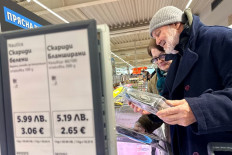
Bulgaria welcomes the eurozone: How Indonesia can benefit
Bulgaria has finally completed its full integration into the euro area, a journey that began with its membership of the European Union in 2007. What does the full integration mean for this nature-rich, beautiful country in the Balkans, which borders the Black Sea, and how can this benefit Indonesia?
Editorial 9 months ago
PREMIUM
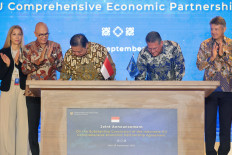
Let’s not give up on trade
While EU authorities would deny that protectionism is the main motive and would point instead to what they deem to be unfair trade practices on Indonesia’s part, the duties in effect protect EU-based steelmakers and rapeseed biodiesel producers.
Economy 10 months ago
PREMIUM
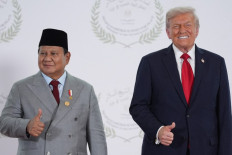
Mixed marks for govt navigating year of turbulent trade
The administration of President Prabowo Subianto has secured multiple trade agreements in its maiden year, partly thanks to the global pressure of an increasingly protectionist United States, but in bilateral talks with the US itself, Indonesia gave much and got little.
Academia 11 months ago
PREMIUM
The only way is up: Why EU-ASEAN trade is headed for success
Trump’s sweeping tariffs have arguably spurred both regions into action, with governments quickly realizing the need to secure reliable and long-lasting trade partnerships amid rising protectionism and shifting alliances.

Americas 11 months ago
PREMIUM
Prabowo hails ‘gamechanging’ trade deal with Canada
With the signing of the Comprehensive Economic Partnership Agreement (CEPA) between the two countries, Indonesia became the first Southeast Asian nation to have such a trade deal with Canada amid the United States’ transformation of its trade ties
Economy 11 months ago
PREMIUM
I-EU CEPA opens door to EU but small businesses will struggle to enter
Duty-free access to the European Union market is supposed to help Indonesian micro, small and medium enterprises (MSMEs), but trade associations doubt it will be a panacea for boosting exports without tackling costs, compliance and capacity.
Editor's Picks
Popular
- Mass poisonings cast doubt on free meals reforms
- Much ado about asset forfeiture
- New data rules could unlock cross-border data flows
- Children are no longer the priority, were they ever?
- Indonesia, Hong Kong to host new 14-team FIFA ASEAN Cup
- Free meals face seven-day ultimatum, possible lawsuit
- Assessing the merit of the strategic commodities bill
- Prabowo’s approval slide fuels warm-up to 2029 elections
- Volcanic eruptions take toll on economy
- Osama the gamer: A list of Bin Laden’s video games from his hard drive


