The Jakarta Post
Please Update your browser
Your browser is out of date, and may not be compatible with our website. A list of the most popular web browsers can be found below.
Just click on the icons to get to the download page.


Popular Reads
Top Results
No results found. Please check your search term and try again
Can't find what you're looking for?
View all search results
Popular Reads
Top Results
No results found. Please check your search term and try again
Can't find what you're looking for?
View all search resultsconstitutional-court
Society 1 month ago
PREMIUM
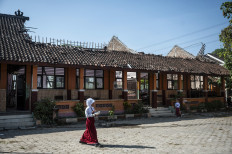
Court ruling shift focus back to schools, teacher welfare
The Constitutional Court's ruling on the removal of the free nutritious meal program from the education budget should pave the way for long-overdue investment in teacher welfare, school repair and equal access to education, teachers and education experts have said.

Politics 1 month ago
PREMIUM
Court ruling on free meals funding gets cautious welcome
Several plaintiffs and education observers critiqued the Constitutional Court for not ordering the government to immediately revise the 2026 and 2027 state budget, which is still in deliberation, to exclude allocations for the free meals program from the education budget.
Politics 1 month ago
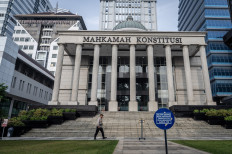
BREAKING: Court orders free meals financing removed from education budget
The court held that the program does not qualify as an educational expense, and that using education budget funds violates the Constitution, which mandates that at least 20 percent of the national budget be allocated to education.


Politics 1 month ago
PREMIUM
Cooperatives, religious groups to keep receiving mining concessions
Energy minister Bahlil Lahadalia insists that cooperatives and religious will remain eligible for priority mining licenses after the Constitutional Court struck down direct appointments, pledging to introduce new implementing regulations accordingly to ensure transparent vetting.

Politics 2 months ago
PREMIUM
Court revokes direct appointment for mining permits
All parties eligible to manage mining permits, including religious groups and universities, must go through a selection process that is necessary to ensure fairness and equal treatment, according to a Constitutional Court ruling.
Politics 2 months ago
PREMIUM
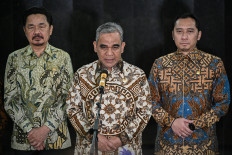
Constitutional Court's independence at risk as MPR seeks key role
The People's Consultative Assembly (MPR) has sought a greater role in providing input to the Constitutional Court on constitutional interpretation before the court issues rulings in relevant cases, prompting experts to warn against political interference in judicial independence.

Politics 2 months ago
PREMIUM
Political parties respect court ruling upholding direct regional elections
Several political parties have welcomed the Constitutional Court's recent ruling reaffirming that regional heads must continue to be elected directly by voters, a decision observers say effectively closes the door on renewed proposals to scrap direct regional elections.
Politics 3 months ago
PREMIUM
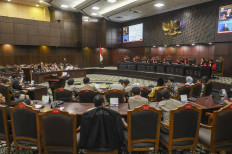
Legal challenge looms for new police law
The new police law is likely to face a legal challenge at the Constitutional Court, as critics question the rushed deliberation process and controversial provisions allowing an expanded role for active-duty police officers in civilian posts.

Editor's Picks
Popular
- PISA gains belie Indonesia’s persistent education crisis
- Not the Ministry of Magic
- The benefit of the doubt has expired
- Suahasil seen to prioritize fiscal discipline, continuity
- Saudi-led coalition says Houthis fired ballistic missile at Riyadh
- 3% deficit cap revision puts Indonesia’s fiscal credibility at risk
- Osama the gamer: A list of Bin Laden’s video games from his hard drive
- Court decision tightens House oversight on free meals funding
- Police probe kidnapping, murder of Ukrainian tourist in Bali
- UN peacekeeping chief in Lebanon says smooth transition is critical before pull-out


