The Jakarta Post
Please Update your browser
Your browser is out of date, and may not be compatible with our website. A list of the most popular web browsers can be found below.
Just click on the icons to get to the download page.


Popular Reads
Top Results
No results found. Please check your search term and try again
Can't find what you're looking for?
View all search results
Popular Reads
Top Results
No results found. Please check your search term and try again
Can't find what you're looking for?
View all search resultscommissioner
Politics 2 months ago
PREMIUM
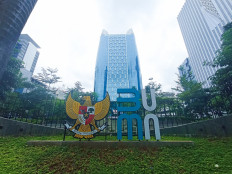
Controversial commissioner appointments revive patronage concerns at SOEs
The appointments of a personal assistant of Raffi Ahmad, President Prabowo Subianto’s special envoy, and a pro-government youth leader to commissioner posts at two state-linked companies have reignited debate over patronage politics.
Politics 11 months ago
PREMIUM
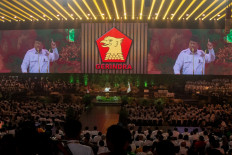
Gerindra dominates SOE commissioner seats, survey shows
The dominance of politically connected figures in state-owned enterprises (SOEs) is again under scrutiny after a survey revealed that one-third of commissioner seats are held by political appointees, many linked to President Prabowo Subianto’s Gerindra party.
Politics 1 year ago
PREMIUM
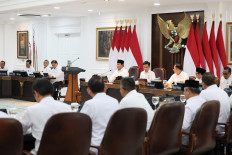
Deputy ministers’ new dual jobs draw flak
Recent appointments of deputy ministers as commissioners at state-owned enterprises (SOEs) in spite of a court ruling prohibiting the practice have garnered criticism that the government is exploiting the grace period before the ban takes place.
Politics 1 year ago
PREMIUM
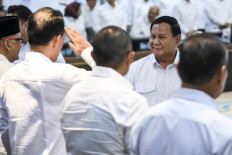
Calls grow for Prabowo to end deputy ministers’ dual roles
Pressure is mounting on President Prabowo Subianto’s administration to remove more than two dozen deputy ministers from their roles as commissioners of state-owned enterprises (SOEs) after the Constitutional Court maintained its position that cabinet members can not hold dual appointments.
Politics 1 year ago
PREMIUM
Deputy ministers' double jobs risk govt's performance
The lack of a checking mechanism for underperforming deputy ministers raises the risk of conflicts of interest for cabinet members holding double positions as state-owned enterprises (SOEs) commissioners, which may undermine the government's overall performance, experts have warned.
Politics 1 year ago
PREMIUM
SOEs Law raises graft oversight concerns
Several new articles included in the revised State-Owned Enterprises (SOEs) Law suggest that state-owned firm’s directors, commissioners and supervisory board members are not considered state officials, potentially limiting the antigraft body’s authority over them.

Politics 2 years ago
PREMIUM
KPK commissioner hopefuls seek to restore trust in agency
As the Corruption Eradication Commission (KPK) continues the search for its next leaders, candidates for commissioner positions have expressed their desire to restore public trust in the antigraft body, which has waned in recent years amid a string of controversies.
Politics 2 years ago
PREMIUM
Prabowo consolidates power early through ministries, top SOE posts
The string of recent appointment of Prabowo Subianto's close aide and of Gerindra Party members as state-owned enterprises (SOEs) commissioners or deputy ministers is intended to help prevent any political turbulence during the government transition and to help the president-elect and his party secure long-term political gain for the 2029 elections, observers have said.
Editor's Picks
Popular
- Popular discontent is justified. Authoritarianism is not the answer
- Govt under pressure as 3 million home drive hits cracks
- Recentralization concerns in fiscal, education heighten
- Safeguarding Indonesia's AI future
- Batam residents protest data centers amid water crisis
- Canals full, roads submerged as Bangkok declares flood disaster
- Japan schoolboy, 11, wins gold while empty seats blight Asian Games
- Jakarta international airport extends closure after Anak Krakatau eruption
- Indonesians still have low awareness against pneumonia: Survey
- Philippines pardons, frees Mary Jane Veloso


