TheJakartaPost
Please Update your browser
Your browser is out of date, and may not be compatible with our website. A list of the most popular web browsers can be found below.
Just click on the icons to get to the download page.


Popular Reads
Top Results
No results found. Please check your search term and try again
Can't find what you're looking for?
View all search results
Popular Reads
Top Results
No results found. Please check your search term and try again
Can't find what you're looking for?
View all search resultseconomy


Academia 1 week ago
PREMIUM
China Shock 2.0 reshuffles winners and losers
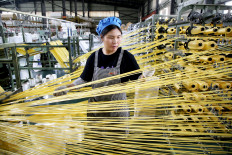
China is trying to export its way out of a domestic slump, unleashing what many Western governments call a second "China shock." While this strategy is triggering trade fights abroad, it's also producing a new set of potential beneficiaries at home.
Politics 1 week ago
PREMIUM
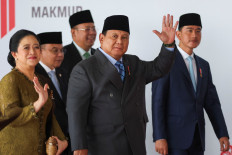
Prabowo invokes PDI-P’s Marhaenism ideology to court support for new mineral exchange
President Prabowo Subianto has invoked the economic philosophy of Marhaenism, associated with the quasi-opposition Indonesian Democratic Party of Struggle (PDI-P), as he seeks broad political support for his new plan to establish a mineral exchange.

Academia 1 week ago
PREMIUM
Is China really a beggar-thy-neighbor power?
When major economies are running at near full capacity, it is not clear that trade deficits should be a cause for concern, since they represent a transfer of purchasing power from surplus countries. Under the current circumstances, then, China’s widely criticized surpluses might as well be called enrich-thy-neighbor.
Economy 1 week ago
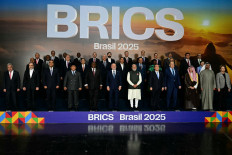
Iran to join BRICS development bank soon
Iran remains under sweeping US and international sanctions, and it has yet to reach a peace deal to end the current conflict with the US and Israel, giving Tehran added incentive to seek alternative financial channels outside the dollar system.



Academia 2 weeks ago
PREMIUM
The costs of ‘execution first, planning later’
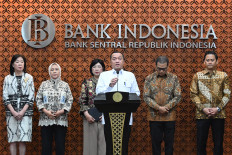
It is true that a hefty share of public spending went into FGDs, seminars and workshops that produced little. But his own government now suffers the opposite failure of executing before it plans, then improvising the plan as the execution collapses. Yet the damage is already done, heavily.
Editor's Picks
Popular
- Calls for reform grow ahead of Prabowo’s state address
- Indonesia at 81: Whose sovereignty are we celebrating?
- Indonesia’s rare earth push faces low-content, costly extraction hurdles
- US-China trade war gives Indonesia shot at boosting investment
- Growing regional discontent
- Mandiri freezing of protester’s account raises alarm over civic freedom
- Govt cracks down on land burning in Kalimantan
- KJRI Johor Bahru repatriates 307 Indonesians from Malaysia
- Borderless pollution chokes Greater Jakarta as policy gaps persist
- Land rights controversy hurts palm oil investment


