The Jakarta Post
Please Update your browser
Your browser is out of date, and may not be compatible with our website. A list of the most popular web browsers can be found below.
Just click on the icons to get to the download page.


Popular Reads
Top Results
No results found. Please check your search term and try again
Can't find what you're looking for?
View all search results
Popular Reads
Top Results
No results found. Please check your search term and try again
Can't find what you're looking for?
View all search resultsminimum-wage


Academia 4 months ago
PREMIUM
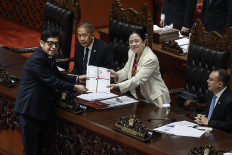
Can domestic workers protection law end ‘modern slavery’?
As Indonesia ratifies a historic domestic worker protection law after two decades of silence, the nation must now decide if these statutory rights will remain a paper promise or finally dismantle the structures of modern slavery.
Jakarta 7 months ago
PREMIUM
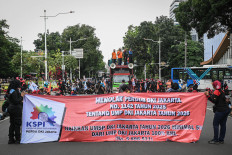
No revision to Jakarta’s minimum wage, Governor Pramono says
Labor unions have argued in a series of protests against the Jakarta administration that this year’s city minimum wage of Rp 5.73 million (US$341) is still lower than the Rp 5.89 million of income recommended by Statistics Indonesia (BPS) for decent living in the city.
Jakarta 8 months ago
PREMIUM
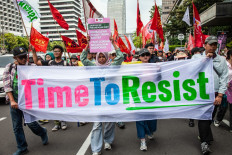
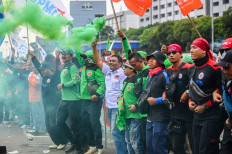
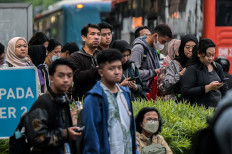
Jakarta's minimum wage bump faces disappointed laborers
Laborers have voiced their dissatisfaction with the higher minimum wage for Jakarta next year, which stands at Rp 5.73 million (US$341), saying that the increase still falls short of meeting living standards amid rising cost of living in the capital.

Archipelago 8 months ago
PREMIUM
Batam gets highest 2026 minimum wage in Riau Islands
The provincial capital's minimum wage has been increased 7.38 percent to around Rp 5.36 million for 2026, while the greatest hike was around 9 percent for Bintan regency, where workers can expect a minimum wage of nearly Rp 4.6 million.

Jakarta 8 months ago
PREMIUM
Jakarta sets 2026’s minimum wage at Rp 5.7 million
Negotiations between workers, business owners and the city administration led to an agreement to set the alpha coefficient that determines the increase of minimum wage at 0.75, still within the threshold of between 0.5 and 0.9 set by the central government.

Editor's Picks
Popular
- Mass poisonings cast doubt on free meals reforms
- New data rules could unlock cross-border data flows
- Malaysia must not breathe Indonesia’s governance failure
- Volcanic eruptions take toll on economy
- Search intensifies for journalists, crew as Anak Krakatau ashfall eases
- Mitigation budget under scrutiny as Indonesia grapples with disasters
- Indonesian wildfire emissions surge to world's highest
- Anak Krakatau doesn't need an earthquake to kill
- Student suffers memory loss, seizures after free meal food poisoning
- Search resumes for missing journalists on Anak Krakatau mission


