The Jakarta Post
Please Update your browser
Your browser is out of date, and may not be compatible with our website. A list of the most popular web browsers can be found below.
Just click on the icons to get to the download page.


Popular Reads
Top Results
No results found. Please check your search term and try again
Can't find what you're looking for?
View all search results
Popular Reads
Top Results
No results found. Please check your search term and try again
Can't find what you're looking for?
View all search resultsreform-era

Politics 1 year ago
PREMIUM
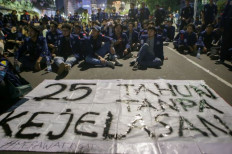
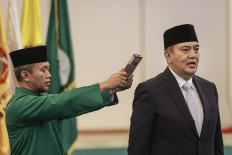
Rise in military, police involvement in civil governance draws scrutiny
The growing presence of active police and military officers in executive and legislative posts under President Prabowo Subianto has sparked concerns among analysts, who warn that the trend signals a shift away from Indonesia’s post-Reform commitment to civilian supremacy in governance.
Politics 1 year ago
PREMIUM
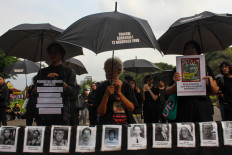
Activists refuse to forget as reform era fades
As Indonesia’s reform era appears to be nearing its end under President Prabowo Subianto, signaled by the resurgence of authoritarian traits such as a growing military presence in civilian affairs, pro-democracy activists continue their efforts to pass on the memory of the nation’s dark past to younger generations.
Politics 1 year ago
PREMIUM
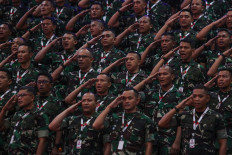
TNI Law revision raises ‘dwifungsi’ fears
President Prabowo Subianto’s decision to press forward with a revision to the 2004 Indonesian Military (TNI) Law has raised concerns about a possible return to the dwifungsi (dual function) system that prevailed in the New Order era, which granted the military significant influence over civilian affairs.
Politics 2 years ago
PREMIUM
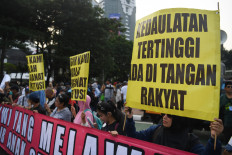
Reform undone: Activists lament shrinking civic space, unresolved rights abuse
Indonesia’s democracy has gone backward since Reform, pushing the democratic values students and the public fought for during the fall of the New Order in May 1998 increasingly out of reach, according to Amnesty International Indonesia executive director Usman Hamid.

Editor's Picks
Popular
- New islands appear after Anak Krakatau volcano erupts
- Prabowo resurrects advisory board
- Whisky, big-screen TV seized from prison 'villas' in West Java
- Reshuffle shores up coalition support for 2029
- A ministry restored
- Sugarcane farmers query House over sugar imports
- The agrarian reform law and investment prospects of palm oil
- Indonesia pushes cooperation to outpace global scam networks
- Can young Indonesians still afford home?
- Career diplomat Arrmanatha takes helm of Foreign Ministry


