TheJakartaPost
Please Update your browser
Your browser is out of date, and may not be compatible with our website. A list of the most popular web browsers can be found below.
Just click on the icons to get to the download page.


Popular Reads
Top Results
No results found. Please check your search term and try again
Can't find what you're looking for?
View all search results
Popular Reads
Top Results
No results found. Please check your search term and try again
Can't find what you're looking for?
View all search resultsIndonesia, Netherlands officials urge unhindered respect for UNCLOS
Amid mounting geopolitical turbulence, officials from Indonesia and the Netherlands said in a forum on Monday that safeguarding key international legal frameworks such as the United Nations Convention on the Law of the Sea (UNCLOS) has become more critical and that the rights of archipelagic states cannot be ignored.
Change text size
Gift Premium Articles
to Anyone
Share the best of The Jakarta Post with friends, family, or colleagues. As a subscriber, you can gift 3 to 5 articles each month that anyone can read—no subscription needed!
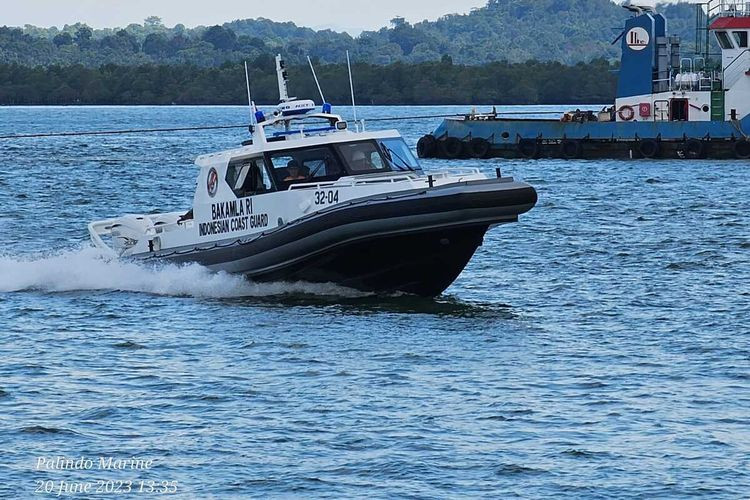 A Maritime and Security Agency (Bakamla) high-speed craft patrols on June 23, 2023, on Tanjung Uncang waters in Batam, Riau Islands.
(Kompas/Hadi Maulana)
A Maritime and Security Agency (Bakamla) high-speed craft patrols on June 23, 2023, on Tanjung Uncang waters in Batam, Riau Islands.
(Kompas/Hadi Maulana)
A
mid mounting geopolitical turbulence, safeguarding key international legal frameworks such as the United Nations Convention on the Law of the Sea (UNCLOS) had become more critical, officials from Indonesia and the Netherlands said on Monday, underscoring that the rights of archipelagic states cannot be ignored.
Dozens of diplomats, naval officers and practitioners convened in South Jakarta on Monday to discuss the evolving geopolitical landscape in the maritime domain, with a focus on the implementation of maritime law at a Dutch Embassy symposium titled “Upholding UNCLOS in Times of Crisis and Conflict”.
Lamenting the increasingly militarized use of maritime spaces, deputy foreign minister Arif Havas Oegroseno emphasized in his keynote speech that UNCLOS was intended to preserve order, restraint, coexistence and strategic stability. He said these principles have become even more vital as the vast majority of global trade and digital communications depend on peaceful seas.
Yet while UNCLOS calls for the peaceful use of the seas, cooperation between states and lawful freedom of navigation and overflight, recent rising tensions have led some countries to selectively adhere to its provisions, invoking certain rights while disregarding others.
“These navigational rights were never intended to become operational battle space privilege. […] One of the dangerous misconceptions today is to believe that the UNCLOS somehow becomes irrelevant in the time of conflict,” Havas said.
“If anything, the need for legal discipline becomes even more critical during periods of strategic tension. […] UNCLOS continues to matter because navigation continues, civilians remain at sea, merchant shipping still operates on the sea, infrastructure remains vulnerable, and coastal populations depend upon maritime stability,” he added.
In his keynote speech, Royal Netherlands Navy commander Vice Adm. Harold Liebergs echoed Havas’ sentiment, saying that in an increasingly connected world, adherence to maritime law and the openness of the seas had become even more crucial. He cited disruptions linked to the closure of the Strait of Hormuz that have rattled global supply chains for gas, food and other goods.