The Jakarta Post
Please Update your browser
Your browser is out of date, and may not be compatible with our website. A list of the most popular web browsers can be found below.
Just click on the icons to get to the download page.


Popular Reads
Top Results
No results found. Please check your search term and try again
Can't find what you're looking for?
View all search results
Popular Reads
Top Results
No results found. Please check your search term and try again
Can't find what you're looking for?
View all search resultsM4CR helps coastal farmers boost food security in Mahakam delta
Change text size
Gift Premium Articles
to Anyone
Share the best of The Jakarta Post with friends, family, or colleagues. As a subscriber, you can gift 3 to 5 articles each month that anyone can read—no subscription needed!
 Set as preferred source
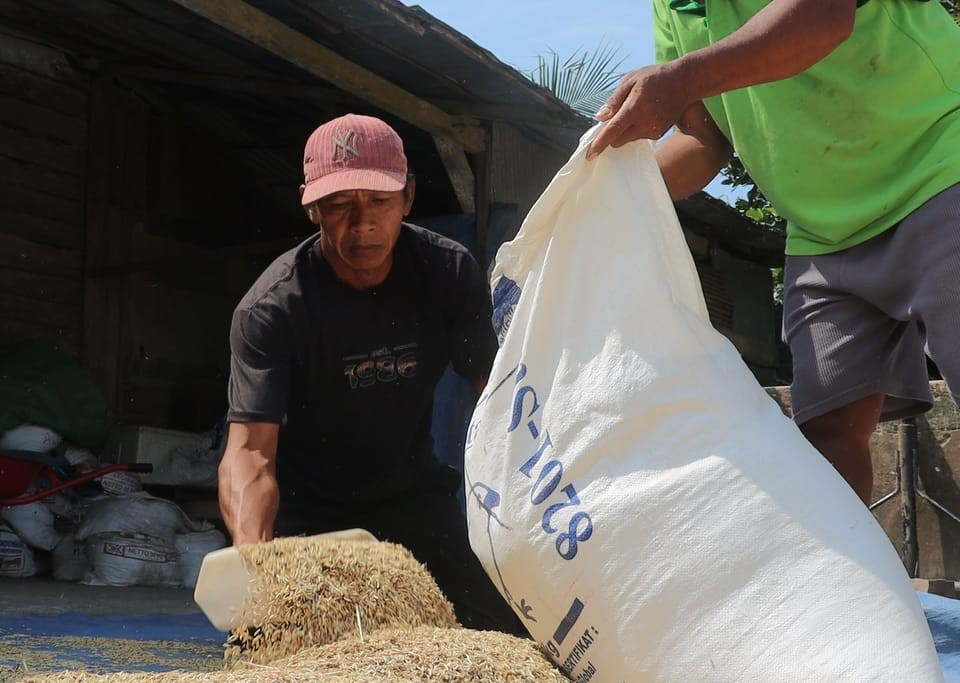 Members of the Sinar Abab Mandiri Forest Farmers Group fill a sack with rice they have cultivated and harvested. (Image courtesy of M4CR)
M
angroves for Coastal Resilience (M4CR) is a national strategic program supporting Indonesia's commitment to mangrove rehabilitation. The Forestry Ministry, through the Directorate General of Watershed Management and Forest Rehabilitation (PDASRH) and in collaboration with the World Bank, aims to rehabilitate 32,634 hectares of mangrove forests by 2027 across four provinces: Riau, North Sumatra, East Kalimantan and North Kalimantan.
One activity involving the communities surrounding these ecosystems has been implemented in Kutai Lama village of Anggana district, Kutai Kartanegara regency, East Kalimantan. Under the guidance of the M4CR program, the villagers have gained greater awareness on the importance of mangroves, leading them to independently undertake infill planting or replanting efforts in areas with mangrove damage.
Members of the Sinar Abab Mandiri Forest Farmers Group (KTH), who all hail from the local community, have replanted mangroves across 275 ha using the sustainable silvofishery method, which integrates mangrove cultivation with aquaculture, as well as an additional 11 ha through an approach designed to increase the density of existing mangroves.
The program’s success proves that community involvement is crucial to managing mangroves and ensuring the sustainability of rehabilitation efforts after planting. Furthermore, community support extends beyond rehabilitation activities toward strengthening livelihood sources as developed by the farmers’ group.
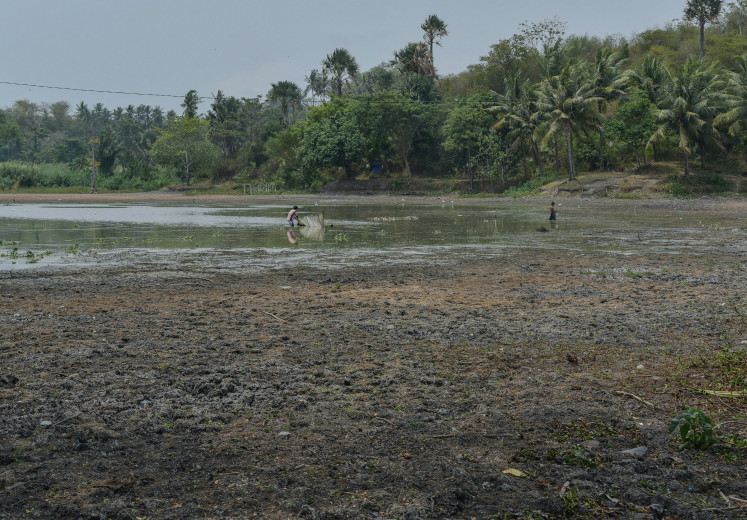
One such initiative is the KTH Sinar Abab Mandiri rice farm, which is situated in a peatland area. The farm is encircled by irrigation ditches that the group now also uses to farm freshwater fish.
In recognition of the potential development of these activities, M4CR has provided a matching grant to strengthen the business. KTH Sinar Abab Mandiri has since used the scheme to bolster the collective rice milling operation it manages.
The decision to bolster rice postharvest processing was also driven by the geographical conditions of the Mahakam delta. Local agricultural lands are accessible only via the Mahakam River, therefore transporting harvested grain inland for milling entails significant time and expense. Establishing milling facilities near paddies offers a solution that enables direct, on-site postharvest processing.
The grant from M4CR has been used to acquire rice polishing and separator machinery, thereby improving grain quality and allowing the milled product to be sorted by grade.
Hamka, head of KTH Sinar Abab Mandiri, explained the program’s assistance helped improve the quality of the rice it produced.
Beyond improving output quality, the rice mill’s operational management is designed to ensure sustainability toward supporting food security for members. In addition, 10 percent of the mill’s proceeds is funneled to a group fund for equipment maintenance and facility repairs as well as other operational needs, thereby relieving members of the individual burden of covering these costs.