The Jakarta Post
Please Update your browser
Your browser is out of date, and may not be compatible with our website. A list of the most popular web browsers can be found below.
Just click on the icons to get to the download page.


Popular Reads
Top Results
No results found. Please check your search term and try again
Can't find what you're looking for?
View all search results
Popular Reads
Top Results
No results found. Please check your search term and try again
Can't find what you're looking for?
View all search resultsElectrifying Indonesia: Driving demand for renewables
Change text size
Gift Premium Articles
to Anyone
Share the best of The Jakarta Post with friends, family, or colleagues. As a subscriber, you can gift 3 to 5 articles each month that anyone can read—no subscription needed!
I
ndonesia’s electricity demand is projected to increase significantly in the coming years. Total electricity consumption is expected to rise from 539 terawatt hours (TWh) in 2025 to 1,813 TWh by 2060. Households are projected to account for around 28 percent of electricity demand, while electric vehicles will contribute around 11 percent of total demand. Rising electricity demand will be one of the drivers of Indonesia’s economic growth, in line with the government’s target of 8 percent economic growth. At the same time, electrification will also play an important role in Indonesia’s efforts to achieve its net-zero emissions target and advance decarbonization.
Research conducted by Tenggara Strategics and the Centre for Strategic and International Studies (CSIS) Indonesia shows that the conversion from liquefied petroleum gas stoves to induction or electric stoves could generate the largest increase in electricity demand from the household sector. If implemented in full, the LPG-to-induction-stove conversion program could create between 27.62 gigawatts (GW) and 53.43 GW of new electricity demand, depending on the efficiency of the induction stoves used. The conversion program could therefore create substantial and reliable electricity demand to support the 100 GWp solar energy program.
Currently, the use of LPG stoves contributes significantly to household energy consumption. About 41.46 percent of total household energy consumption comes from LPG use. At the same time, Indonesia remains highly dependent on LPG imports to meet domestic demand, with around 77.6 percent of national LPG requirements supplied through imports. The conversion from LPG to induction stoves could therefore reduce the country’s foreign-exchange expenditure and could also lower subsidies if the most energy-efficient induction stoves are used.
In addition, transport electrification through the adoption of EVs is also an important part of Indonesia’s decarbonization efforts while supporting the country’s industrialization. In 2025, around 23,660 kiloliters (KL), or approximately 65 percent of national gasoline consumption, still had to be met through imports. Greater EV adoption could reduce this dependence, with every additional one million EVs estimated to save around 1,250 KL of gasoline consumption annually. At the same time, the development of a domestic EV industry could potentially create up to 500,000 new jobs, so transport electrification could therefore not only help reduce fuel imports but also support industrial development and job creation.
On the other hand, various industrialization initiatives will also increase electricity demand, particularly mineral downstreaming and data center development. Nickel downstreaming is estimated to add about 13.6 GW of captive power generation capacity under the 2025-2034 Electricity Procurement Business Plan (RUPTL), while data center development is projected to add about 1.7 GW of demand by mid-2027. These needs are expected to keep growing alongside the expansion of downstream industry and rising data center demand.
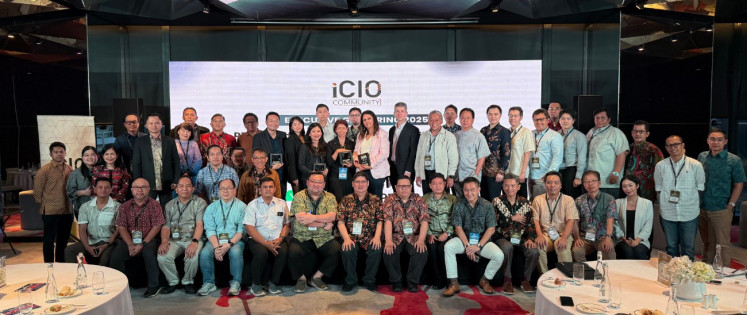
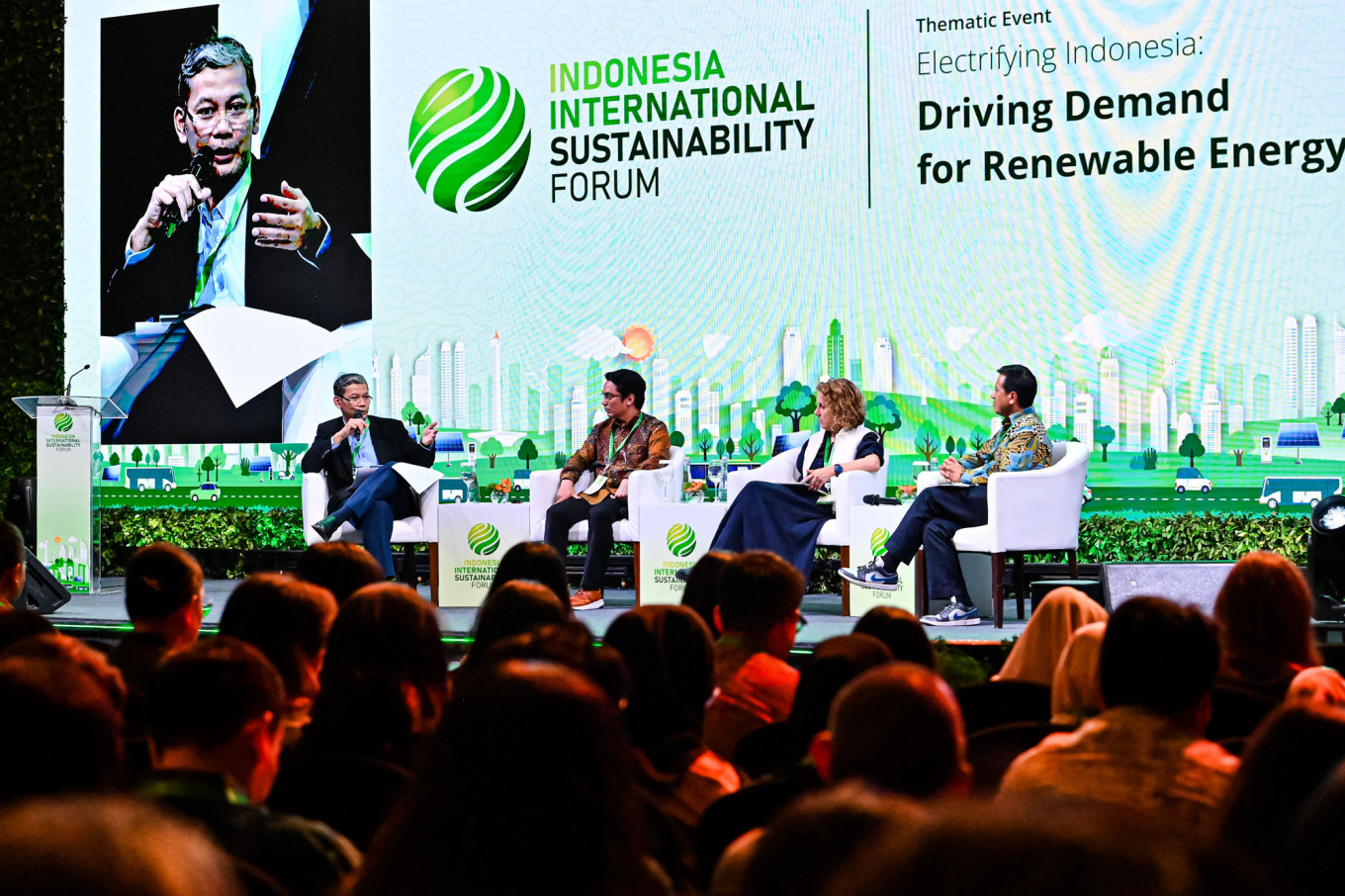
The findings of the study by Tenggara Strategics and CSIS Indonesia were presented as part of the Indonesia International Sustainability Forum (IISF) 2026. The event opened with remarks by Yose Rizal Damuri, Executive Director of CSIS Indonesia, which discussed the opportunities from electrification and the importance of ensuring that rising electricity demand can be met with greener energy. Next, Gigih Udi Atmo, Director of Energy Conservation at the Directorate General of New, Renewable Energy and Energy Conservation (EBTKE) at the Energy and Mineral Resources Ministry delivered a speech on the importance of considering efficiency in implementing electrification, so that the initiative can also support energy security. For example, the induction stove conversion program not only reduces dependence on LPG, but induction stoves have also proven to be far more energy efficient than LPG stoves.
The presentation of the research findings was followed by a panel discussion bringing together different perspectives on the growth of electricity demand and supply in Indonesia. On the demand side, Helen Clarkson, OBE, CEO of Climate Group, spoke from the perspective of renewable energy demand from global companies that are members of RE100. About 35 percent of RE100 members operate in Indonesia, so Indonesia's ability to supply green energy will become increasingly important to ensure that these companies can continue operating and investing in Indonesia.
Meanwhile, Hendra Suryakusuma, Chairman of the Indonesia Data Center Provider Organization (IDPRO), spoke about the rapidly growing electricity demand from data centers, from 640 MW at the beginning of this year to 1.7 GW by mid-2027. About 30 percent of IDPRO members are targeting net-zero by 2030, so Indonesia's data center sector is ready to support renewable energy procurement through programs such as the 100 GWp solar energy initiative.
On the supply side, Tri Hardimasyar, EVP of Asset Management and Integrated Management System at PT PLN (Persero), discussed PLN's readiness to supply electricity to meet continually rising demand. For example, the 100 GWp solar energy program will be implemented in three phases: 30 GWp in the first phase, 35 GWp in the second and 35 GWp in the third. The first phase will focus on reducing diesel consumption, which tends to occur in areas not integrated with the conventional electricity grid, through the development of rooftop solar PV or floating solar PV.
By bringing together perspectives from the government and industry, the discussion provided clearer picture of the steps needed to ensure that Indonesia’s growing electricity demand can go hand in hand with the accelerated development of renewable energy.