The Jakarta Post
Please Update your browser
Your browser is out of date, and may not be compatible with our website. A list of the most popular web browsers can be found below.
Just click on the icons to get to the download page.


Popular Reads
Top Results
No results found. Please check your search term and try again
Can't find what you're looking for?
View all search results
Popular Reads
Top Results
No results found. Please check your search term and try again
Can't find what you're looking for?
View all search resultsIndonesia coal plant closure U-turn sows energy transition doubts
The government's decision to reverse its plan for the early retirement of the Cirebon 1 power plant in West Java has raised fresh doubts about Jakarta's energy transition commitment and dashed the hopes of locals who blame the plant for environmental and health problems.
Change text size
Gift Premium Articles
to Anyone
Share the best of The Jakarta Post with friends, family, or colleagues. As a subscriber, you can gift 3 to 5 articles each month that anyone can read—no subscription needed!
 Set as preferred source
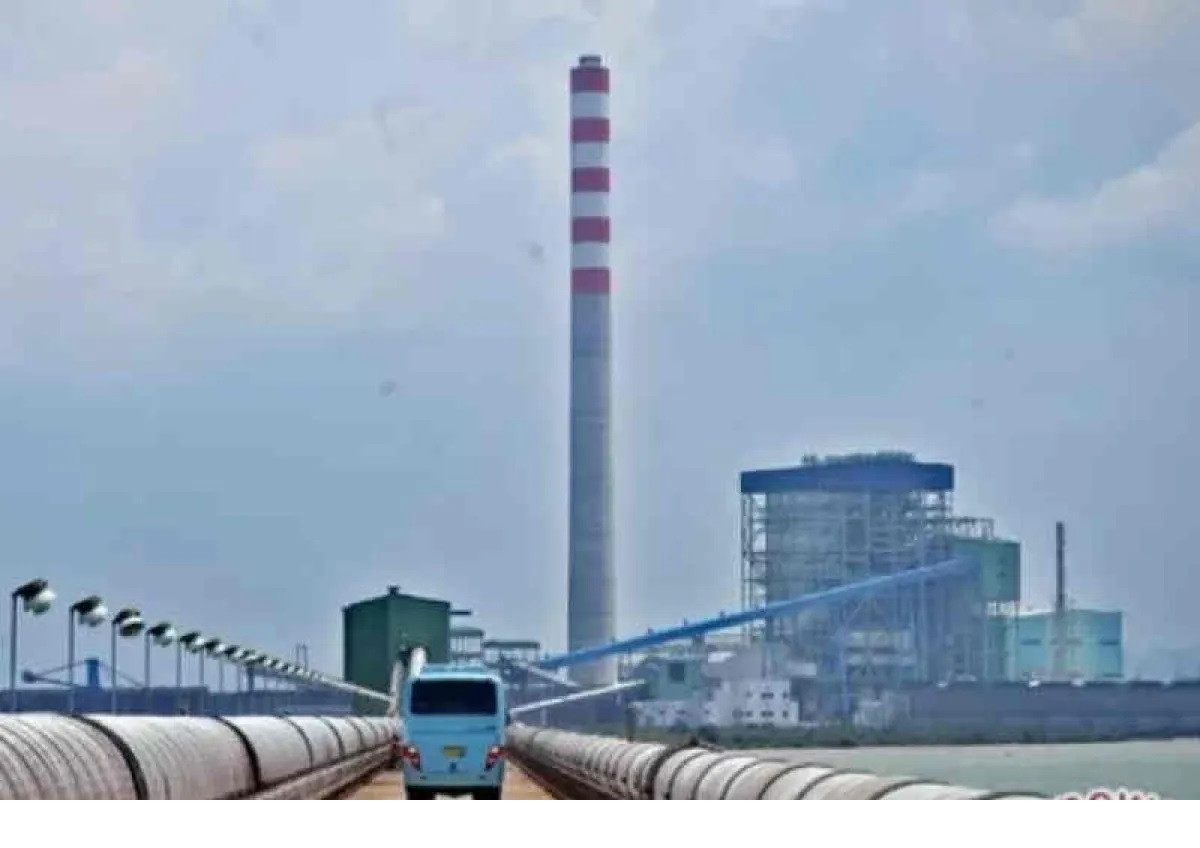 A bus travels near Cirebon-1 coal-fired power plant in Cirebon, West Java on Oct. 18, 2020. (Antara/Yudhi Mahatma)
V
illager Supriyanto is visibly frustrated as he discusses the sprawling coal power plant emitting white plumes of smoke over his small fishing community in Cirebon, West Java.
One of the power plants, Cirebon-1, was supposed to be in its final years, with its closure set for early 2035, as part of Indonesia's plans to wean itself from polluting coal with international support.
But a reversal last year cast fresh doubts on Jakarta's energy transition plans and dashed the hopes of locals who blame the plant for environmental and health problems.
Supriyanto, 32, is a green mussel trader and once bought from local fishermen who harvested the shellfish offshore.
They say the mussels have disappeared because of the plant's wastewater.

"There should be goods (green mussels) from our own village, now there aren't," Supriyanto, who like many Indonesians goes by one name, told AFP.
"Why does it [Cirebon-1] have to be here?"
Sarjum, 46, who lives in another village in the Cirebon area, said the plant has also affected his seafood trade and forced him to look for other work.
"The power plant discharged hot water. So the fish don't come," the father-of-three told AFP.
The 660-megawatt (MW) Cirebon-1 coal plant began operating in 2012 with a 30-year contract. A second 1,000 MW facility started operation in 2023.
The consortium that owns Cirebon Power said it follows government regulations and wastewater is expelled "in a clear, pure condition, at the same temperature as the seawater".
Read also: Silent, invisible danger on Cirebon coast
Cirebon-1 was picked for early retirement as a flagship project of a $20-billion international deal to help Indonesia phase out coal.
The 2022 Just Energy Transition Partnership (JETP) was supposed to channel funding from rich nations to help emerging economies green their grids.
But critics say there has been little progress.
Funding has grown to $21.8 billion, but only around $3.4 billion of that has been made available, Indonesia's government said earlier this month.
Last year, Washington withdrew altogether, with Germany stepping up to co-lead with Japan.
But the framework is in "deadlock", Center of Economic and Law Studies executive director Bhima Yudhistira Adhinegara said.
That is partly because several partners have their own energy transition schemes, like Japan's Asia Zero Emission Community.
"It means that each country is not placing their priority on the JETP itself," he told AFP, suggesting the deal should be "reformulated" with greater emphasis on local communities.
'Mixed signal'
In 2024, Indonesian President Prabowo Subianto committed to phasing out fossil fuel power plants over the next 15 years.
But in December, the government said it would keep Cirebon-1 open, citing its long potential lifespan and "supercritical" technology, which burns coal more efficiently than older plants.
It said it would seek older and less efficient plants to close instead.
The government likely feared rising electricity prices because funding for replacement capacity remains uncertain, said Fabby Tumiwa, executive director of the Institute for Essential Services Reform (IESR) think-tank.
"The funds to build infrastructure to replace the coal plant are not all available now," he told AFP.
Read also: Coal must go for climate funds to flow, German ambassador says
The move sent a "mixed signal" on the government's commitment, said Dinita Setyawati, Asia energy analyst at energy think-tank Ember.
It also highlights the need for funding to build "cleaner, alternative power plants to satisfy the energy needs", she said.
That might be better achieved with a "market-led energy transition", including deregulation of electricity distribution and perhaps subsidies, Dinita added.
Indonesia was the second country to sign a JETP after South Africa with the framework later applied in both Vietnam and Senegal.
There have been persistent criticisms, however, that the funding is difficult to access or offered as market-rate loans that risk creating debt traps.
Coal generates nearly 70 percent of Indonesia's electricity with state power firm PLN projecting 16.6 gigawatts in new coal and gas power capacity by 2034, according to a Centre for Research on Energy and Clean Air (CREA) study.
Captive coal plants supplying industrial sites will add 31 GW more, CREA said.
Health problems
Around Cirebon-1, many residents describe increased respiratory problems since operations began, and a CREA study linked air pollutant emissions from the plant to over 400 deaths annually.
The plant's owner insists it adheres to required emission thresholds, but the government's closure U-turn has left some locals disheartened.
"We no longer believe what the government says," said local activist Mohammad Aan Anwaruddin, who has lobbied for its closure.
Read also: Proposed renewable rule change spark concerns of coal expansion
Plans to close Cirebon-1 have stirred up mixed emotions, especially for those employed at the facility.
"I'm not a hypocrite. I'm the breadwinner, earning my living there for my wife and children," Sopian Suputra, who works as a security guard at the plant, said.
Sarjum said he will continue to campaign for the plant's closure, fearing for his children and grandchildren's health.
"I think it's killing Cirebon people slowly."