The Jakarta Post
Please Update your browser
Your browser is out of date, and may not be compatible with our website. A list of the most popular web browsers can be found below.
Just click on the icons to get to the download page.


Popular Reads
Top Results
No results found. Please check your search term and try again
Can't find what you're looking for?
View all search results
Popular Reads
Top Results
No results found. Please check your search term and try again
Can't find what you're looking for?
View all search resultsQRIS & content: A lifeline for MSMEs
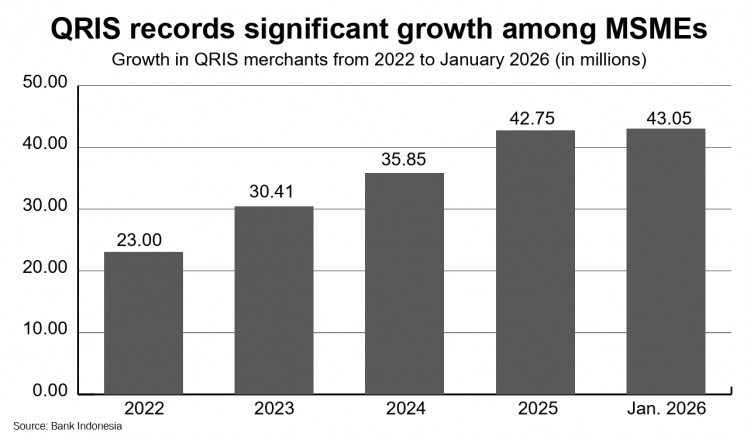
With over 43 million merchants connected to the Quick Response Code Indonesian Standard (QRIS) payment system as of January, digitalization now defines the identity of today's tech-savvy market traders, moving beyond large corporations.
Change text size
Gift Premium Articles
to Anyone
Share the best of The Jakarta Post with friends, family, or colleagues. As a subscriber, you can gift 3 to 5 articles each month that anyone can read—no subscription needed!
 Set as preferred source
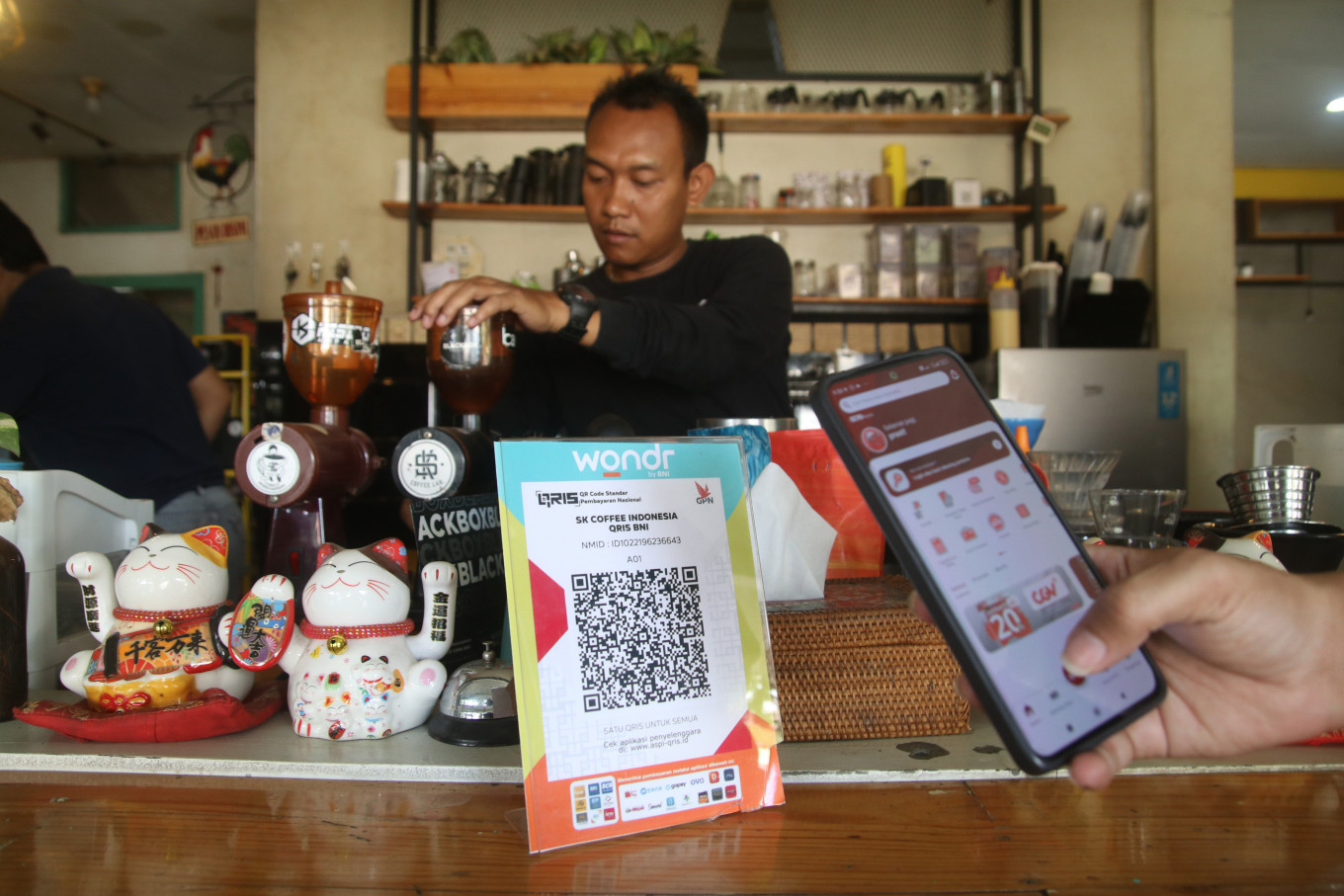 A barista prepares a beverage on Sept. 19, 2024, as a customer uses a smartphone to scan a Quick Response Indonesia Standard (QRIS) code to make a digital payment at SK Coffee Lab, a café in Kediri, East Java. (Antara/Prasetia Fauzani)
T
he internet has transitioned from a luxury to a vital tool for millions of micro, small and medium enterprises (MSMEs) in Indonesia, marking a shift from digital trial and error to a new era of economic growth.
With over 43 million merchants connected to the Quick Response Code Indonesian Standard (QRIS) payment system as of January, digitalization now defines the identity of today's tech-savvy market traders, moving beyond large corporations.
This figure is not just a statistic on paper. The fact that 93 percent of these QRIS merchants are MSMEs demonstrates that digital transformation is no longer a monopoly of large corporations in skyscrapers.
The dominance of MSMEs in this segment of the digital payment ecosystem signals a fundamental paradigm shift. QRIS has become the most effective bridge to financial inclusion in Indonesia's modern history. For traditional market traders or small-scale shop owners, QRIS is not just a sticker on their stall or counter but their first digital passbook that automatically, transparently and accountably records their transactions.
If 2020-2024 was known as the era of digital payment adoption or introduction, then 2026 will be a period of strategic deepening. The digitalization of MSMEs has moved up a level. Today, a shoemaker in Cibaduyut or a chip seller in Lampung no longer sits back and waits for buyers to come to their brick-and-mortar stores. They are actively seeking out customers through live streaming platforms.
This phenomenon completely changes the structure of interactions between sellers and buyers as geographical boundaries break down through a mobile screen. A seller can demonstrate the quality of their product directly, respond to buyers' questions in real time and even build an emotional connection through product usage tips and tricks. This is what we call content-driven commerce at the micro level.

For consumers, this shopping model engenders a much higher level of trust than simply viewing static, often deceptive, product photos. The integration of interactive content channels and instant payment systems eliminates transaction friction. The process from viewing, expressing interest and agreeing on a price to scanning a QR code occurs in a matter of seconds. This is the economic efficiency long dreamed of.
However, we must not become complacent amid this explosive growth: This particular digital revolution has not yet reached its end. Several structural barriers remain that, if not addressed promptly, will render this digitalization merely a passing trend without long-term welfare impacts.
First is financial management literacy. Using QRIS to accept payments is one thing, but managing the cash flow from that digital data is another. Many MSMEs still fail to separate their trading capital from household expenses. Without strong financial literacy, digitalization will become a means of mere exchange, not a means of sustainable capital growth.
Second is content sustainability. Being a content creator and a merchant is no easy task. Consistently managing social media accounts and conducting live streams requires significant physical energy and creativity. We are beginning to see digital fatigue among MSMEs due to the highly dynamic competition of algorithms. A supportive ecosystem is needed to help them stay relevant without losing focus on producing goods.
Data optimization for credit is crucial, because the vast QRIS transaction data should be harnessed to unlock new credit opportunities. This “new gold” can enable previously unbankable MSMEs to quickly access low-interest working capital based on their digital transaction history, fostering sustainable growth.
Behind transaction figures reaching trillions of rupiah is a human aspect often overlooked in media coverage. For a small trader, having access to digital technology isn't just about business efficiency but also about self-respect.
There's a sense of pride and modernity when a market trader no longer has to scramble for change, as well as a sense of security when all sales records are stored neatly in their pockets. Technology gives them a better bargaining position. Instead of showing up empty-handed, they can now enter a bank equipped with persuasive data. Their economic identities are now visible and recognized, with a clear track record.
This year is witnessing that the future of the Indonesian economy lies in mastering the complete digital ecosystem, from payments to marketing. The success of 43 million QRIS merchants, with absolute MSME dominance, is a solid foundation for national economic resilience in the face of global shocks.
The government, regulators and financial institutions still have a long way to go, however. This revolution must be monitored to ensure that MSMEs' digital data can truly be converted into access to capital and real prosperity.
Digitalization isn't just about changing the way we pay but also about transforming the fate of millions of the nation's economic drivers. Our aim is for Indonesian MSMEs to actively participate and thrive as leading players in the ever-expanding global market rather than remaining passive observers at home.
*****
The writer is an analyst at Mandiri Institute.