The Jakarta Post
Please Update your browser
Your browser is out of date, and may not be compatible with our website. A list of the most popular web browsers can be found below.
Just click on the icons to get to the download page.


Popular Reads
Top Results
No results found. Please check your search term and try again
Can't find what you're looking for?
View all search results
Popular Reads
Top Results
No results found. Please check your search term and try again
Can't find what you're looking for?
View all search resultsBeyond emergency aid, NTT communities face a long road to recovery
As relief operations continue in East Nusa Tenggara, attention is turning to the harder, slower work of recovery, especially for children.
Change text size
Gift Premium Articles
to Anyone
Share the best of The Jakarta Post with friends, family, or colleagues. As a subscriber, you can gift 3 to 5 articles each month that anyone can read—no subscription needed!
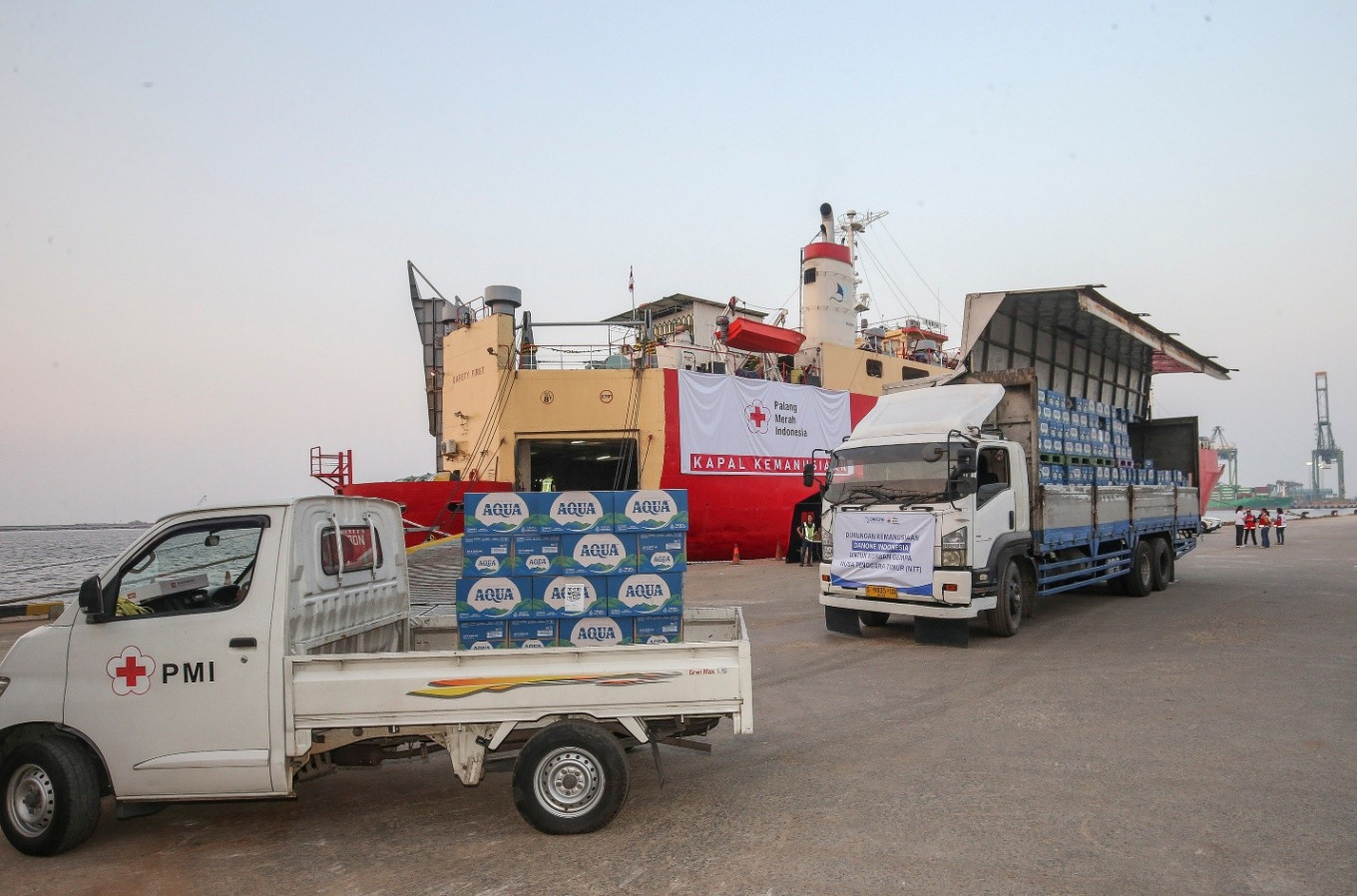 Supporting communities affected by the NTT earthquake, Danone Indonesia donated 2,200 boxes of AQUA, shipped from Tanjung Priok Port aboard PMI’s Humanitarian Ship. (Courtesy: PMI)
F
or communities affected by the earthquake in East Nusa Tenggara (NTT), recovery involves more than rebuilding damaged homes and infrastructure.
Access to safe drinking water, food and adequate nutrition remains essential during the emergency period. But as families begin adjusting to the aftermath, other needs are emerging: protection, psychosocial support and the restoration of daily routines, particularly for children.
That range of needs has drawn together government agencies, humanitarian organizations, local communities and private sector partners in a response that is gradually shifting from emergency relief toward early recovery.
The Indonesian Red Cross (PMI) has coordinated much of the assistance, using its humanitarian network and on-the-ground assessments to determine what affected areas need.
Among the private sector partners supporting the effort is Danone Indonesia, which has given PMI a Rp 1 billion (US$56,400) cash donation, along with around 53,000 bottles of AQUA drinking water and a supply of nutritional products. The cash is being used to procure supplies according to needs PMI identifies on the ground, allowing assistance to be adjusted as conditions in affected communities change.
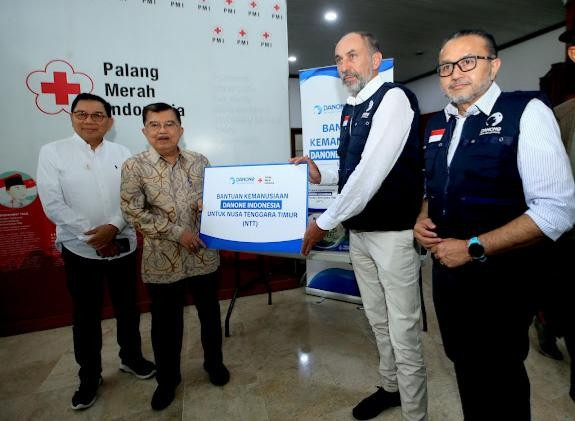

PMI chairman Muhammad Jusuf Kalla thanked Danone Indonesia for the contribution, noting it was not the company’s first time supporting disaster relief through PMI.
“Today, we received a cash contribution of Rp 1 billion, and this isn’t the first time for AQUA. This is the sixth time they’ve contributed disaster assistance, so we’re grateful, because it means Danone is putting ESG [environmental, social and governance] business principles into practice well. Every time a disaster happens, Danone Indonesia is there to help,” Kalla said.
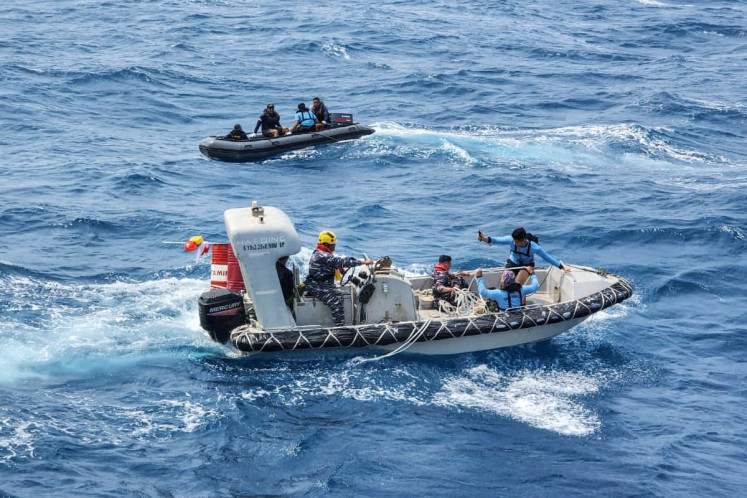
Getting that aid to communities has required a combination of routes. Some supplies have moved overland into Manggarai, while assistance for coastal communities has traveled by sea aboard a humanitarian ship operated jointly by PMI and Kalla Lines.
The ship, carrying Danone products alongside other relief supplies, departed for Flores on Aug. 22. Drinking water has begun reaching Langke Rembong district, Manggarai regency, and the response expanded to coastal areas once the ship arrived.
Danone Indonesia CEO Laurent Boissier said the company’s priority was finding practical ways to help families affected by the earthquake, and that Danone chose to work through PMI to draw on its distribution network and experience.
“When the earthquake struck Flores, our thoughts at Danone went immediately to the affected families. In times of crisis, our true responsibility is simply to stand close to the community with concrete action,” Boissier said.
“By working through PMI’s extensive network, we want to ensure that clean water, health supplies and nutrition reach the right people at the right moment.”
Children face a different recovery challenge
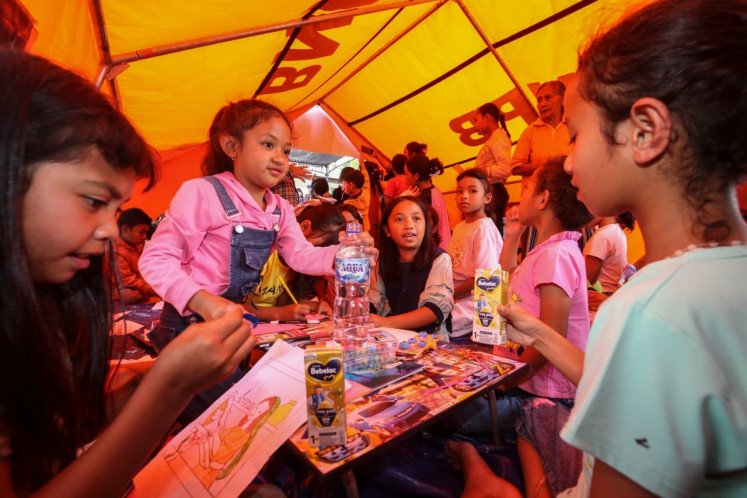
While water, food and shelter are among the most urgent needs after a disaster, the situation facing children is often more complex. The Women’s Empowerment and Child Protection Ministry has stressed the importance of continued support for affected children, particularly those experiencing trauma.
During visits to West Manggarai and Manggarai, ministerial representatives, the Indonesian Child Protection Agency (LPAI), Danone Indonesia and other stakeholders toured a number of affected sites, including a shelter in West Manggarai’s Golo Bias village, Komodo Regional General Hospital, the Manggarai regency command post and a special education tent school in Ruteng, assessing conditions facing women and children to ensure that their needs stay part of the wider emergency response.
Women’s Empowerment and Child Protection Minister Arifatul Choiri Fauzi said psychological recovery for children required sustained assistance. “Trauma healing cannot be done only once or twice. Long-term support involving psychologists is therefore needed,” she said.
LPAI chairman Seto Mulyadi said giving children safe environments so they could gradually return to familiar activities, such as playing, learning and expressing their emotions, was part of restoring a sense of normalcy after a disaster. Adequate nutrition was another part of that recovery, he said, particularly as displacement disrupted children’s routines and access to food.
From relief to recovery
Danone Indonesia has distributed hydration and nutrition products totaling around 5,000 cartons since the response began, using several channels including PMI, the Muhammadiyah Disaster Management Center (MDMC) and local partners.
The shift from emergency relief to recovery rarely happens cleanly. Needs that are urgent in the first days can change as displaced families return home, children go back to school and communities begin rebuilding their livelihoods. This means humanitarian organizations and their partners have to keep reassessing rather than assume emergency needs will hold steady through recovery.
Boissier said the partnership with PMI was intended to extend beyond the immediate emergency.
“This is not a onetime gesture. It reflects our belief in true partnership; one built on continued presence, not just immediate response,” he said. “Danone remains committed to standing alongside PMI as this recovery effort moves forward.”
For children, recovery may take longer still. Physical needs such as nutrition and shelter can be addressed relatively quickly, while the psychological impacts of a disaster can persist long after damaged buildings have been repaired. That gap points to a broader challenge in disaster response: Getting aid to affected communities quickly is critical, and sustaining support as those communities rebuild their lives matters just as much.