The Jakarta Post
Please Update your browser
Your browser is out of date, and may not be compatible with our website. A list of the most popular web browsers can be found below.
Just click on the icons to get to the download page.


Popular Reads
Top Results
No results found. Please check your search term and try again
Can't find what you're looking for?
View all search results
Popular Reads
Top Results
No results found. Please check your search term and try again
Can't find what you're looking for?
View all search resultsIndonesia at 81: Whose sovereignty are we celebrating?
What happens when the language used to resist external dependence starts shaping what counts as legitimate disagreement inside the republic itself?
Change text size
Gift Premium Articles
to Anyone
Share the best of The Jakarta Post with friends, family, or colleagues. As a subscriber, you can gift 3 to 5 articles each month that anyone can read—no subscription needed!
 Set as preferred source
 President Prabowo Subianto delivers his annual State of the Nation address on Aug. 15, 2025, ahead of the country's Independence Day in Jakarta. (AFP/pool/Ajeng Dinar Ulfiana)
T
his Aug. 17, we celebrate the 81st anniversary of Indonesia’s independence at a moment when the government speaks more insistently than usual about sovereignty, self-reliance and national strength. The rhetoric is expansive. The material reality is not.
Indonesia still depends on foreign capital, imported technology, external markets and institutions whose capacity remains uneven at home. That gap matters, because sovereignty is not only a measure of what the state can do. It is also a political vocabulary through which leaders define priorities and decide which forms of dissent are treated as legitimate.
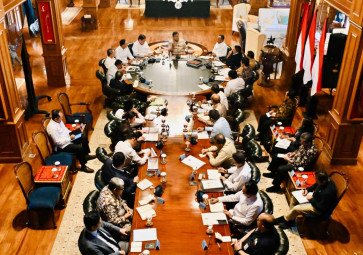
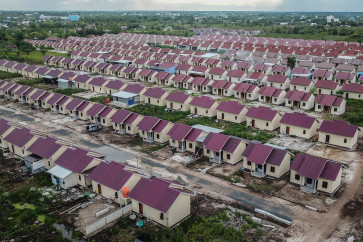
Under President Prabowo Subianto, that vocabulary now sits at the center of governance. Free meals and food self-sufficiency, energy security, downstream industrial policy and defense modernization are all presented as expressions of national independence.
None of these ambitions are inherently wrong. Indonesia has genuine reasons to reduce its exposure to geopolitical rivalry and commodity dependence. The harder question begins elsewhere: what happens when the language used to resist external dependence starts shaping what counts as legitimate disagreement inside the republic itself.
A capable state can widen citizens' choices. But the same expansion of state capacity can just as easily centralize decisions over money, institutions and priorities. Power does not become democratic merely because its goals are popular or dressed in national interest.
The relevant test is whether a stronger center is matched by a stronger capacity outside it — in the legislature, the press, civil society and the courts — to scrutinize, contest and, where necessary, stop what the government decides to do.

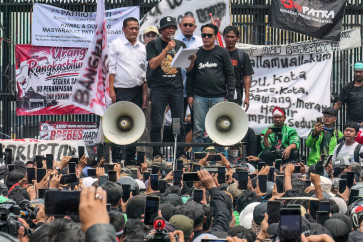
That balance is already under strain. Prabowo has repeatedly said criticism is legitimate, yet his administration has also reached for foreign influence as an explanation when confronting domestic dissent.