The Jakarta Post
Please Update your browser
Your browser is out of date, and may not be compatible with our website. A list of the most popular web browsers can be found below.
Just click on the icons to get to the download page.


Popular Reads
Top Results
No results found. Please check your search term and try again
Can't find what you're looking for?
View all search results
Popular Reads
Top Results
No results found. Please check your search term and try again
Can't find what you're looking for?
View all search resultsInequality worsens as wealth gap widens
The economic disparity is most apparent in the eastern part of Indonesia, such as Sulawesi and Papua, where extractive industries, which are done by businesses led by wealthy people and driven by Jakarta-centered development, have exacerbated the wealth rift.
Change text size
Gift Premium Articles
to Anyone
Share the best of The Jakarta Post with friends, family, or colleagues. As a subscriber, you can gift 3 to 5 articles each month that anyone can read—no subscription needed!
 Set as preferred source
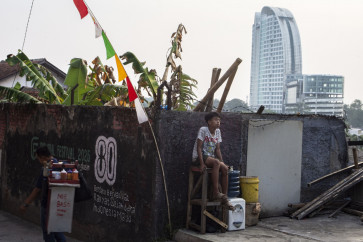
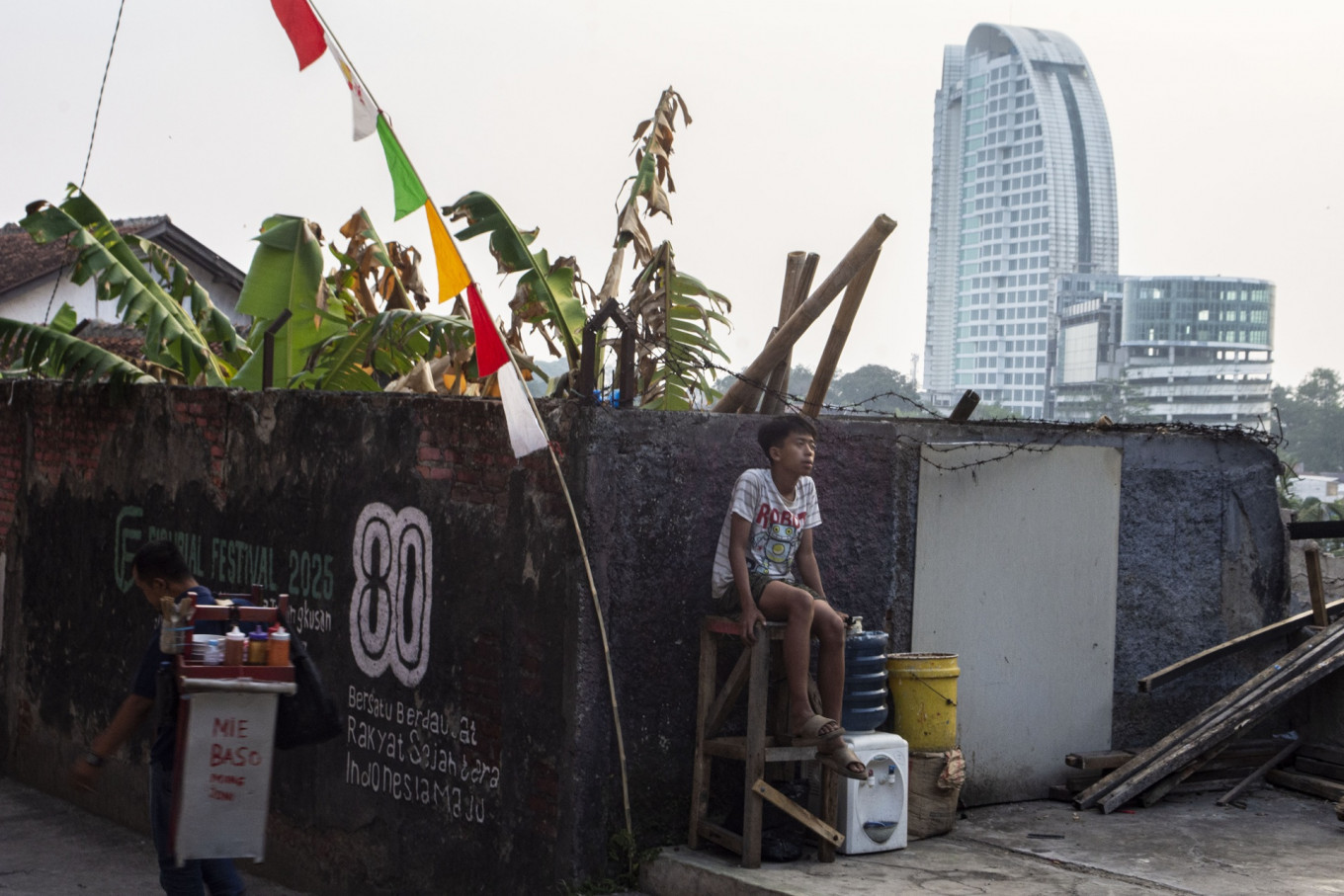 A boy sits on Aug. 5 at the Dago residential area in Bandung, West Java. The West Java office of Statistics Indonesia (BPS) recorded a decrease in the urban poor population from 2.83 million people in September 2025 to 2.7 million in March. (Antara/Novrian Arbi)
I
nequality in Indonesia has multiplied over the past three decades, a situation mirrored across many resource-dependent Global South countries, with the solution being an inclusive economic growth rather than excessive state intervention, according to academics.
More than 220 scholars from at least 20 countries gathered for the three-day 2026 Institute for Advanced Research (IFAR) Consortium Conference hosted by the Indonesian International Islamic University in Depok, West Java.
Aiming to examine the current landscape of inequality across Southeast Asia, many scholars pointed to the widening socioeconomic gap in Indonesia, where wealth is increasingly concentrated in a small web of politically-wired individuals.
In countries such as Indonesia, economic growth often came at the expense of shrinking share of labor wages in the national economy, according to sociology professor Vivek Chibber of New York University in the United States.
“Since the 1980s, what policy shifts occurred have overwhelmingly favored the wealthy as against the general population, especially the working population [or] labor in countries like Indonesia,” Chibber said in his keynote address on Wednesday.
Income inequality can be seen in the measurement of the country’s Gini coefficient as deduced in reports issued by the Statistics Indonesia (BPS).

The latest score for the coefficient, issued by the agency on Aug. 5, was 0.368 in March, slightly rising from 0.363 in September last year. A coefficient of zero represents perfect equality, while one captures a complete unequal condition.