The Jakarta Post
Please Update your browser
Your browser is out of date, and may not be compatible with our website. A list of the most popular web browsers can be found below.
Just click on the icons to get to the download page.


Popular Reads
Top Results
No results found. Please check your search term and try again
Can't find what you're looking for?
View all search results
Popular Reads
Top Results
No results found. Please check your search term and try again
Can't find what you're looking for?
View all search resultsGlobal standards, governance and commercial discipline underpin INA’s investment strategy
Five years after its establishment, the Indonesia Investment Authority (INA) has demonstrated how strong governance, commercial discipline and global partnerships can mobilize long-term capital while supporting Indonesia's sustainable economic development.
Change text size
Gift Premium Articles
to Anyone
Share the best of The Jakarta Post with friends, family, or colleagues. As a subscriber, you can gift 3 to 5 articles each month that anyone can read—no subscription needed!
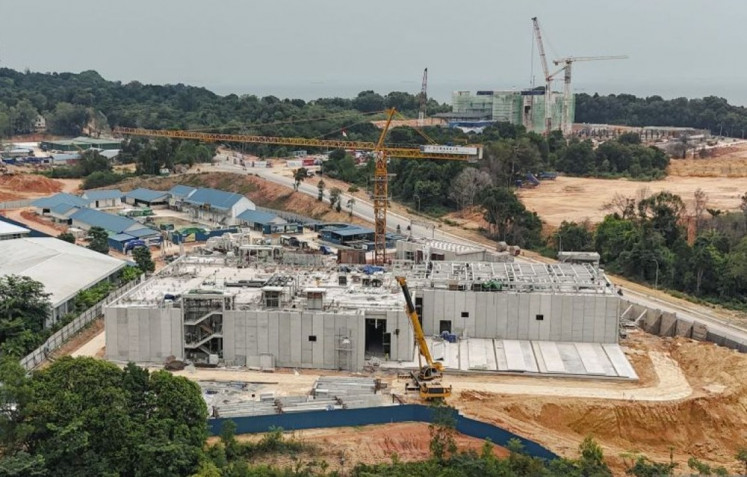
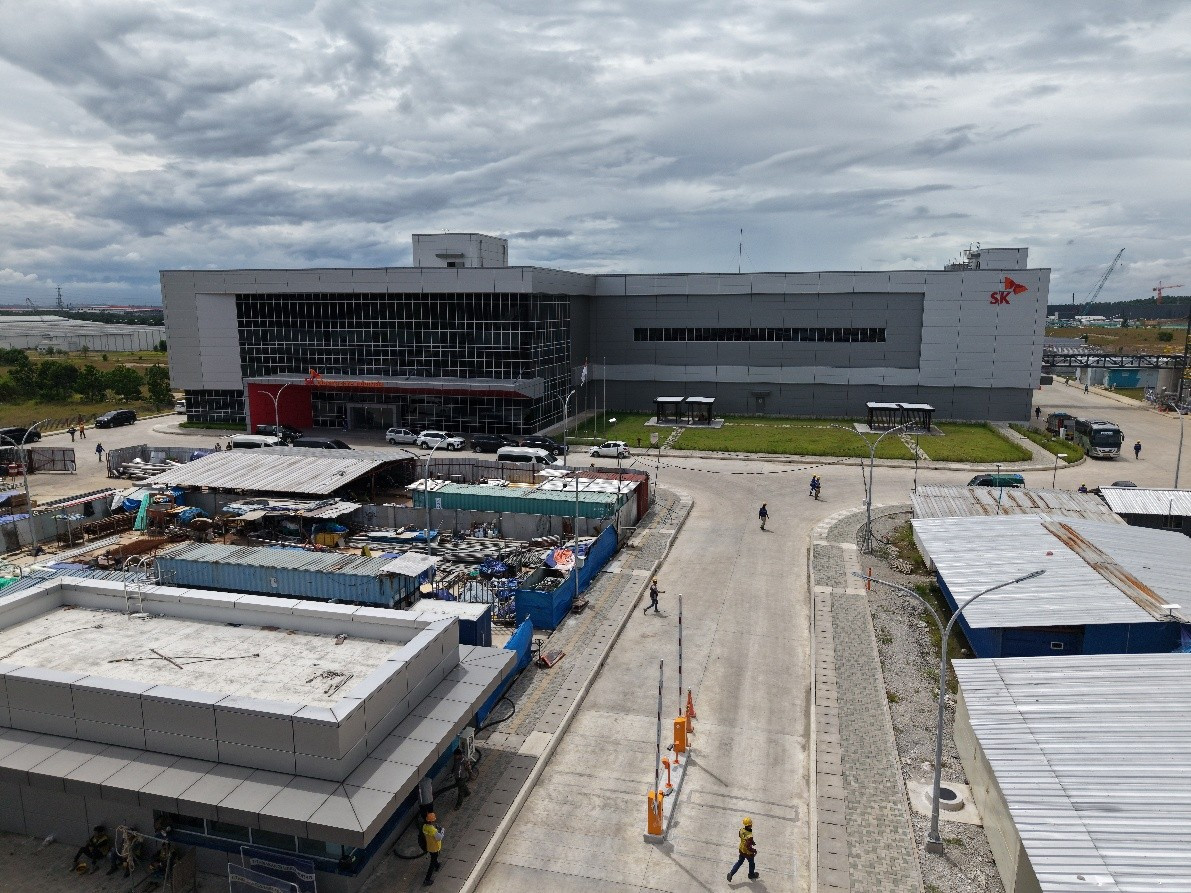 A plasma fractionation plant is pictured in Karawang, West Java in this file photo. The plant is owned by PT SK Plasma Core Indonesia, a joint venture between South Korea’s biopharmaceutical company SK Plasma and Indonesia’s sovereign wealth fund, the Indonesia Investment Authority (INA). (Images Courtesy of the Indonesia Investment Authority)
C
an a sovereign wealth fund do more than generate investment returns? Can it also accelerate national development while maintaining commercial discipline?
Indonesia sought to answer those questions when it established the Indonesia Investment Authority (INA). Unlike many sovereign wealth funds created primarily to preserve national wealth or stabilize fiscal revenues, the INA was designed to mobilize long-term institutional capital into strategic sectors that support Indonesia's sustainable economic development.
Five years after its establishment, the INA offers an opportunity to evaluate whether this model is delivering on its promise.
According to Wijayanto “Wija” Samirin, a senior economist at Paramadina University, Indonesia requires substantial high-quality investment to sustain long-term economic growth. Given the country's fiscal limitations, foreign investment remains an important source of development financing.
Wija spent 15 years early in his career working in investment banking, private equity and the hedge-fund industry. He is also a public policy practitioner, having served as special staff to the vice president of Indonesia for economic and financial affairs from 2014 to 2019, senior economic advisor to the Jakarta governor from 2019 to 2022, and an independent commissioner at several companies.
"Development today depends not only on public spending but also on the ability to attract high-quality long-term investment," he said. Beyond capital, foreign investment also brings technology, expertise and global business networks.

However, many international investors remain cautious about entering Indonesia. Wija believes that a trusted and credible investment partner is therefore essential to bridge this confidence gap.
"In this context, the INA plays a critical role," he said.
He emphasized that a sovereign wealth fund must also be commercially successful. It needs the ability to identify attractive investment opportunities, execute projects efficiently and consistently earn investors' trust.
"The ability to recognize opportunities is only the starting point. Efficient execution is essential for maximizing returns, while investor confidence ultimately determines whether investment plans become reality," he said.
Equally important, according to Wija, is maintaining institutional independence.
"Once non-commercial interests influence investment decisions, professionalism inevitably erodes. Projects that are not economically viable may still be pursued, undermining investor confidence and damaging the institution's credibility."
Strong governance, transparency, investment independence and a firm commitment to environmental, social and governance (ESG) principles are therefore fundamental. "Trust is the single most important asset of a sovereign wealth fund. Without it, attracting investment is simply not possible," he added.
That trust has translated into long-term capital for Indonesia. During its first five years, the INA and its investment partners deployed approximately Rp74.5 trillion (US$4.7 billion). Of this amount the INA invested Rp 33.3 trillion, while helping mobilize Rp 41.2 trillion in foreign direct investment.
The value of co-investment
Wija explained that co-investment has become a common strategy among sovereign wealth funds because it enables institutions with limited capital to maximize their economic impact.
Beyond increasing available funding, co-investment also serves as an important validation mechanism.
"If reputable domestic and international investors are willing to participate, it indicates that independent parties have also assessed the project and found it commercially viable," he said.
He added that co-investment helps reduce the risk of "groupthink," where decisions are shaped by limited perspectives rather than independent evaluation.
Indonesia, he noted, can learn from China's experience. During the early development of its high-speed rail network, China invited the World Bank to finance around 10 percent of the project despite having sufficient domestic resources. The World Bank's participation strengthened project governance by ensuring rigorous feasibility studies, internationally accepted procurement standards and independent supervision throughout implementation.
Wija believes Indonesia's sovereign wealth fund should pursue two complementary objectives.
The first is generating competitive investment returns, ensuring financial sustainability and allowing the fund to expand without relying on continuous government capital injections.
The second is serving as a catalyst for high-quality investment by attracting credible foreign direct investment through trusted co-investment partnerships.
"In short, the first mandate is about sustainability and financial independence, while the second is about creating long-term economic impact," he said.
He cited Malaysia's Khazanah Nasional as an example of this dual-mandate approach. Around 70 percent of Khazanah's investments remain in Malaysia to strengthen domestic economic development through strategic partnerships.
Singapore's Temasek also operates under a dual mandate but follows a different strategy. Around 60 percent of its investments are overseas, with the objective of reinforcing Singapore's position as a regional economic hub by strengthening logistics, finance, human capital and other strategic sectors.
The INA's strategy is reflected in the sectors where it has deployed capital over the past five years. Together with global investment partners, the INA has focused on transportation and logistics, green energy, digital infrastructure and artificial intelligence, health care and advanced materials.
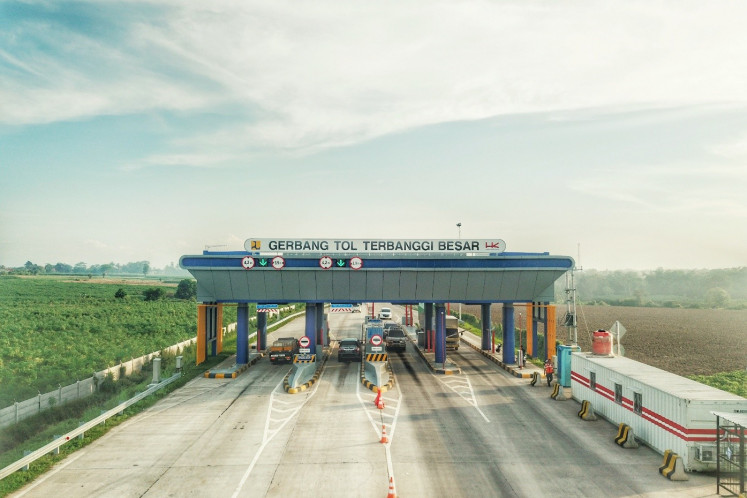
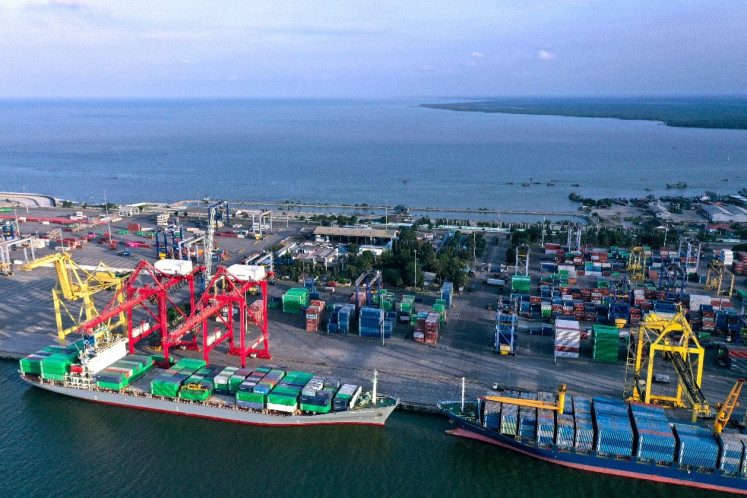
In transportation and logistics, the INA has supported the development of more than 250 kilometers of toll roads, strategic port infrastructure and approximately 200,000 square meters of modern logistics facilities. These investments improve connectivity, lower logistics costs and support regional economic growth.
Digital infrastructure and AI account for nearly 30 percent of the INA's cumulative investment allocation. Investments include one of Southeast Asia's largest telecommunications tower operators with more than 40,000 towers across Indonesia, over 57,000 km of fiber-optic network, and a hyperscale data center platform designed to support the country's growing AI ecosystem. These assets are expected to strengthen productivity, accelerate digital transformation and encourage innovation.
In health care, the INA supports Indonesia's largest hospital network and retail pharmacy platform. It has also invested in Indonesia's first and Southeast Asia's largest blood plasma fractionation facility, with a projected annual processing capacity of 600,000 liters. The project is expected to improve national health resilience, reduce dependence on imported plasma-derived medicines and strengthen Indonesia's pharmaceutical industry.
Collectively, these investments reflect the INA's strategy of backing strategic assets capable of generating long-term commercial returns while supporting sustainable national development.
Wija considers the INA a successful example of a sovereign wealth fund despite its relatively limited capital base.
"I believe the INA has successfully executed high-quality strategic projects that generate meaningful economic benefits for communities while delivering attractive returns for investors," he said.
He also believes the INA has effectively fulfilled its role as a catalyst for foreign investment by maintaining professionalism and institutional independence.
"Beyond the successful execution of strategic projects, the high level of trust it has earned from investors is another important indicator of the INA's success."
That credibility has also been recognized internationally.
According to Global SWF, an independent research platform that monitors sovereign wealth funds worldwide, the INA achieved a Governance, Sustainability and Resilience (GSR) score of 92 percent in 2026, well above the global sovereign wealth fund average of 60 percent. The ranking places the INA as the second-highest-performing sovereign wealth fund in Asia.
The result reflects continued progress in governance, sustainability integration and institutional resilience.
As a full member of the International Forum of Sovereign Wealth Funds (IFSWF), the INA also follows the Santiago Principles, which emphasize transparency, accountability, independence and prudent risk management.
Wija said that as Indonesia enters a new phase of economic transformation, the challenge is no longer simply attracting investment, but ensuring that capital is deployed responsibly, transparently and in sectors that create lasting economic value.
According to him, five years after its establishment, the INA has begun to demonstrate how a sovereign wealth fund can balance commercial performance with national development objectives. Its ability to sustain that role, however, will depend on maintaining investment discipline, institutional independence and strong governance as its portfolio and responsibilities expand.
“The INA will also need to navigate increasingly complex global conditions, manage concentration and execution risks, and ensure that its investments continue to deliver measurable economic benefits beyond financial returns. If it can preserve investor confidence while scaling its impact, the INA could play a more significant role in supporting a resilient, competitive and inclusive Indonesian economy over the long term,” Wija concluded.