The Jakarta Post
Please Update your browser
Your browser is out of date, and may not be compatible with our website. A list of the most popular web browsers can be found below.
Just click on the icons to get to the download page.


Popular Reads
Top Results
No results found. Please check your search term and try again
Can't find what you're looking for?
View all search results
Popular Reads
Top Results
No results found. Please check your search term and try again
Can't find what you're looking for?
View all search resultsIndonesia's global commodities price-setting ambition risks backfiring
The exchange, scheduled for launch next year, is President Prabowo Subianto's latest initiative to expand state influence over natural resources in a country that is the biggest global supplier of palm oil, nickel and thermal coal and a major source of copper and bauxite.
Change text size
Gift Premium Articles
to Anyone
Share the best of The Jakarta Post with friends, family, or colleagues. As a subscriber, you can gift 3 to 5 articles each month that anyone can read—no subscription needed!
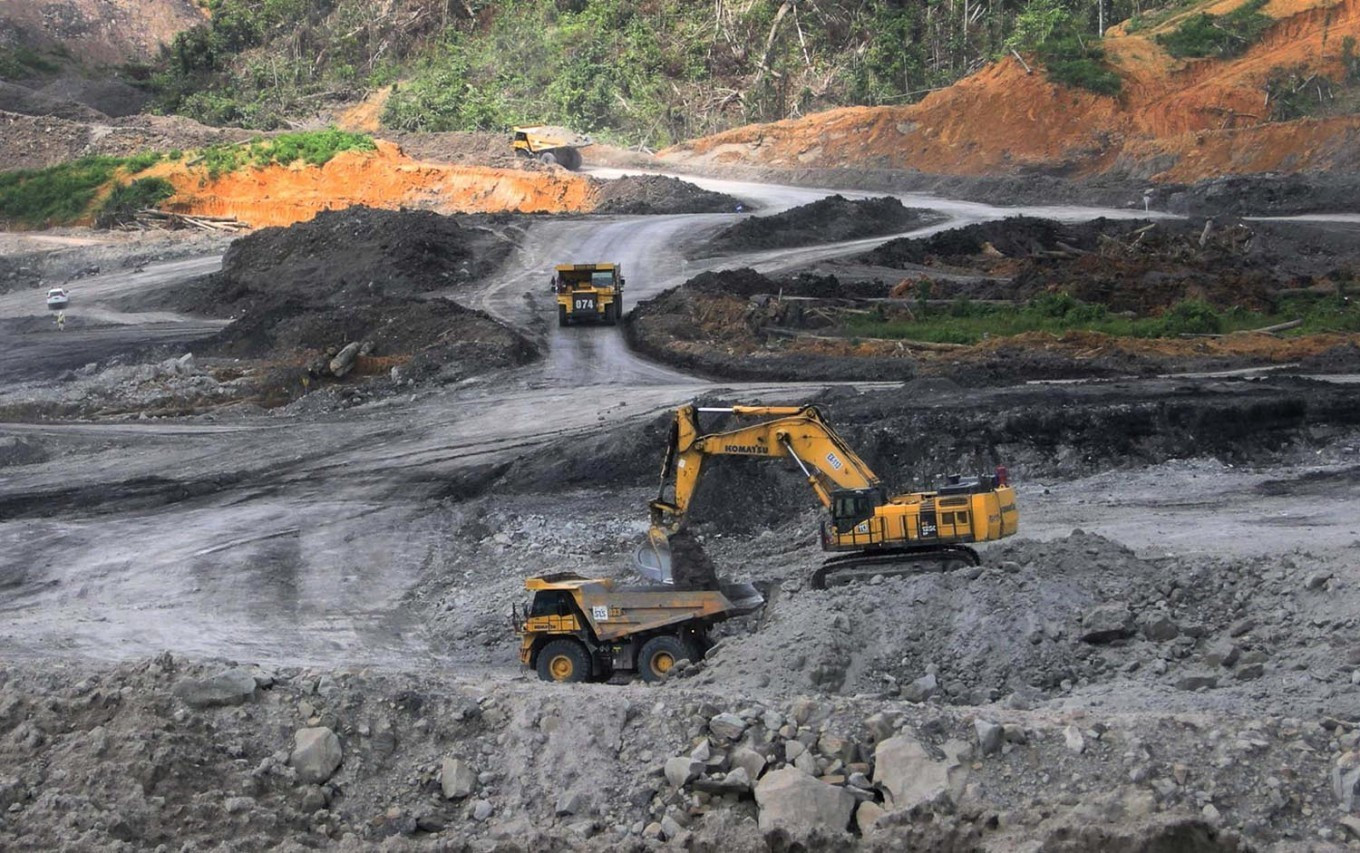 Heavy equipment is operated at a coal mine in East Kalimantan owned by PT Berau Coal in this undated photograph. (JP/Indra Harsaputra)
I
ndonesia's bid to exert control over global prices for its vast natural resources by setting up a new commodities exchange will struggle to compete with established bourses and risks backfiring if participation is mandatory.
The exchange, scheduled for launch next year, is President Prabowo Subianto's latest initiative to expand state influence over natural resources in a country that is the biggest global supplier of palm oil, nickel and thermal coal and a major source of copper and bauxite.
In a fiery speech to parliament last month, Prabowo said that Indonesia would rather keep its commodities than sell them too cheaply.
Trading through the exchange will be mandatory, said Sarjito, who was appointed chief supervisor of commodity trading and like many Indonesians uses one name.
Prabowo's move comes as his approval rating has fallen 30 percentage points to 51 percent in eight months, and critics say the exchange plan is as much about political messaging as economic strategy.
Yanuar Nugroho, a former top aide to Prabowo's predecessor Joko Widodo, called it a nationalist narrative "good for campaign material", rather than sound policy.

‘Probably backfires’
Several industry veterans and analysts said price-setting was built on trust, and any move to force it risked deterring investors at a time when a depreciating rupiah, a poorly performing stock market and widespread concerns over economic management were already testing their patience.
"Indonesia is a significant player in a number of commodities - enough to create serious market distortions - but trying to 'set global commodity prices' probably backfires," said Ian Hiscock, a Singapore-based principal at the Energy Shift Institute, an energy finance think tank.
The move risked pushing rule-abiding investors out and leaving "more nefarious actors to square regulations with economic reality," reducing transparency rather than boosting it, he said.
In the case of nickel, that could include accelerating substitution away from nickel-based battery chemistries and providing incentives to buyers to underwrite projects from more reliable suppliers, he said.
One industry insider, asking not to be named given the sensitivity of the matter, said even if the exchange was mandated for all transactions of relevant commodities, buyers would try to find alternative suppliers, or even alternative products, if the set price was much higher than on other exchanges.
Simeng Deng, senior analyst at Rystad Energy, said buyers could simply walk away, noting that Indonesian coal exports, the world's largest by volume, were already under pressure as top buyers China and India diversified purchases towards Mongolia, Russia and South Africa.
The exchange risked becoming a domestic administrative layer rather than a genuine price-discovery mechanism, she said, which could push wary buyers to shift from Indonesia even faster, while raising compliance costs and giving investors reason to sit on capital until the rules settle.
Prabowo's spokesperson and officials at the Financial Services Authority (OJK) could not immediately respond to requests for comment. Sarjito declined to comment further.
Palm oil battle
Palm oil underlines the challenge of taking on an incumbent exchange.
Indonesia, by far the top producer and exporter of the edible oil, launched a palm oil bourse in 2023, but transactions remain light. Past efforts by regional and global exchanges to develop alternative palm oil futures have done little to dent the dominance of Malaysia, which launched its Crude Palm Oil (CPO) Futures contract in 1980, as the global price setter.
Bursa Malaysia Derivatives recorded 19.62 million CPO futures contracts, equivalent to 490.43 million metric tons of CPO, traded in 2025, while Indonesia trade ministry data showed CPO futures trading over the same year at 30,341 lots, equivalent to just 151,705 tons.
"It is going to be very difficult to compete with Bursa," said Julian McGill, managing director of oil crop advisory firm Glenauk Economics, adding that being the largest producer conferred "surprisingly limited" advantage.
Veteran palm oil trader M.R Chandran, chairman of agritech firm IRGA, expects a split market rather than a new benchmark: Jakarta's new bourse would probably serve as "an internal reference for export duties and domestic clearances," with Bursa Malaysia’s Crude Palm Oil Futures contract remaining the benchmark for global price discovery and risk management.
Malaysian Palm Oil Association CEO Roslin Azmy Hassan said Kuala Lumpur "shouldn't be complacent" but sees no "immediate threat". Liquidity, transparency and international participation, he said, take years to build.
Concerns over transparency, legal certainty and exchange independence already discouraged trading on Indonesian exchanges, a Jakarta-based palm oil analyst with a global trading house said.
Even supporters of the new Indonesian exchange said building credibility takes time.
"A successful exchange is not built overnight. A successful exchange is built over time," Yazid Kanca Surya, CEO at PT Jakarta Futures Exchange, told Reuters.