The Jakarta Post
Please Update your browser
Your browser is out of date, and may not be compatible with our website. A list of the most popular web browsers can be found below.
Just click on the icons to get to the download page.


Popular Reads
Top Results
No results found. Please check your search term and try again
Can't find what you're looking for?
View all search results
Popular Reads
Top Results
No results found. Please check your search term and try again
Can't find what you're looking for?
View all search resultsUS trade court probes Trump's 'forced labor' tariffs
Four small businesses and 25 Democratic-led states argue that the tariffs, applied to imports from 60 trading partners including the EU and China, far exceed the president's authority.
Change text size
Gift Premium Articles
to Anyone
Share the best of The Jakarta Post with friends, family, or colleagues. As a subscriber, you can gift 3 to 5 articles each month that anyone can read—no subscription needed!
 Set as preferred source
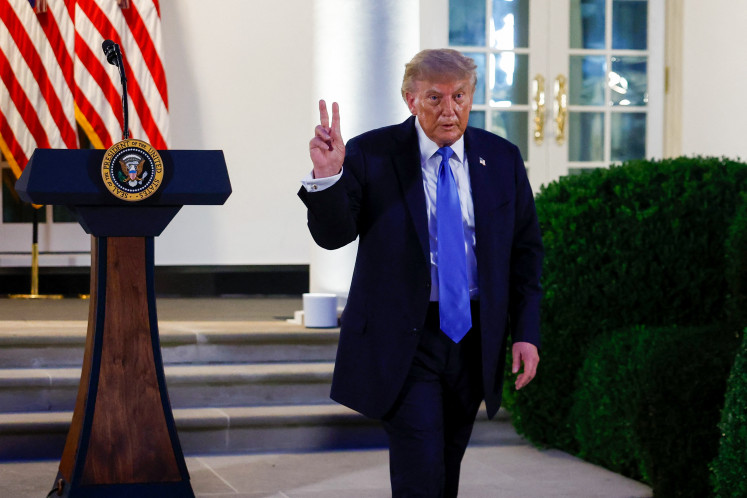
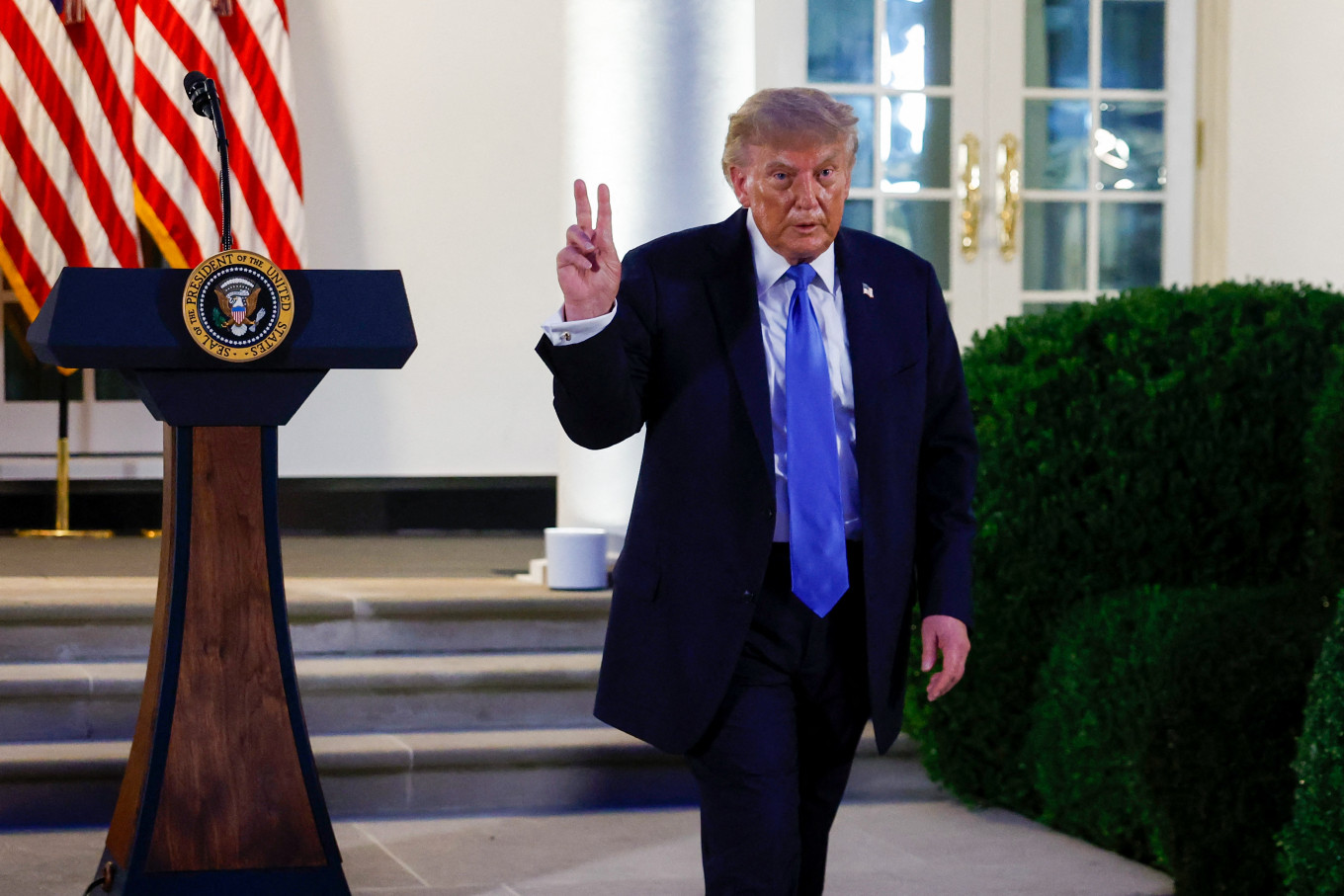 US President Donald Trump leaves the podium after speaking as he hosts a dinner in the Rose Garden at the White House on Sept. 02, 2026 in Washington, DC. (AFP /Getty Images/Kevin Dietsch)
T
he US Court of International Trade on Wednesday scrutinized the legal and factual underpinnings of President Donald Trump's latest global tariffs, which were imposed on nearly all US imports over allegations trading partners aren't doing enough to stop forced labor.
A panel of three judges appointed by Presidents Trump, Barack Obama and Joe Biden heard arguments in Manhattan over lawsuits alleging that the latest tariffs are an attempt to revive the unchecked tariff power the Supreme Court struck down in February.
Four small businesses and 25 Democratic-led states argue that the tariffs, applied to imports from 60 trading partners including the EU and China, far exceed the president's authority.
Pratik Shah, an attorney representing small businesses that sued over the tariffs, told the court that the Trump administration has misused a law that offers only a "carefully constrained" tariff authority.
In its rush to impose new tariffs, the Trump administration skipped the legal requirements to make country-specific findings that each of the tariffs was justified, Shah said. Shah contrasted the tariffs with duties imposed under the same law during Trump’s first term, when the US Trade Representative produced country-by-country reports and imposed tariffs tailored to each economy.
"If you're going to do it at breakneck speed and try to cover the entire globe, you still have to satisfy the statutory requirements," Shah said.

Eric Hamilton, representing the US Department of Justice, said the US Trade Representative had thoroughly evaluated the prevalence of goods produced with forced labor in international commerce. The government did not need to show "with metaphysical certainty" that forced labor was a "burden" on US commerce before imposing tariffs, he said.
The panel is expected to issue a written ruling in the coming weeks.
The plaintiffs asked the court to throw out the tariffs entirely. The court could also issue a more limited ruling that asks the government to re-do its investigation to provide more detail and justifications for the tariffs, as the court did with some of Trump's tariffs in his first term.
Attorneys questioned
The judges interrupted attorneys for both sides soon after they began their arguments, peppering them with questions about the level of detail required in the government's investigation into forced labor in other countries before deciding to apply tariffs.
They asked Shah whether he was simply asking for "more paper" from the government, and they asked Hamilton whether the government was ignoring more detailed statutory requirements that dealt specifically with forced labor, rather than relying on broader authority about "unreasonable" trade practices.
Trump has made tariffs a central pillar of his foreign policy, using them as leverage to negotiate trade deals around the globe. But the Supreme Court ruled against most of Trump's widest-ranging tariffs on Feb. 20, finding that the president cannot use emergency economic powers to unilaterally impose tariffs on all US trading partners.
Trump responded by immediately imposing a temporary 10 percent global tariff under a different US law. When those temporary tariffs expired, he invoked another legal authority to impose in July the forced labor tariffs now being challenged, which range from 10 percent to 12.5 percent.
The plaintiffs' lawsuits, consolidated before the court, argue the administration failed to satisfy the legal requirements for imposing the tariffs and is using concerns about forced labor as a pretext to revive a broad tariff authority that US courts have repeatedly rejected.
The Trump administration argued in court papers that it had conducted real investigations into other nations’ failure to prevent imports of goods produced with forced labor, and concluded that tariffs were warranted for each of the 60 investigated trading partners.