The Jakarta Post
Please Update your browser
Your browser is out of date, and may not be compatible with our website. A list of the most popular web browsers can be found below.
Just click on the icons to get to the download page.


Popular Reads
Top Results
No results found. Please check your search term and try again
Can't find what you're looking for?
View all search results
Popular Reads
Top Results
No results found. Please check your search term and try again
Can't find what you're looking for?
View all search resultsPopular discontent is justified. Authoritarianism is not the answer
The people's fight against oligarchy, corruption and foreign dependence won't be won by sliding back into authoritarianism, but by building a democracy strong enough to hold power to account.
Change text size
Gift Premium Articles
to Anyone
Share the best of The Jakarta Post with friends, family, or colleagues. As a subscriber, you can gift 3 to 5 articles each month that anyone can read—no subscription needed!
 Set as preferred source
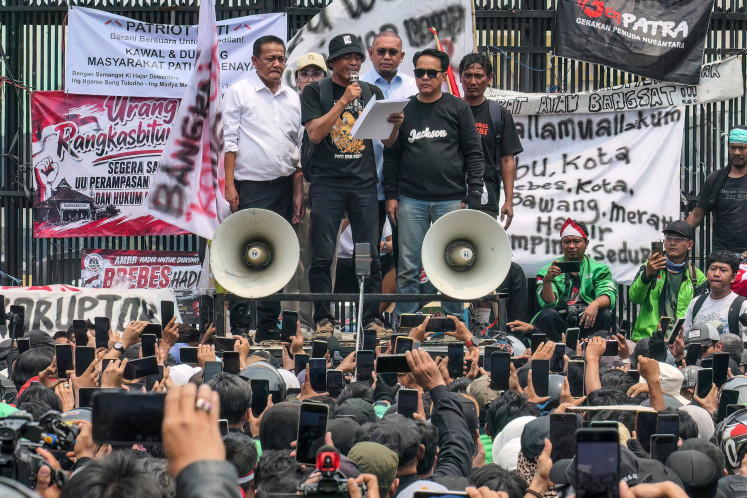
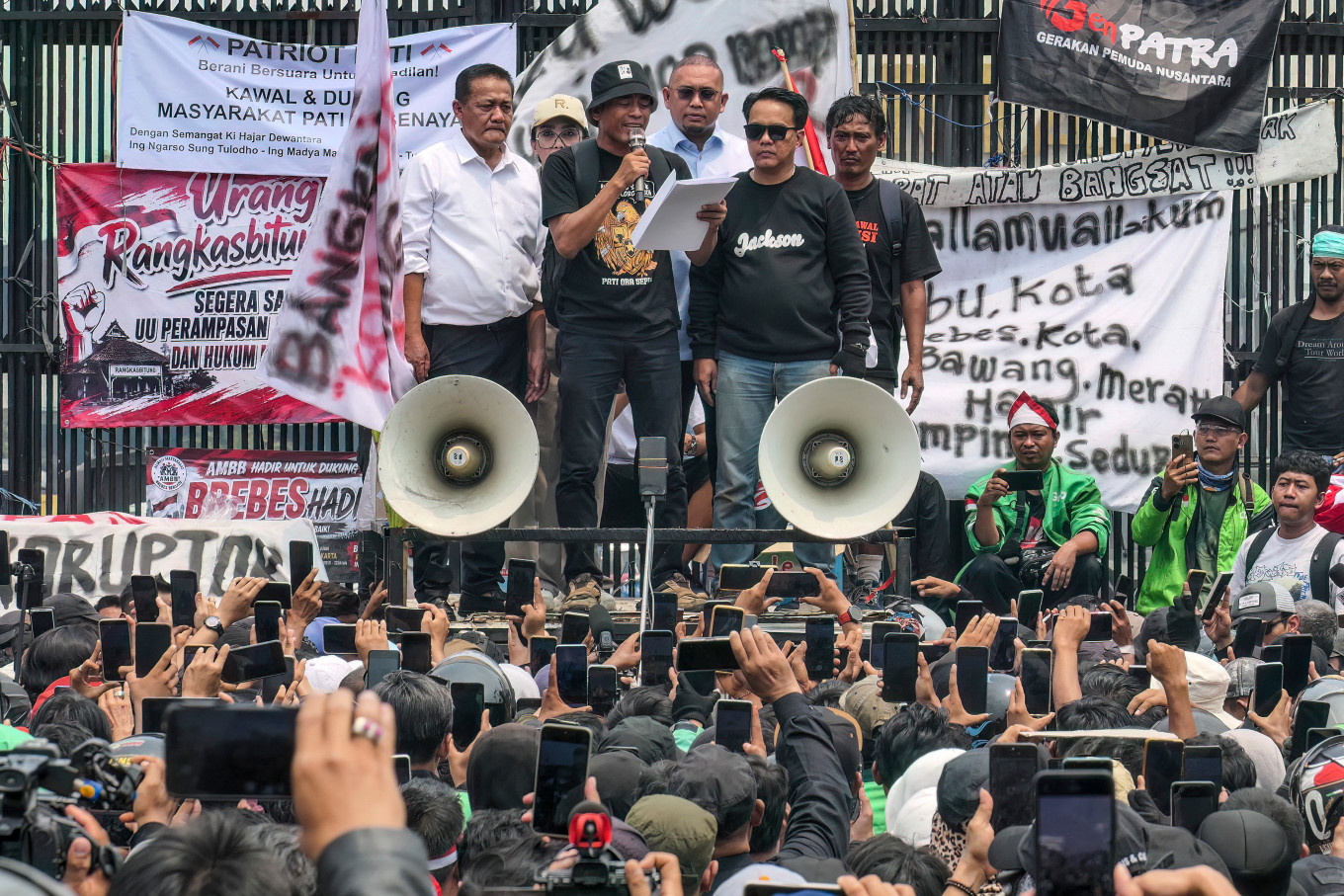 Supriyono (center left, onstage), also known as “Botok”, an activist from Pati regency, Central Java, speaks during a demonstration outside the Senayan Legislative Complex in Central Jakarta on Aug. 27, 2026, urging lawmakers to immediately pass the asset forfeiture bill. (AFP/Azwar Ipank)
P
olitical discontent is highly visible across Indonesia, from student and worker protests in major cities to local resistance against land grabs and extractive projects. Much of this dissatisfaction concerns the distribution of power and wealth.
Three issues stand out.
First is the concentration of political and economic power among relatively small elites. More than a quarter century after the reform movement, competitive elections have become firmly established, but democracy has not prevented elite capture. Elections are expensive, political parties depend heavily on wealthy sponsors and the boundaries between political office and major business interests are blurred.

The word oligarchy has moved from academic analysis into everyday Indonesian political language. This is hardly surprising in a political system where influence depends so heavily on money.
Second, and even more familiar, is corruption. Indonesia has fought corruption through democratic reform, a once powerful Corruption Eradication Commission (KPK), greater media freedom and an active civil society. But corruption has proved remarkably resilient and remains systemic, linking political financing, public procurement, natural resource concessions, appointments and business interests.
Corruption and oligarchy reinforce each other. Expensive politics creates incentives to seek private financing; private financiers expect influence; political authority provides access to licenses, contracts and natural resources; and the proceeds help reproduce political power. The result is a circle that democratic elections have been unable to break.

The third source of discontent is more sensitive but should not be avoided: growing foreign influence over strategic parts of the economy. For example, Chinese capital and technology have contributed substantially over the past decade to industrial development and economic growth.