The Jakarta Post
Please Update your browser
Your browser is out of date, and may not be compatible with our website. A list of the most popular web browsers can be found below.
Just click on the icons to get to the download page.


Popular Reads
Top Results
No results found. Please check your search term and try again
Can't find what you're looking for?
View all search results
Popular Reads
Top Results
No results found. Please check your search term and try again
Can't find what you're looking for?
View all search resultsEl Niño-powered drought leaves West Kalimantan palm farmers high and dry as river recedes
For several weeks, local palm oil mills have cut their fresh fruit bunch purchases because storage tanks are filled with processed oil they cannot ship out as a prolonged drought driven by "super El Niño" conditions has dried out the area's main transportation artery, the Kapuas River.
Change text size
Gift Premium Articles
to Anyone
Share the best of The Jakarta Post with friends, family, or colleagues. As a subscriber, you can gift 3 to 5 articles each month that anyone can read—no subscription needed!
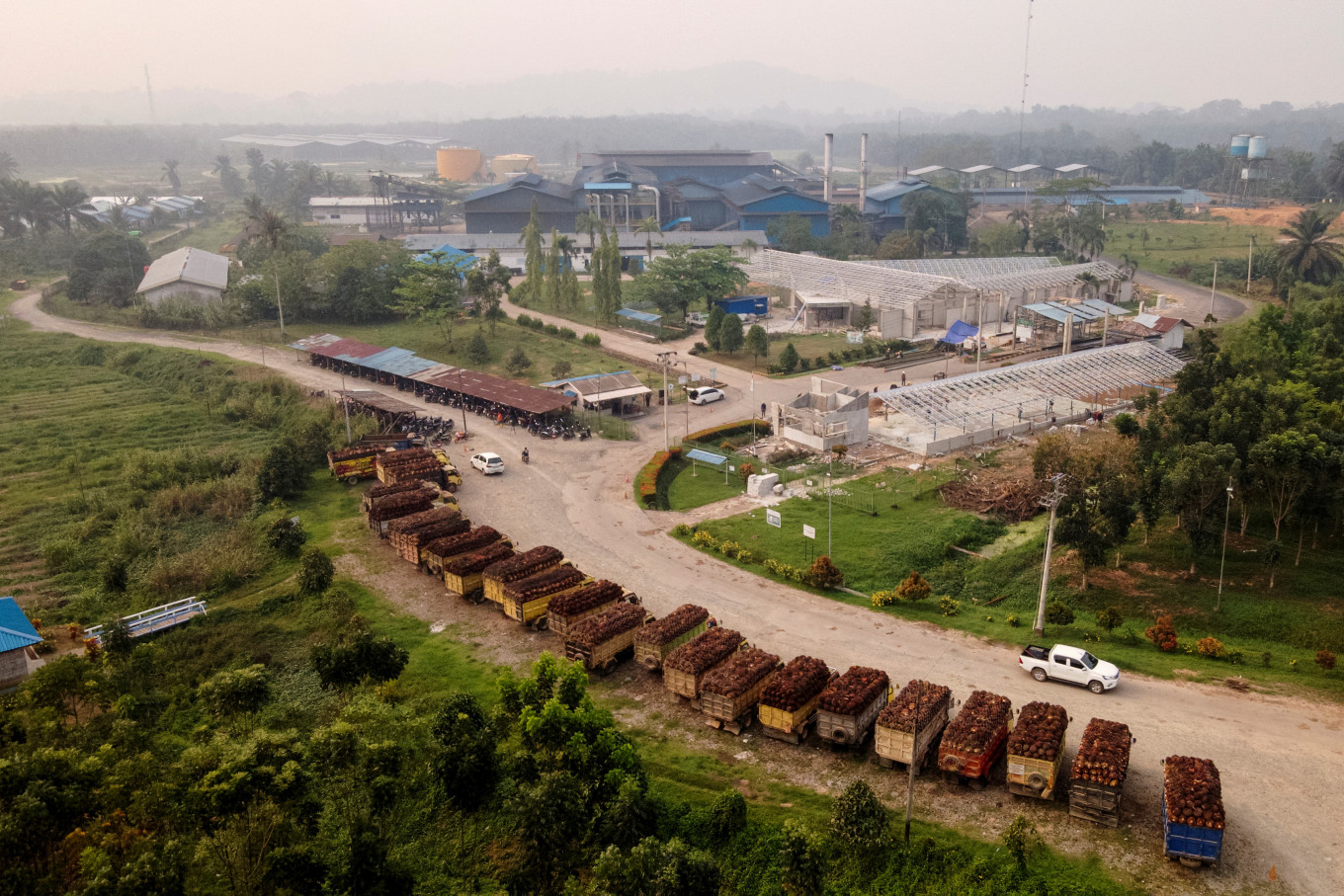 A drone view shows trucks loaded with oil palm fruit bunches waiting outside the Multi Prima Entakai (MPE) palm oil mill in Sanggau, West Kalimantan, October 2, 2026. (Reuters/Soepriyadi Gunawan)
S
upendi, a 33-year-old palm fruit farmer, cooled his heels at a mill in Indonesia's West Kalimantan for four frustrating days earlier this month trying to unload his harvest of fresh fruit bunches before being told to leave as the site was full.
For several weeks, local palm oil mills have cut their fresh fruit bunch purchases because storage tanks are filled with processed oil they cannot ship out as a prolonged drought driven by "super El Niño" conditions has dried out the area's main transportation artery, the Kapuas River.
"The fruit was not accepted," Supendi told Reuters by telephone. "Now we’re at a loss as to how to sell it.”
He had driven from his hometown to the Multi Prima Entakai palm oil mill in the city of Sanggau in early October carrying 7 metric tons of fruit bunches from his small farm and neighboring ones. He is one of thousands of smallholder farmers in West Kalimantan stuck with rotting fruit.
Supendi's struggles illustrate one of the many impacts of this year's extreme El Niño in Indonesia and Southeast Asia.
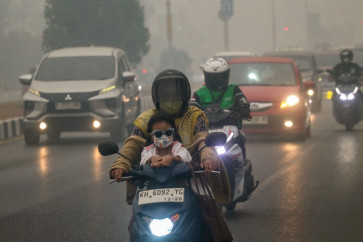
The weather phenomenon caused by a warming of the Pacific Ocean waters off South America typically causes hot, dry weather in Southeast Asia. But the strength of the current pattern has parched rivers and wells in Indonesia and fanned forest fires in Borneo — where West Kalimantan is located — and Sumatra that have spread choking haze over the province and as far as Malaysia and Singapore.

West Kalimantan accounts for about 11 percent of palm oil output in Indonesia, the world's largest producer, and analysts estimate fourth-quarter output across Indonesian Borneo could fall by 12 percent to 15 percent because of the El Niño-related disruptions.
The Kapuas — Indonesia's longest river at 1,143 km — transports 40 percent of West Kalimantan’s palm oil output, according to data from the Indonesian Palm Oil Association, known as GAPKI. Sandbanks have emerged from the receding waters of the river, causing several barges and tugboats to run aground, according to Reuters witnesses.
Road delivery is a limited alternative, because trucks carry less than barges and fewer are available, millers say.
During El Niños in 2015 and 2018, similar droughts lasted for about a month, several local farmers said. But this year the Kapuas has dropped to a lower level and the effects have lasted for two months already.
Indonesia's weather agency expects the start of the rainy season to be pushed back to November, from October normally, delaying the river's resurgence and relief from the country's most intense wildfires in 11 years.
Thirteen palm oil mills out of 50 in West Kalimantan have been affected by the transportation disruptions, accounting for roughly half of the province's processing capacity, said Aris Supratman, who heads GAPKI's West Kalimantan office.
He estimated palm oil supply from the province would fall by about 11 percent in September from August due to the backup.
"Because of the disruption, shipments are being delayed, and once their storage tanks are full, they inevitably have to limit production,” he said.
GAPKI has revised down its 2026 national palm oil production forecast by 2.9 percent as the dry weather slows fruit maturity.
Dian Kurniawan, 44, a manager at the Multi Prima Entakai mill that turned Supendi away, said the company's fruit bunch purchases had dropped to 10,000 tons in September compared to the 30,000 tons it processed in July.
As of October 1, the mill held 8,200 tons of crude palm oil, near its storage tank capacity of 8,500 tons.
"We usually can deliver 2,000 tons in four days, but with trucks sometimes we can only deliver 100 tons per day,” Dian said, adding that truck shipments are not only slower than by barge but also three times the cost.
Farmers unable to sell their harvests face difficulties maintaining their palm trees, said Indra Rustandi, who heads the West Kalimantan branch of smallholder farmers group APKASINDO, adding the lack of income has caused some to cut their fertilizer applications by up to 70 percent to save costs.
Another Sanggau smallholder, 63-year-old Rahmat Wiyono, said he struggled to sell his fruit over the last two months, sometimes driving six hours only to be offered Rp 2,650 ($0.15) per kg of fruit bunches, compared with three hours to his regular mill, which had paid Rp3,400.
"Some of our friends haven’t had any harvest for the past two months, so they have had to find other ways to supplement their daily income," such as selling homemade cakes and donuts, he said.