The Jakarta Post
Please Update your browser
Your browser is out of date, and may not be compatible with our website. A list of the most popular web browsers can be found below.
Just click on the icons to get to the download page.


Popular Reads
Top Results
No results found. Please check your search term and try again
Can't find what you're looking for?
View all search results
Popular Reads
Top Results
No results found. Please check your search term and try again
Can't find what you're looking for?
View all search resultsThe controversial delicacy taking Bali by storm
Change text size
Gift Premium Articles
to Anyone
Share the best of The Jakarta Post with friends, family, or colleagues. As a subscriber, you can gift 3 to 5 articles each month that anyone can read—no subscription needed!
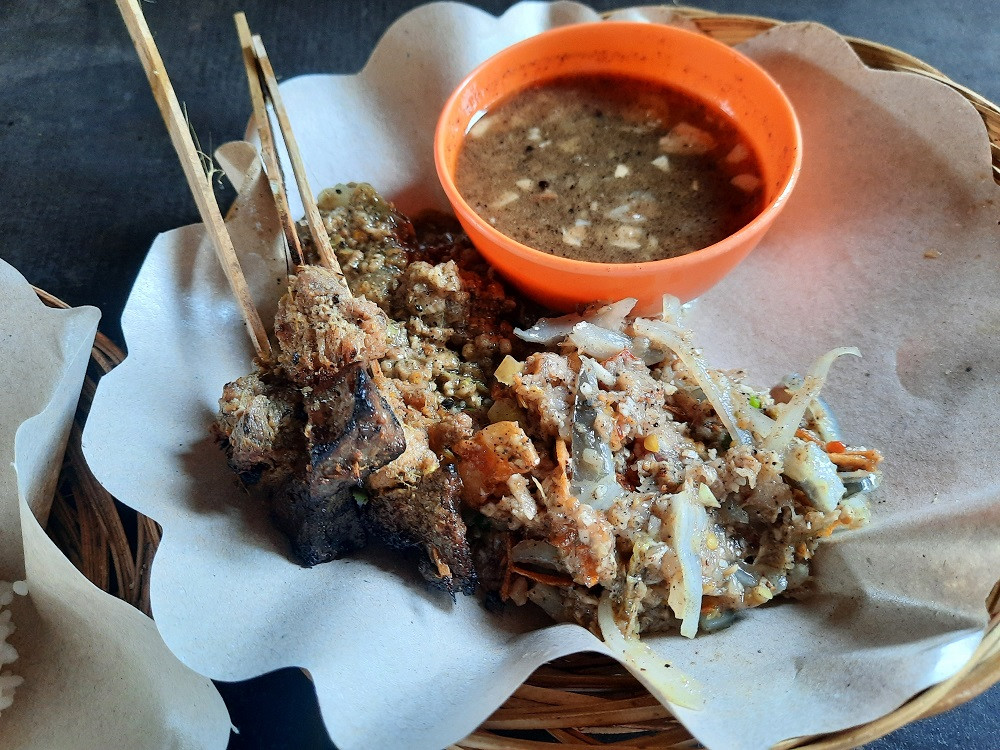 Complex: Though it may seem intimidating, lawar empas is a study in textures, with savory spices that are not at all fiery or offensive. (JP/Raka Ibrahim) (JP/Raka Ibrahim)
A
small warung (stall) serving lawar empas (freshwater softshell turtle) is gaining popularity in Bali. But troubling questions linger about the dish’s inspiration and provenance.
There’s nothing unusual about the scenes that greet you when you step into Adi Dongker’s warung (stall). Located near an art market in the sleepy hamlet of Sukawati – 30 minutes from the Denpasar city center – the eatery is typically thronged with excited foodies.
With his imposing knife and extensive spice rack, Adi’s warung has slowly gained acclaim among connoisseurs of one of Bali’s most beloved dishes: lawar.

A catch-all term for coarsely chopped spices, condiments, and meats thickened with either coconut milk or spiced blood, lawar is enhanced with a protein – often pork or duck.
It may not have the global clout of rendang (Padang spice-braised meat), nasi goreng (fried rice) or the fame of Balinese babi guling (spit-roasted suckling pig), but for the islanders, lawar is a way of life. Literally.
Its presence at traditional ceremonies, weddings and religious rituals is unnegotiable. Village elders and religious leaders alike request different lawar for different rituals and occasions, and making it is a village affair. At its best, lawar is a celebration of each Balinese region’s unique terroir, culture and wisdom.
Over at Adi Dongker’s place, though, a new type of lawar has gained popularity, while harkening back to a controversial past.


More from The Weekender

Machines Without a Beating Heart?
As electric cars reshape the driving experience, enthusiasts wrestle with what makes a car special: the roar of its engine, the quirks of an aging machine, or the memories we leave behind the wheel.

FX Harsono revisits Indonesia’s unresolved past in Ambang/Threshold
The veteran artist reworks familiar images of violence and discrimination to confront a history that continues to shape the present.

Farewell, good breast
A cancer diagnosis brings more than the fear of illness. It raises difficult questions about how to protect those we love while revealing unexpected reserves of tenderness and resilience.