The Jakarta Post
Please Update your browser
Your browser is out of date, and may not be compatible with our website. A list of the most popular web browsers can be found below.
Just click on the icons to get to the download page.


Popular Reads
Top Results
No results found. Please check your search term and try again
Can't find what you're looking for?
View all search results
Popular Reads
Top Results
No results found. Please check your search term and try again
Can't find what you're looking for?
View all search resultsUN sees higher global warming, even in best-case scenario
Despite a rapid expansion of renewable energy and climate policies that are reducing emissions in many countries, the report said "urgent and stringent" cuts were still needed to achieve that best-case outcome.
Change text size
Gift Premium Articles
to Anyone
Share the best of The Jakarta Post with friends, family, or colleagues. As a subscriber, you can gift 3 to 5 articles each month that anyone can read—no subscription needed!
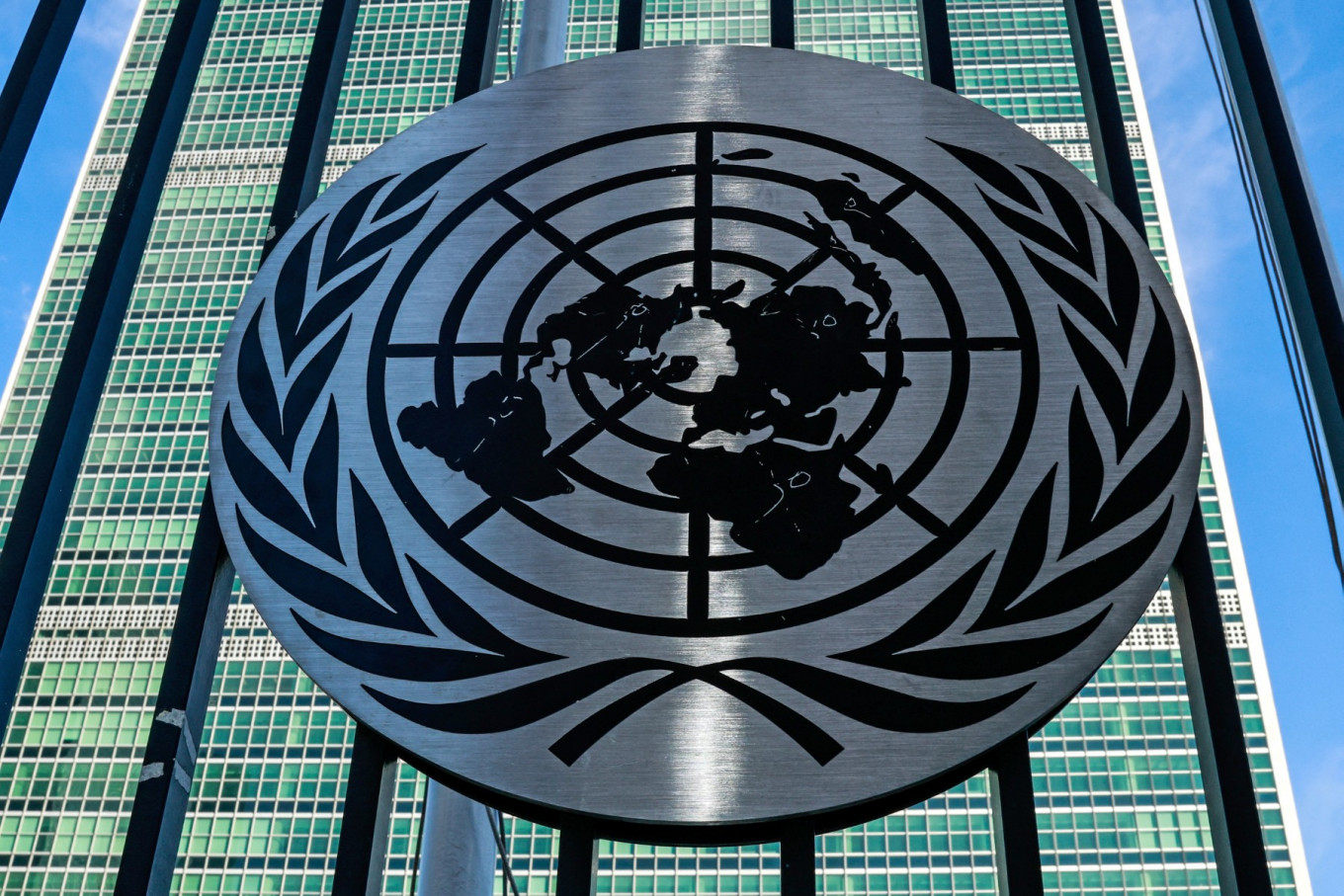 The United Nations (UN) logo is seen on a gate outside the UN headquarters ahead of the United Nations General Assembly (UNGA) in New York on September 21, 2025. (AFP/Kena Betancur)
G
lobal warming is now projected to exceed previous estimates, with even the most optimistic scenario seeing average temperatures rise to 1.7-1.8 degrees Celsius above pre-industrial levels by mid-century, a UN report showed on Wednesday.
Despite a rapid expansion of renewable energy and climate policies that are reducing emissions in many countries, the report said "urgent and stringent" cuts were still needed to achieve that best-case outcome.
The UN Environment Programme's report said greenhouse gas emissions would need to fall 18% from 2025 levels by 2030, 45% by 2035 and 69% by 2040. Current national plans would cut emissions by only 5-8% by 2030 and 11-15% by 2035.

The report projected global warming of 2.8 Celsius by 2100 under current policies, or 2.6 C if countries fully implement existing climate pledges. Both estimates are higher than last year's projections, reflecting the US withdrawal from the Paris Agreement and revised assessments of historical emissions.
As countries prepare for the next round of climate talks in Turkey, COP31, UN Secretary-General António Guterres said it was crucial not to give up on efforts to rein in the emissions that are fueling floods, fires and other natural disasters.
"Overshoot is not surrender. We can still keep it as small and as short as possible – and bring temperatures back below 1.5 degrees by the end of the century," he said.
Under the 2015 Paris Agreement, countries agreed to try to keep the average temperature increase at well below 2 degrees and ideally 1.5 C.
As limiting warming to 1.5 C with no or limited overshoot was no longer considered possible, the UN Environment Programme said its new "lowest possible" overshoot scenario gives roughly a 50% chance that temperatures could return to 1.5 C or below by 2100.
The report said climate plans submitted since last year had made virtually no difference to future warming projections, and that returning to 1.5 C would depend on large-scale carbon removal, the feasibility of which was uncertain.
More from The Weekender

My mother’s magic jar of happiness
In a jar of notes left by her mother, Pallavi finds the small comforts of recovery as they become something to hold on to through the untethering force of grief.

Dari mana?
The question that asks where we are from sounds simple, but between distant homes, shifting identities and the worlds we inhabit on the page, our origins can be harder to pin down.

In between the kingdoms of the well and sick
In a clarifying Third Place between illness and recovery, life becomes both stranger and clearer than it's ever been.