TheJakartaPost
Please Update your browser
Your browser is out of date, and may not be compatible with our website. A list of the most popular web browsers can be found below.
Just click on the icons to get to the download page.


Popular Reads
Top Results
No results found. Please check your search term and try again
Can't find what you're looking for?
View all search results
Popular Reads
Top Results
No results found. Please check your search term and try again
Can't find what you're looking for?
View all search resultsThe triple-return ocean economy
Advancing regenerative ocean solutions provides a hedge against systemic instability by protecting one of Earth’s most powerful stabilizing forces.
Change text size
Gift Premium Articles
to Anyone
Share the best of The Jakarta Post with friends, family, or colleagues. As a subscriber, you can gift 3 to 5 articles each month that anyone can read—no subscription needed!
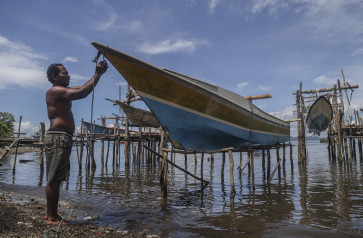
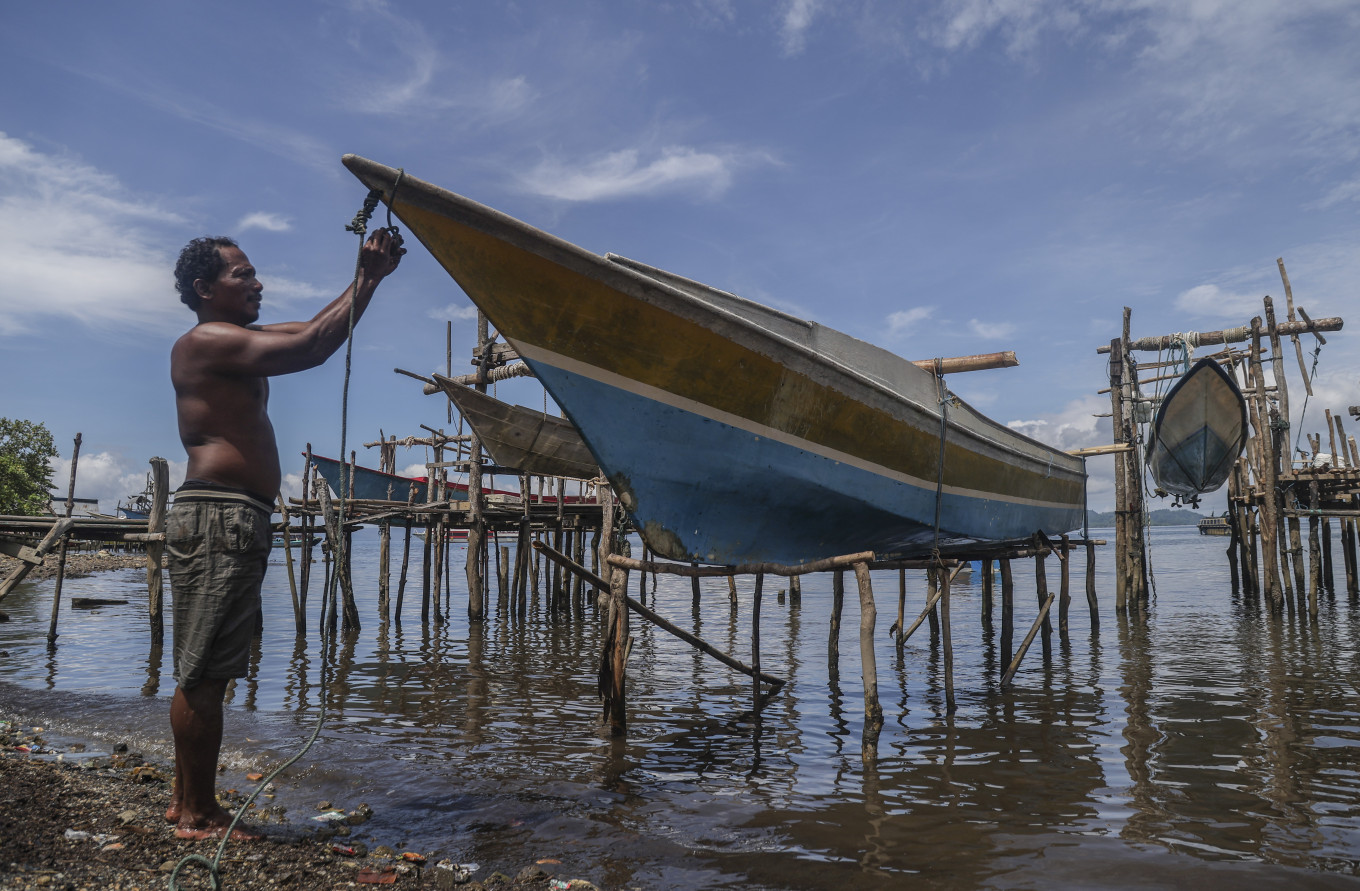 A fisherman parks his fishing boat on Nov. 11, 2025, in Kupal village, on Bacan Island, at coastal area in South Halmahera regency, North Maluku. (Antara/Andri Saputra)
W
hen investors are deciding where to put their money, they ask fundamental questions about the nature of the opportunity, its risks and the expected return. When it comes to the ocean, the answer to the last question is particularly compelling: investing in a resilient and sustainable blue economy offers immense environmental, social and financial returns.
Historically, the ocean has been treated as an open-access resource to be fished, drilled, polluted and, ultimately, forgotten. This outdated view is both dangerous and costly. As the world’s largest carbon sink, a biodiversity hotspot and a climate regulator, the ocean underpins food systems, economic growth and weather stability. Advancing regenerative ocean solutions thus provides a hedge against systemic instability by protecting one of Earth’s most powerful stabilizing forces.
Even though healthy marine ecosystems are productive economic assets that compound in value over time, they continue to be significantly underpriced. According to the Organisation for Economic Co-operation and Development (OECD)’s The Ocean Economy to 2050 report, the ocean economy has doubled in real terms from 1995 to 2020, when it contributed US$2.6 trillion to global gross domestic product and employed more than 100 million people. If it was a country, the ocean would be the world’s fifth-largest economy. Marine sectors that build resilience, including offshore renewables, sustainable aquaculture, carbon sequestration and blue tech, are poised for rapid growth.
Forward-looking investors, recognizing that the ocean is the next frontier of innovation and climate adaptation, will act decisively. In fact, without urgent action, the opportunity may slip through our fingers. According to a report by the World Wide Fund for Nature, in collaboration with the Ocean Risk and Resilience Action Alliance and Metabolic, continued ocean degradation could jeopardize up to $8.5 trillion of value at 66 percent of globally listed companies over the next 15 years. Commercial fisheries, coastal real estate, tourism, maritime infrastructure and ports are among the most exposed industries. A more sustainable trajectory could reduce this risk by more than $5.1 trillion.
Investors tend to respond to climate and biodiversity risks by hedging their losses and closing their positions, causing market downturns. As a result, they have not yet taken advantage of the multi-trillion US dollar opportunity offered by a regenerative ocean economy. Less than 0.01 percent of total investments, less than 1 percent of international philanthropic funding, and less than 1 percent of official development assistance go to the ocean economy. Venture-capital funding has also fallen short: for example, marine renewable-energy startups received only $300 million in 2023, even though scaling floating wind turbines, as well as wave and tidal energy, will require roughly $32 billion in annual investment to help close the emissions gap by 2050.
It is not hard to imagine a future where healthy markets, thriving coastal communities and flourishing ocean ecosystems create a virtuous cycle. Sustainable seafood production is possible only if habitats are protected from industrial pollution, wild catch and aquaculture are practiced responsibly, and consumer behavior is aligned. But investors are stuck behind the “transition wall”, the mismatch between short-term return expectations and long-term value creation. Institutional capital is currently constrained by seven- to ten-year horizons and risk-averse structures.

Against this backdrop, high-net-worth individuals, whose wealth reached $90.5 trillion in 2024, represent an untapped investor base. Moreover, baby boomers are expected to transfer $83 trillion to their children and grandchildren over the next two decades, reshaping asset allocation. Many of these individuals manage their wealth through family offices, which are well-positioned to deploy capital across the spectrum, from philanthropic to market-rate, and have the tools and flexibility to generate returns while driving positive change in the ocean economy.