The Jakarta Post
Please Update your browser
Your browser is out of date, and may not be compatible with our website. A list of the most popular web browsers can be found below.
Just click on the icons to get to the download page.


Popular Reads
Top Results
No results found. Please check your search term and try again
Can't find what you're looking for?
View all search results
Popular Reads
Top Results
No results found. Please check your search term and try again
Can't find what you're looking for?
View all search resultsHow presidential clemency fuels impunity
Prabowo’s increasingly reckless use of pardons reflects a troubling pattern of presidential overreach.
Change text size
Gift Premium Articles
to Anyone
Share the best of The Jakarta Post with friends, family, or colleagues. As a subscriber, you can gift 3 to 5 articles each month that anyone can read—no subscription needed!
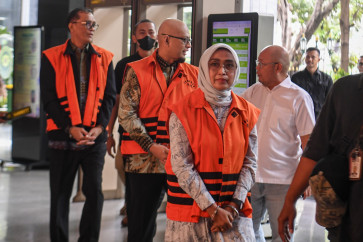
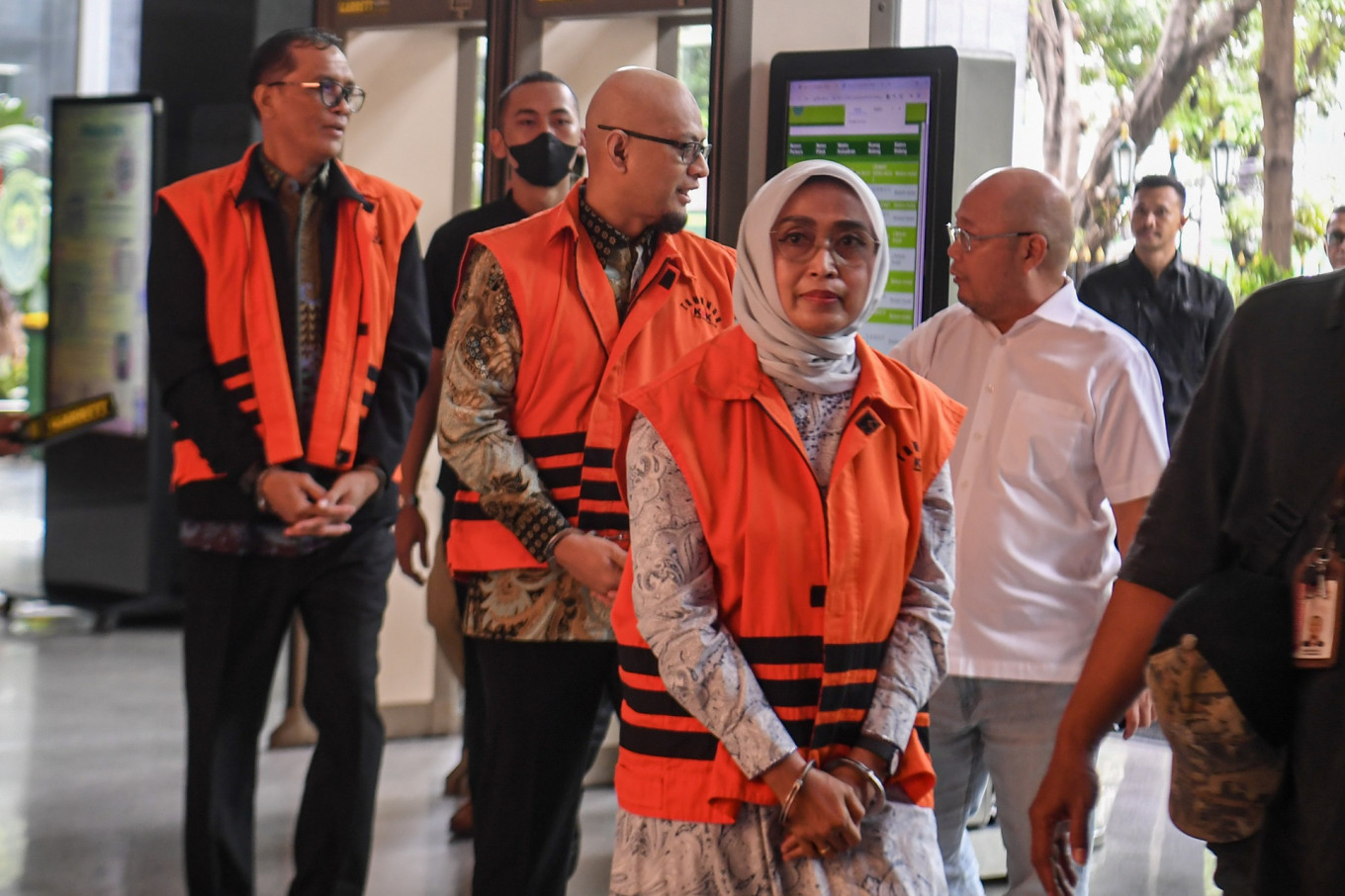 Former executives of state-owned ferry operator PT ASDP Ferry Indonesia, namely president director Ira Puspadewi (second right), planning and development diretor Harry Muhammad Adhi Caksono (third left) and commercial and service director Muhammad Yusuf Hadi, walk into the courtroom of the Jakarta Corruption Court in Jakarta ahead of their verdict hearing on Nov. 20, 2025. (Antara/Muhammad Adimaja)
L
ike a benevolent Santa Claus, President Prabowo Subianto has once again extended his generosity to those convicted of corruption. Most recently, exercising his constitutional authority, he granted rehabilitation to three former executives of state-owned ferry operator PT ASDP.
Before that, the public was likewise taken aback when he issued pardons to two of his political opponents, Tom Lembong and Hasto Kristiyanto. Perhaps for this magnanimity, Prabowo may soon be awarded a special hero’s title, a gesture that corrupt actors themselves would likely applaud.
As the president of all Indonesians, he has every right to use this prerogative. Perhaps the former Army's Special Forces (Kopassus) general sensed foul play in a haphazard legal process. It is also possible that he heard the public’s growing frustration over the arbitrary enforcement of the law. Since the Corruption Eradication Commission (KPK) and the Attorney General’s Office (AGO) are viewed as failing to deliver genuine justice, he might believe he is justified in punishing them with the strongest blade of executive authority, which is the presidential prerogative.
The politics of clemency is not new in any constitutional democracy. Around the world, it is often used as a tool of political bargaining or as a quiet weapon to shield allies or silence opponents.
Peru’s former president Pedro Kuczynski faced fierce criticism after pardoning Alberto Fujimori, a former president and high-profile corruption convict. Many viewed the move as a political deal to protect Kuczynski from impeachment. In Brazil, former president Michel Temer issued a decree that granted clemency to corruption convicts. More recently, Donald Trump’s series of politically charged pardons in the United States has benefited several of his close associates.
Because this instrument is used so frequently, Transparency International has observed that presidential clemency often becomes a pathway to impunity, especially for corruption offenders.

Yet clemency should be reserved only for truly exceptional situations. This extraordinary relief should never function as a mechanism that appears to forgive corruption or allow its perpetrators to avoid meaningful punishment.