TheJakartaPost
Please Update your browser
Your browser is out of date, and may not be compatible with our website. A list of the most popular web browsers can be found below.
Just click on the icons to get to the download page.


Popular Reads
Top Results
No results found. Please check your search term and try again
Can't find what you're looking for?
View all search results
Popular Reads
Top Results
No results found. Please check your search term and try again
Can't find what you're looking for?
View all search resultsAnalysis: When executives criminalized for doing their jobs
Change text size
Gift Premium Articles
to Anyone
Share the best of The Jakarta Post with friends, family, or colleagues. As a subscriber, you can gift 3 to 5 articles each month that anyone can read—no subscription needed!
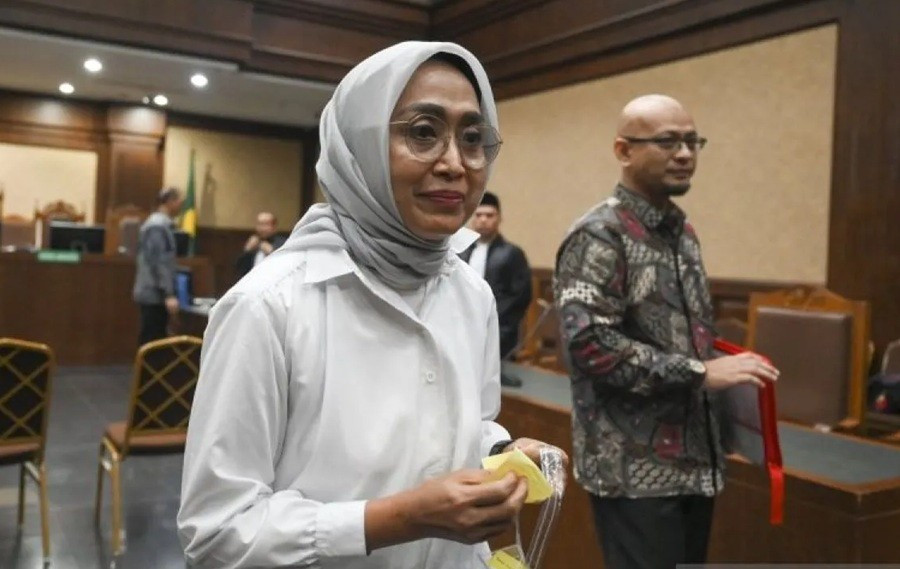 Defendants Ira Puspadewi (left), former president director of PT ASDP Indonesia Ferry, and company director Harry Muhammad Adhi Caksono leave the courtroom after their indictment at the Jakarta Corruption Court on July 10, 2025 (Antara/Hafidz Mubarak A)
F
ollowing public outcry, President Prabowo Subianto granted rehabilitation to three former executives of state-owned enterprise (SOE) PT ASDP Indonesia Ferry convicted in the corruption case surrounding the company's acquisition of ferry operator PT Jembatan Nusantara (JN). For many observers, the prosecution of former president director Ira Puspadewi and two other executives epitomize the criminalization of business judgment.
Judges had sentenced Ira, former commercial and service director Muhammad Yusuf Hadi, and former planning and development director Harry Muhammad Adhi Caksono to between four and four and a half years in prison for allegedly enriching JN's owners by Rp 1.25 trillion (US$75 million). The severity of the punishment shocked the public and prompted scrutiny from the House of Representatives. Their names have been cleared, but would corporate decisions continue to be dragged into a legal maze?
The acquisition was framed as indirect corruption, but ASDP's purchase of JN was far from reckless. The company paid Rp 1.27 trillion based on a valuation of Rp 1.34 trillion. The deal carried strategic value for ASDP and was approved at every level: the board of directors (BOD), board of commissioners (BOC) and the then-SOEs minister.
The process also involved oversight from the deputy attorney general for state administration and the Development Finance Comptroller (BPKP), as well as assessments from accredited consultants and appraisers, including Deloitte, PwC, PT BKI and PT SMI. Afterwards, ASDP's market share jumped by more than 33 percent, and its fleet expanded to 126 vessels after gaining operating permits for 53 ships at a time when a moratorium made new route permits hard to obtain.
However, the Corruption Eradication Commission (KPK) argued based on its own valuation that the acquisition constituted a total loss to the state, and blamed the ASDP board's decision-making. It claimed JN's finances were deteriorating and that the company's assets were overstated, noting that over 95 percent of its value came from vessels more than 30 years old with allegedly inflated book values. KPK said that ASDP's leadership had failed to fully consider these risks.
The heart of the controversy lies in a staggering valuation gap, with KPK auditors concluding JN was worth just Rp 19 billion. The state-loss calculation was conducted internally by the KPK and was completed three months after the executives had already been detained.

The KPK's valuation was much lower because the vessels were treated as scrap metal, assessed solely by weight and scrap prices. The defendants disputed this method, arguing that the ships were seaworthy and actively operational in ASDP's network. Ultimately, the verdict hinged on this valuation clash. Notably, presiding Judge Sunoto issued a dissenting opinion.