The Jakarta Post
Please Update your browser
Your browser is out of date, and may not be compatible with our website. A list of the most popular web browsers can be found below.
Just click on the icons to get to the download page.


Popular Reads
Top Results
No results found. Please check your search term and try again
Can't find what you're looking for?
View all search results
Popular Reads
Top Results
No results found. Please check your search term and try again
Can't find what you're looking for?
View all search resultsSumatra disasters reveal our climate policy failures
These disasters underscore that Indonesia’s ecological, political and institutional systems are no longer adequate for the climate realities of today.
Change text size
Gift Premium Articles
to Anyone
Share the best of The Jakarta Post with friends, family, or colleagues. As a subscriber, you can gift 3 to 5 articles each month that anyone can read—no subscription needed!
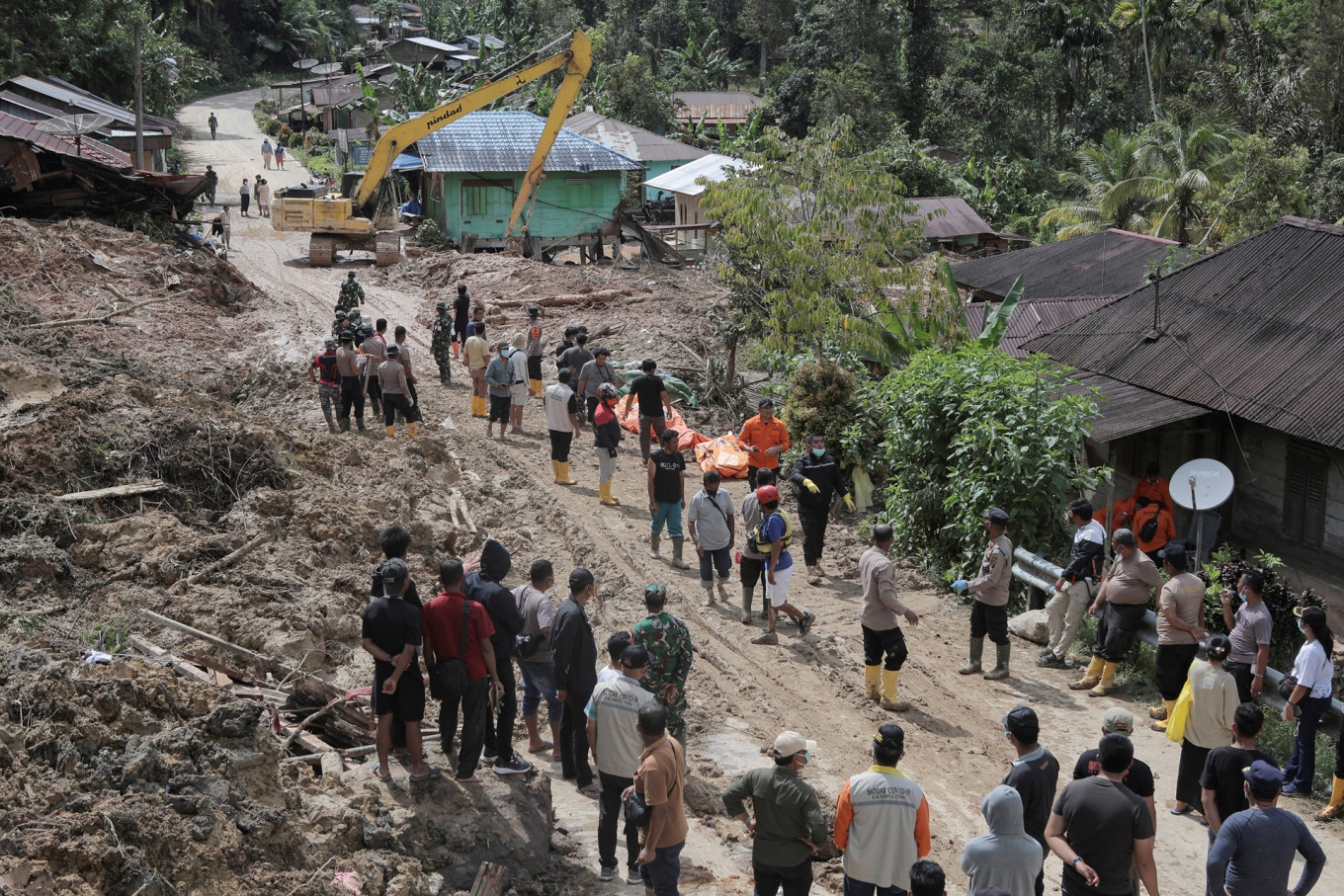 Rescue teams work in a search and rescueoperation in an area hit by deadly landslides following heavy rains in Sibalanga, North Tapanuli, North Sumatra, on Nov. 29, 2025. (Reuters/Agatha Capri)
T
he devastating floods and landslides that recently swept across West Sumatra, North Sumatra and Aceh have left behind more than flooded homes, broken roads and grieving families. They can no longer be dismissed as seasonal tragedies or the inevitable outcome of extreme rainfall.
The scale and speed of destruction reveal a deeper structural failure in how Indonesia manages its landscapes and governs its climate risks. These disasters underscore that Indonesia’s ecological, political and institutional systems are no longer adequate for the climate realities of today.
Sumatra has always been geographically fragile. The Bukit Barisan mountain range, stretching 1,700 kilometers from Aceh to Lampung, is defined by steep slopes, erodible volcanic soils and short, fast-flowing rivers that fall sharply from upland forests to dense lowlands. In such terrain, even moderate rainfall can trigger slope failures or cause rivers to swell abruptly, demanding disciplined watershed management and land-use decisions.
Yet, the region is increasingly unable to absorb what it once handled with relative resilience. Floods and landslides today are no longer proportionate to rainfall. They travel faster, destroy more and recur with alarming frequency.
Climate change intensifies this pressure. Indonesia’s meteorological observations increasingly mirror global scientific projections, including those of the IPCC: Extreme rainfall events are becoming more frequent and intense, while anomalous seasonal shifts are becoming the “new normal”.
But climate change is just an amplifier, not the architect, of catastrophe. The decisive factor, the reason why storms that once caused manageable flooding now trigger deadly flash floods and widespread landslides, lies in long-term human actions. It is shaped by the way land is managed, by the condition of forests and watersheds, and by the institutions responsible for protecting them.

In other words, meteorology, interacting with geography, may provide the hazard, but governance determines whether it becomes a catastrophe. Although torrential rainfall may trigger disasters, the underlying vulnerabilities stem from long-standing policy failures at both national and regional levels.