The Jakarta Post
Please Update your browser
Your browser is out of date, and may not be compatible with our website. A list of the most popular web browsers can be found below.
Just click on the icons to get to the download page.


Popular Reads
Top Results
No results found. Please check your search term and try again
Can't find what you're looking for?
View all search results
Popular Reads
Top Results
No results found. Please check your search term and try again
Can't find what you're looking for?
View all search resultsASEAN floods 2025: Governance at a crossroads
The flooding that peaked last month across the region illustrates a fundamental truth: disaster risk reduction is inextricably tied to governance, including economic policies, and ASEAN must tackle climate issues as a collective agenda.
Change text size
Gift Premium Articles
to Anyone
Share the best of The Jakarta Post with friends, family, or colleagues. As a subscriber, you can gift 3 to 5 articles each month that anyone can read—no subscription needed!
 Set as preferred source
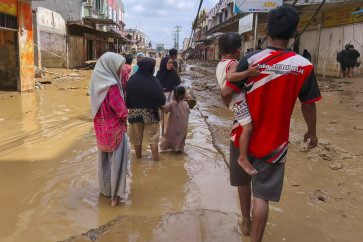
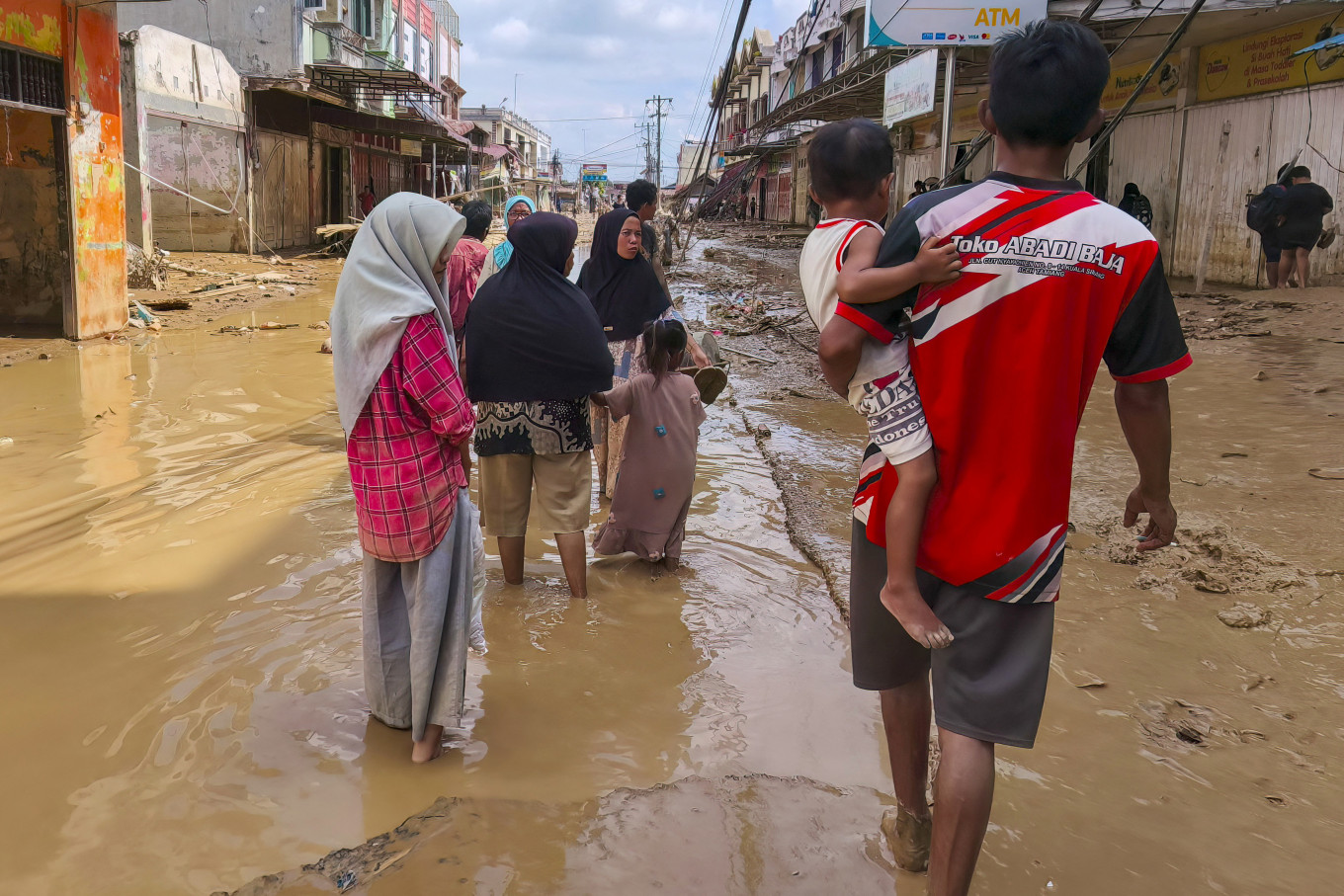 Flood-affected residents walk along a muddy road in Kuala Simpang village in Aceh Tamiang, North Sumatra on Dec. 2, 2025. (AFP/Iwan Gunadi Batubara)
T
he floods that devastated Indonesia, Malaysia, Vietnam, the Philippines and Thailand in late 2025 were not simply natural disasters. They were governance failures.
What appeared as torrents of water and mud were in fact the visible consequence of decades of ecological neglect, fragmented policies and a development model that consistently sacrifices resilience for short-term growth.
Extreme rainfall linked to Tropical Cyclone Senyar 95B triggered landslides in Aceh, North Sumatra and West Sumatra, killing more than 400 people and displacing over 180,000. Malaysia declared its worst flooding in 15 years while Vietnam, the Philippines and Thailand saw rivers overflow and agricultural lands submerged.
These events were not isolated accidents. They were regional shocks exposing the fragility of governance systems in Southeast Asia.
The problem is not only climate extremes but also policy extremes. Forests cleared for timber, wetlands converted into housing estates and infrastructure built without risk-sensitive planning have stripped ecosystems of their natural buffers. Each country continues to pursue extraction and expansion, fearing loss of competitiveness if it exercises restraint while its neighbors do not. The result is collective vulnerability.
In game theory terms, ASEAN is locked in the prisoner’s dilemma. Every nation knows that restraint, such as protecting forests, enforcing land use regulations and investing in adaptation, would reduce disaster risk. Yet no country dares to act alone. The fear of losing economic advantage drives each to continue exploiting, even as the collective outcome worsens.

This is why the flooding in Indonesia coincided with the floods in Malaysia and why the agricultural losses in Thailand mirror those in Vietnam. Climate change does not respect borders, and neither does ecological mismanagement.