TheJakartaPost
Please Update your browser
Your browser is out of date, and may not be compatible with our website. A list of the most popular web browsers can be found below.
Just click on the icons to get to the download page.


Popular Reads
Top Results
No results found. Please check your search term and try again
Can't find what you're looking for?
View all search results
Popular Reads
Top Results
No results found. Please check your search term and try again
Can't find what you're looking for?
View all search resultsPhilanthropies shift focus to scale, transparency, measurable outcomes
Philanthropies can begin by designing learning systems that move beyond counting outputs to understanding outcomes.
Change text size
Gift Premium Articles
to Anyone
Share the best of The Jakarta Post with friends, family, or colleagues. As a subscriber, you can gift 3 to 5 articles each month that anyone can read—no subscription needed!
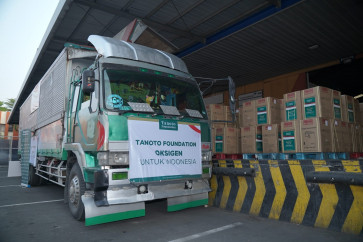
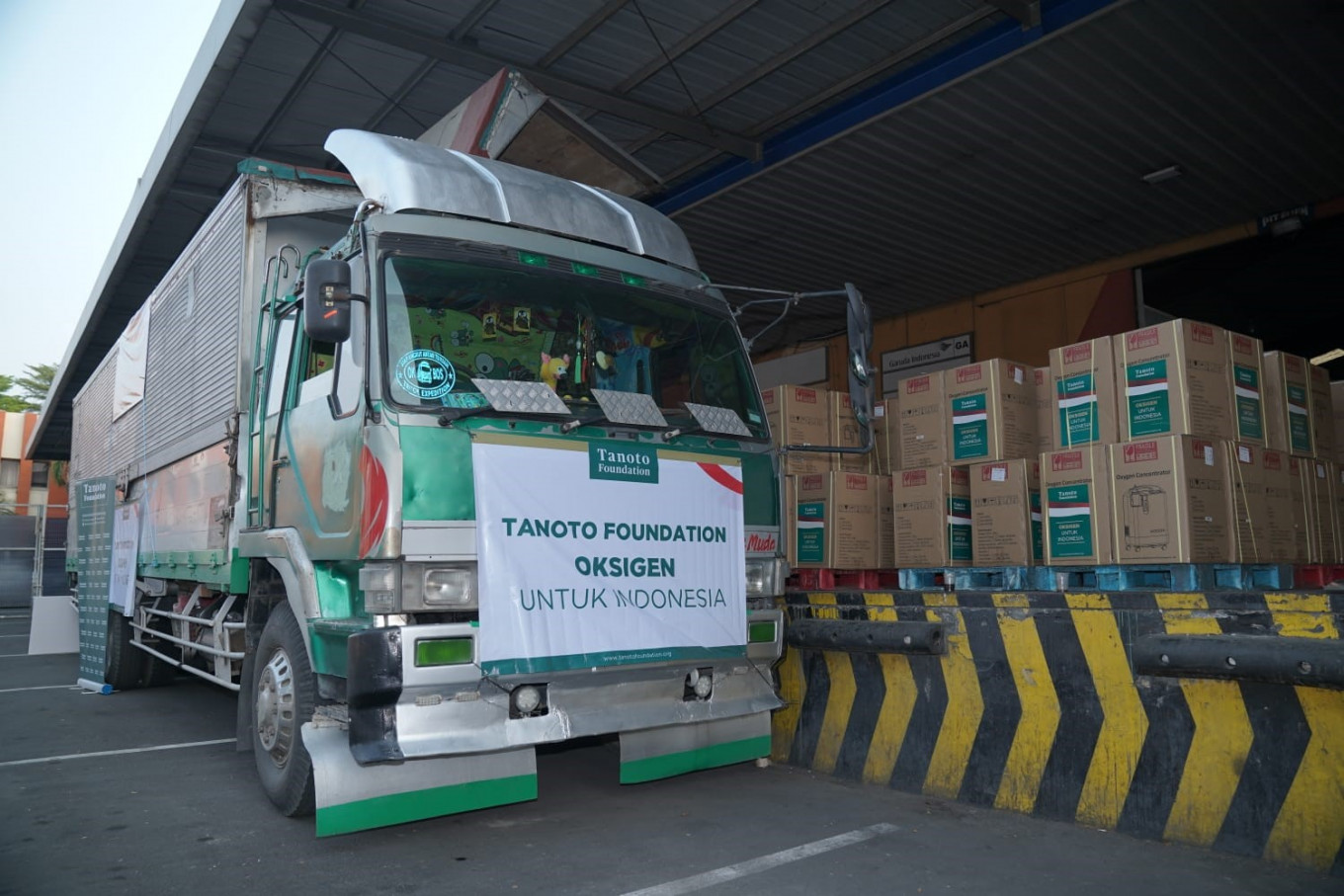 A truck loaded with a donation of oxygen concentrators on March 8, 2021, from the Tanoto Foundation leaves a freight depot at Soekarno-Hatta International Airport, Banten. (Courtesy of Tanoto Foundation)
I
ndonesia’s philanthropic sector stands at an inflection point. With an estimated Rp 600 trillion (about US$38 billion) in annual potential, the question is no longer about the scale of giving, but about its impact. How can funders build on their grant making impact to catalyze transformative change?
Some organizations are already showing what’s possible. Tanoto Foundation, for instance, has been funding rigorous impact evaluations of their PINTAR education program and partnering with Statistics Indonesia to develop better measurement tools for early childhood development. These partnerships go beyond research, they're building the knowledge infrastructure that helps policymakers design better programs, practitioners improve their work and funders invest more strategically.
The next opportunity is to mainstream this approach across Indonesia’s philanthropic ecosystem and scale it to implementing organizations of all sizes working in sectors vital to the country’s future, from education and climate resilience to healthcare and economic empowerment. By embracing their role as "evidence-builders", a strategic function identified by Filantropi Indonesia, philanthropic organizations can cultivate a culture of learning: constantly evaluating what works and what does not, adapting strategies based on evidence, and sharing insights across the sector.
What does this culture of learning look like in practice? It starts with a fundamental shift: moving from measuring outputs to measuring outcomes, from counting activities to understanding change.
Many philanthropies track outputs such as lives touched, grants awarded or clinics built, but true impact means asking if the important outcomes are changing as a result.
Did students improve literacy and numeracy? How many families escaped poverty? Do the benefits last beyond the program's end? These questions demand rigorous measurement, but they are essential for understanding what truly works.

Philanthropies can begin by designing learning systems that move beyond counting outputs to understanding outcomes. These systems do not immediately require complex research, they can start with a few clear questions: What change do we want to see, and how will we know if it happened?