TheJakartaPost
Please Update your browser
Your browser is out of date, and may not be compatible with our website. A list of the most popular web browsers can be found below.
Just click on the icons to get to the download page.


Popular Reads
Top Results
No results found. Please check your search term and try again
Can't find what you're looking for?
View all search results
Popular Reads
Top Results
No results found. Please check your search term and try again
Can't find what you're looking for?
View all search resultsCatastrophe in the suburbs
Earlier this month, a fire in a storage facility holding highly toxic pesticide started a chain of reactions that ended up with a massive fish kill along a 22-kilometer stretch of the Cisadane River, with local authorities in many municipalities in South Tangerang, Banten, issuing warnings to residents against using water drawn from the river.
Change text size
Gift Premium Articles
to Anyone
Share the best of The Jakarta Post with friends, family, or colleagues. As a subscriber, you can gift 3 to 5 articles each month that anyone can read—no subscription needed!
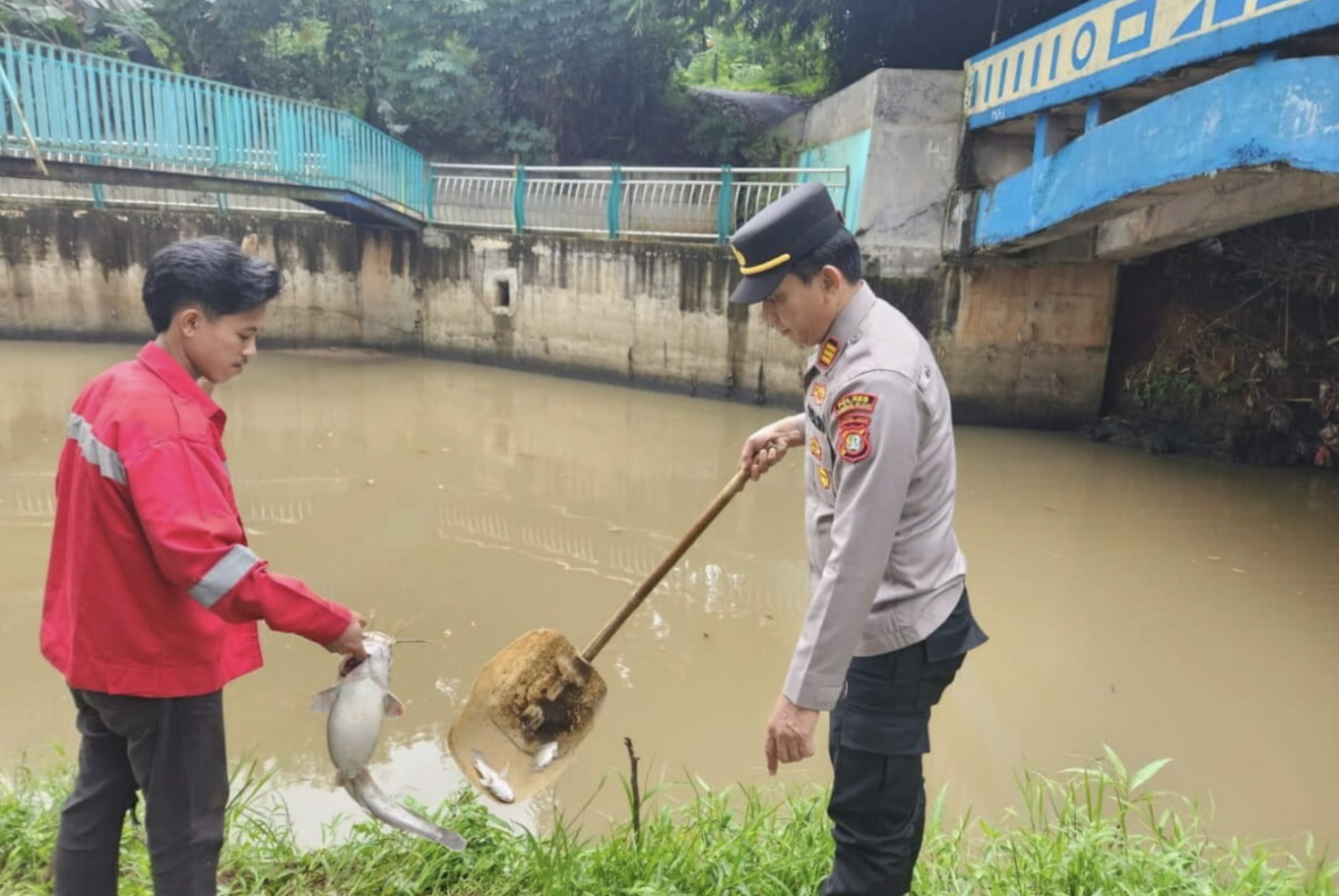 A police officer and local resident in South Tangerang collect dead fish from the Cisadane river following an industrial accident in early February 2026. (The Jakarta Post/Mongabay)
It is the stuff of nightmares that a scriptwriter might use to kick off a zombie movie.
Earlier this month, a fire in a storage facility holding highly toxic pesticide started a chain of reactions that ended up with a massive fish kill along a 22-kilometer stretch of the Cisadane River, with local authorities in many municipalities in South Tangerang, Banten, issuing warnings to residents against using water drawn from the river.
The precaution proved to be correct especially after a preliminary probe by the Environment Ministry found that more than 20 tonnes of highly toxic cypermetrin and profenofos, two chemical compounds mostly used in weedkiller solutions, were released into the Cisadane during the fire.
But the situation could have been much worse, if not downright apocalyptic, if the fire had struck a mini nuclear reactor with a capacity of 30 megawatts run by the National Nuclear Agency (BATAN), located only 3 kilometers from Taman Tekno, the site of last week’s fire.
While the fire at the Taman Tekno facility may have been catastrophic enough and was certainly one of the most serious industrial accidents taking place in Greater Jakarta in recent years, for a majority of people who have spent years living in the affluent neighborhoods of Bumi Serpong Damai (BSD) and in the greater South Tangerang area, the incident was just another nuisance.
Residents of South Tangerang, including those living in BSD and Gading Serpong, may not have experienced a nuclear meltdown but in the past few years they have dealt with severe environmental problems that have taken a toll on their physical and mental health.

South Tangerang has consistently ranked as among the municipalities in the Greater Jakarta area with the worst air quality, with the district of Serpong topping the list with an air quality index (AQI) frequently ranked as very poor.