The Jakarta Post
Please Update your browser
Your browser is out of date, and may not be compatible with our website. A list of the most popular web browsers can be found below.
Just click on the icons to get to the download page.


Popular Reads
Top Results
No results found. Please check your search term and try again
Can't find what you're looking for?
View all search results
Popular Reads
Top Results
No results found. Please check your search term and try again
Can't find what you're looking for?
View all search resultsA bittersweet victory
The acquittal of four activists is a rare victory for Indonesian democracy, but the long battle to protect free speech from state suppression is far from over.
Change text size
Gift Premium Articles
to Anyone
Share the best of The Jakarta Post with friends, family, or colleagues. As a subscriber, you can gift 3 to 5 articles each month that anyone can read—no subscription needed!
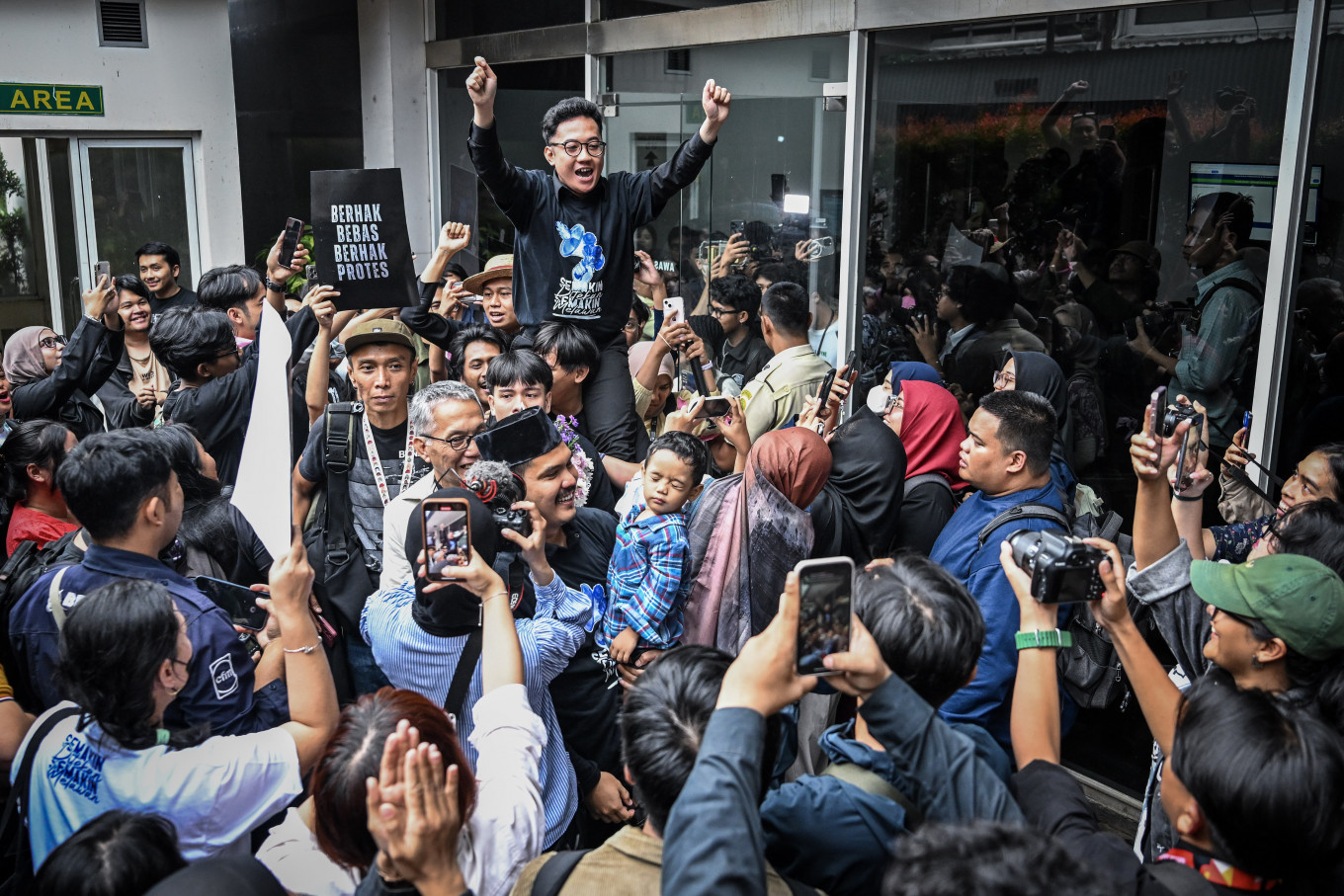 Delpedro Marhaen celebrates with supporters on Friday, March 6, 2026, after he and others were acquitted at the Central Jakarta District Court in Central Jakarta. (Antara/Bayu Pratama S)
W
hen the panel of judges at the Central Jakarta District Court read the verdict acquitting four activists of all charges related to incitement of the August 2025 riots last week, the courtroom erupted in joy, with some hailing the decision as a blessing of Ramadan. While the acquittal offers Indonesian democracy a glimmer of hope, civil liberties will still face a long struggle before they can truly thrive in the country.
Lokataru Foundation’s Delpedro Marhaen and Muzaffar Salim, Gejayan Memanggil movement’s Syahdan Husein, and Riau University student Khariq Anhar were all found not guilty of inciting hatred and hostility among the public, including minors, toward the government during the widespread protests and unrest in August last year. The nationwide demonstrations are considered the largest protests President Prabowo Subianto has faced since taking office in October 2024.
The judges ruled that the activists' social media posts did not deliberately cause protests to escalate into riots, nor did they incite individuals to vandalize public facilities. The posts, according to the bench, were an expression of freedom of speech that should not be restricted through criminal law in a democratic, rule-of-law country such as Indonesia.
While the prosecution and trial against Delpedro and his colleagues should never have happened in the first place, we laud the judges for providing a breath of fresh air amid a series of setbacks for the country’s declining democracy. We further urge for similar acquittals to be granted to the hundreds of others currently standing trial for voicing their grievances and criticisms of the government.
The aftermath of the nationwide August unrest, triggered by public protests against lawmakers’ lavish allowances and lack of empathy amid economic hardships, has further exposed the erosion of Indonesian democracy, marked by police brutality and a massive crackdown against online critics.
More than 7,000 people were arrested by the police in various cities in what human rights defenders called the “largest state suppression” since the 1998 reform movement. While most were released without charges, around 1,000 were named suspects; approximately 700 of these were detained specifically for posting content critical of the authorities.

With hundreds of others still facing charges related to the August unrest, judges handling these cases must deliver justice and clear them of all suspicion, especially those arrested simply for airing their discontent without being involved in any violence.