TheJakartaPost
Please Update your browser
Your browser is out of date, and may not be compatible with our website. A list of the most popular web browsers can be found below.
Just click on the icons to get to the download page.


Popular Reads
Top Results
No results found. Please check your search term and try again
Can't find what you're looking for?
View all search results
Popular Reads
Top Results
No results found. Please check your search term and try again
Can't find what you're looking for?
View all search resultsAnalysis: Domestic worker law addresses but won’t end modern slavery
Change text size
Gift Premium Articles
to Anyone
Share the best of The Jakarta Post with friends, family, or colleagues. As a subscriber, you can gift 3 to 5 articles each month that anyone can read—no subscription needed!
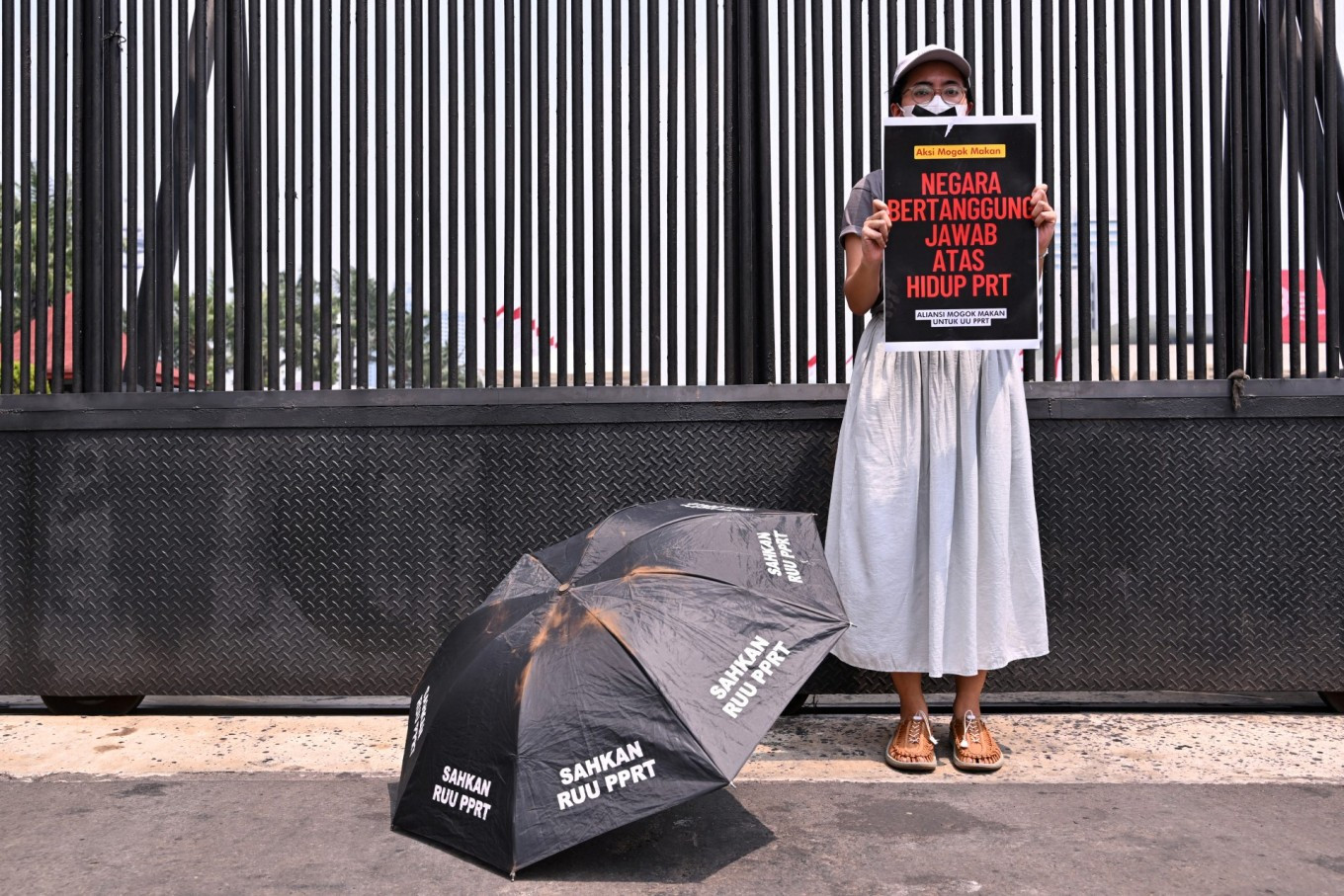 An activist takes part in a hunger strike outside the Senayan Legislative Complex in Central Jakarta on Aug. 14, 2023, as part of a protest demanding lawmakers pass the long-awaited domestic workers protection bill. (AFP/Adek Berry))
D
omestic workers work long hours and do all kind of chores for low wages and have little or no legal recourse in case of harassment or abuse, as they are completely at the mercy of their employers, or “masters” in this system of modern slavery that persists in Indonesia.
At least, that was until the House of Representatives passed the Law on Domestic Workers Protection (UU PPRT) on April 21. Among the rights and protections it guarantees, millions of domestic workers, mostly women, will gain legal status and recognition for the first time.
The Domestic Workers Protection Bill had lingered at the House for more than 22 years, indicative of a lack of enthusiasm and sense of urgency, not only on the part of legislators but also the general public. President Prabowo Subianto, in his Labor Day address last year, promised the bill would be passed within three months.
The House missed that deadline but enacted the law in time for May Day 2026 with little fanfare, to judge by the scant attention mainstream media gave the milestone legislation. Nevertheless, the new law could impact the way millions of families across the country treat their servants. And therein lies the rub.
While the law lists the various rights and obligations that must be met by all stakeholders, employers, workers and related businesses such as home cleaning services, it falls short on details related to enforcement and more importantly, oversight.
For example, the law mandates a formal employment agreement that outlines the employee’s rights and the employer’s obligations. But any negotiation between the two sides would involve an unequal power relationship and most likely result in an unfair contract for the domestic worker.

Furthermore, the law merely stipulates entitlements such as “decent wages”, “humane working hours”, “breaks and days off” and “holidays” to be determined by mutual agreement and does not set a legal framework.