The Jakarta Post
Please Update your browser
Your browser is out of date, and may not be compatible with our website. A list of the most popular web browsers can be found below.
Just click on the icons to get to the download page.


Popular Reads
Top Results
No results found. Please check your search term and try again
Can't find what you're looking for?
View all search results
Popular Reads
Top Results
No results found. Please check your search term and try again
Can't find what you're looking for?
View all search resultsThe fragile state of women’s rights: From the Bekasi tragedy to the denial of 1998 rapes
As we tout a new law to protect the vulnerable, the dismissal of historical atrocities and the stripping of political quotas reveal a nation still deeply invested in making its women disappear.
Change text size
Gift Premium Articles
to Anyone
Share the best of The Jakarta Post with friends, family, or colleagues. As a subscriber, you can gift 3 to 5 articles each month that anyone can read—no subscription needed!
 Set as preferred source
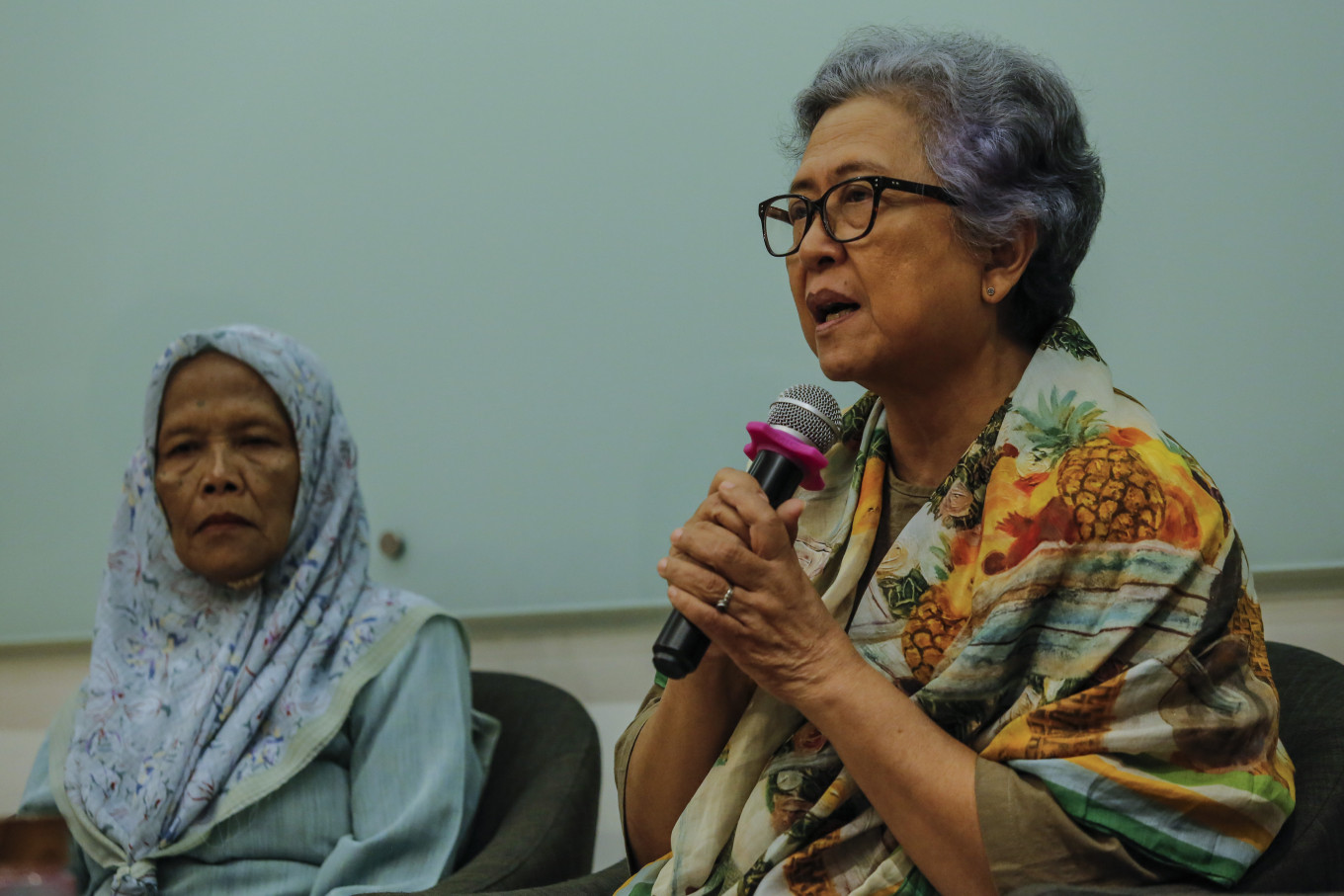 Ita Fatia Nadia (right), advocate for May 1998 rape victims, and plaintiff Kusmiyati speak at a press conference on April 7 at Amnesty International Indonesia in Jakarta. (Antara/Asprilla Dwi Adha)
I
t should not take a horrific train accident in Bekasi, West Java, for us to rethink the safety of women who choose female-only carriages to ensure a trip home free from harassment. Yet, physical safety remains as elusive as legal dignity. While women appear more valuable on paper—following the passage of the long-awaited Domestic Workers Protection Law on Kartini Day, April 21—the reality in this male-dominated society remains starkly different.
Women workers, domestic helpers and activists greeted the new law with hugs and tears from the balcony of the House of Representatives’ plenary hall, marking the end of a 22 year struggle. This legislation officially recognizes domestic work as valuable labor. It rejects the patriarchal standard that domestic work is merely "natural" unpaid labor or a requirement to keep a house "spic and span" and children disciplined. Historically, failure to meet these standards has too often been used to justify violence against women.
Ending the sense of entitlement to cheap domestic help—a remnant of our feudal past— will require extensive campaigning. Nevertheless, the law is a vital step toward instilling shared responsibility for home and family care, while ensuring domestic workers receive at least the minimum wage. Resistance is expected to increase, particularly from employers accustomed to the live-in maid system.
However, on the same day this history was written, it became clear that marginalized women remain disposable and denied their voices. The Jakarta State Administrative Court dismissed a lawsuit filed against Culture Minister Fadli Zon, who had questioned the official findings of the May 1998 riots regarding mass rapes.
The Civil Coalition Against Impunity will appeal, saying that if the ruling stands, it effectively erases the suffering of the urban poor and ethnic Chinese women who were killed, shot or gang-raped during the tragedy. Among them was 11-year-old Fransisca who, according to volunteer Fatia Nadia, was tortured and killed alongside her mother and sibling.
Gruelling struggles have secured greater legal protection and recognition for girls and women, as politicians polish their image with pro-women gestures.

Apart from the latest legislation on domestic workers, other examples are the 2017 ban on child marriage through the higher legal marrying age and the law against sexual violence.