The Jakarta Post
Please Update your browser
Your browser is out of date, and may not be compatible with our website. A list of the most popular web browsers can be found below.
Just click on the icons to get to the download page.


Popular Reads
Top Results
No results found. Please check your search term and try again
Can't find what you're looking for?
View all search results
Popular Reads
Top Results
No results found. Please check your search term and try again
Can't find what you're looking for?
View all search resultsHomelessness: A growing challenge in an aging Malaysia
Rising living costs, increasing healthcare expenses and the absence of regular income can quickly push vulnerable elderly individuals into poverty.
Change text size
Gift Premium Articles
to Anyone
Share the best of The Jakarta Post with friends, family, or colleagues. As a subscriber, you can gift 3 to 5 articles each month that anyone can read—no subscription needed!
 Set as preferred source
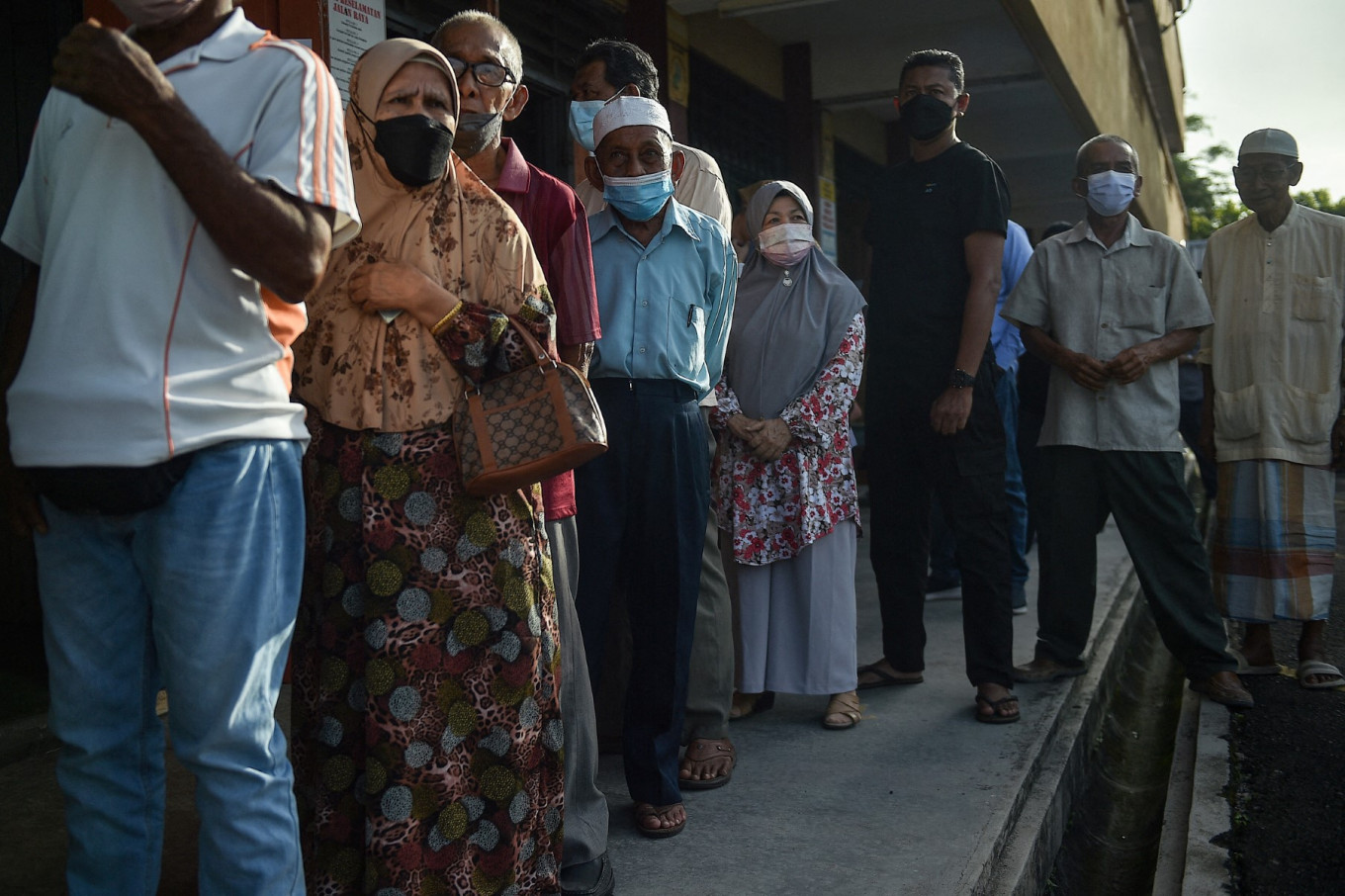 Voters line up at a polling station during the general election in Permatang Pauh, Malaysia's Penang state, on Nov. 19, 2022. (AFP/Arif Kartono)
Malaysia is on the threshold of becoming an aged nation.
Advances in health care, improved living standards and better nutrition have enabled Malaysians to live longer than previous generations.
While this is a positive achievement, it also presents new social challenges, one of which is the growing number of homeless and destitute senior citizens.
For many Malaysians, old age is expected to be a period of rest, dignity and family support after decades of hard work.
Unfortunately, this is not the reality for everyone. Some elderly persons are forced to live on the streets, sleep in public places, seek refuge in temporary shelters or depend on the generosity of strangers for their daily survival.
The plight of homeless senior citizens is often hidden from public view.

While some may be visible in city centers, many others remain unnoticed in abandoned buildings, places of worship, bus stations or temporary accommodation provided by charitable organizations.
Their circumstances may differ, but their challenges are remarkably similar.
One of the main causes of elderly homelessness is financial insecurity.
Many senior citizens spent their working years in low-paying jobs or the informal sector and entered retirement with little or no savings.
Rising living costs, increasing healthcare expenses and the absence of regular income can quickly push vulnerable elderly individuals into poverty.
Family circumstances also play a significant role.
The traditional extended family system, which once provided support for aging parents, is gradually changing.
Urbanization, migration for employment, smaller family sizes and economic pressures have made it more difficult for some families to care for elderly parents.
In unfortunate cases, elderly persons may experience neglect, abandonment or social isolation.
Health issues further compound the problem.
Homelessness among senior citizens should not be viewed merely as a welfare concern. It is also a matter of public health, social justice and human dignity.
Older persons are more likely to suffer from chronic illnesses, disabilities and mobility limitations.
Without stable housing, managing medical conditions becomes increasingly difficult.
A simple illness that could be treated easily may become a serious health risk when a person lacks proper shelter, nutrition and access to health care.
Every elderly person deserves the opportunity to live safely and with respect during the final stage of life.
The Malaysian Department of Social Welfare under the Ministry of Women, Family and Community Development plays a leading role in assisting destitute senior citizens through welfare programs, outreach activities and residential care facilities.
However, government agencies alone cannot solve the problem.
Local authorities, healthcare providers, charitable organizations, religious institutions, corporations and the wider community all have important roles to play.
A society is often judged by how it treats its most vulnerable members.
Homeless senior citizens represent a group that is easily overlooked, yet they are among those most in need of assistance.
As Malaysia moves toward an aging society, addressing elderly homelessness must become a national priority.
No citizen who has spent a lifetime contributing to society should have to spend his or her final years without shelter, security and dignity.
---
The writer is council member of Federation of Malaysian Manufacturing, Selangor, and FMM safety and health committee chairman.