The Jakarta Post
Please Update your browser
Your browser is out of date, and may not be compatible with our website. A list of the most popular web browsers can be found below.
Just click on the icons to get to the download page.


Popular Reads
Top Results
No results found. Please check your search term and try again
Can't find what you're looking for?
View all search results
Popular Reads
Top Results
No results found. Please check your search term and try again
Can't find what you're looking for?
View all search resultsA shifting soccer world
As soccer's old guard stumbles against a fierce new wave of global underdogs, the expanding World Cup proves that the gap between the giants and the rest is officially dead.
Change text size
Gift Premium Articles
to Anyone
Share the best of The Jakarta Post with friends, family, or colleagues. As a subscriber, you can gift 3 to 5 articles each month that anyone can read—no subscription needed!
 Set as preferred source
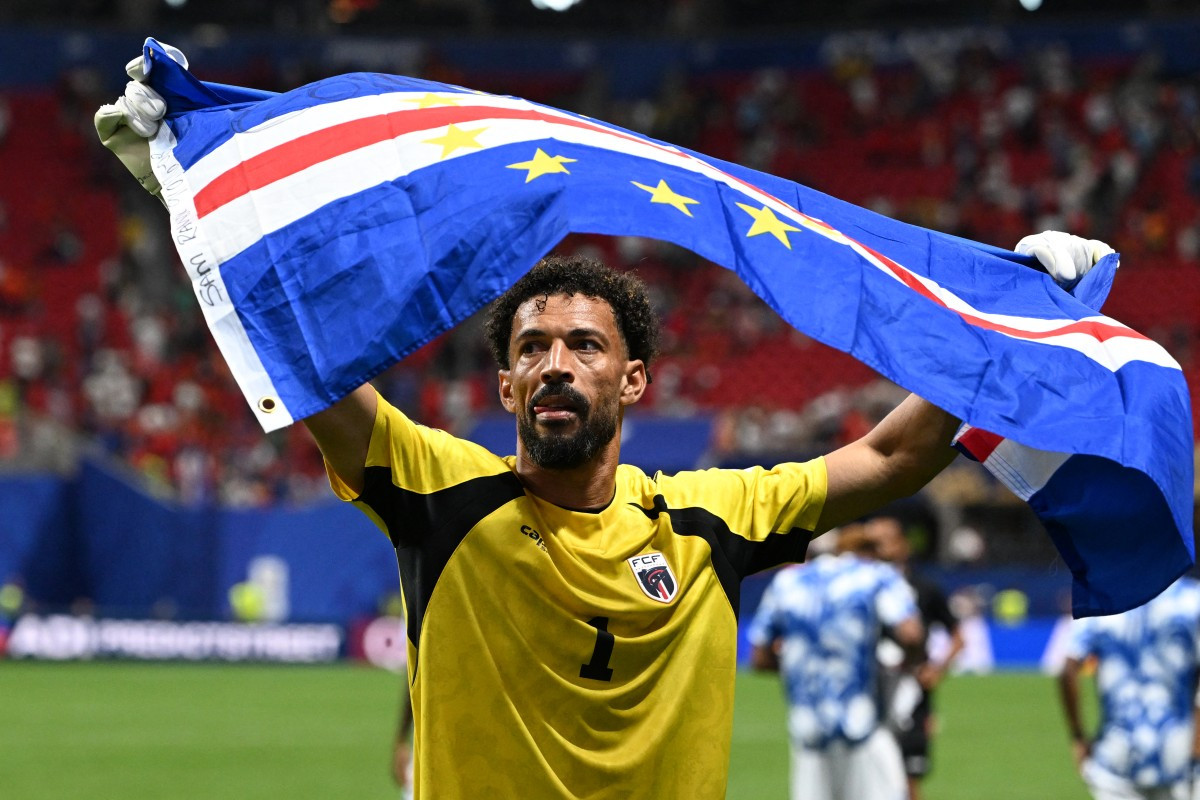 Cape Verde's goalkeeper Vozinha celebrates with his national flag at the end of the 2026 FIFA World Cup Group H soccer match between Spain and Cape Verde at the Atlanta Stadium in Atlanta, the United States on June 15, 2026. (AFP/Roberto Schmidt)
T
he ball is round, so goes the old saying. It refers to the sheer unpredictability of soccer, especially in the World Cup, where national pride is at stake. No one would have expected Saudi Arabia to stun Argentina 2-1 in their opening match in Qatar four years ago, even if the South Americans quickly recovered to win the tournament.
This year, cohosts the United States, Canada and Mexico have witnessed shock and awe come one after another, defying the predictions of pundits and punters alike. Qatar held big-name Switzerland to a 1-1 draw, while Morocco forced a 1-1 stalemate with five-time champion Brazil. Belgium had to thank an own goal from Egyptian defender Mohamed Hany for a 1-1 tie and Saudi Arabia almost produced another stunner in a 1-1 deadlock against two-time winner Uruguay.
But the most surprising affair of all came on Monday at Atlanta Stadium. Feisty newcomer Cape Verde fended off reigning European champion Spain in an epic match that ended in a scoreless draw. The hero of the tiny West African squad was veteran goalkeeper Vozinha, who made at least seven spectacular saves. The 40-year-old goalie broke down in tears after the final whistle, while thousands of his compatriots back home poured into the streets to celebrate the memorable debut.
Nevertheless, there is still a long way to go in this World Cup. As Ronaldo noted after Portugal’s disappointing 1-1 draw with the Democratic Republic of Congo on Wednesday, it is too early to predict who will lift the trophy on July 20. With the 48 finalists having only played their first games, teams will undoubtedly adapt their tactics and up their game to survive the next stages.
Few would argue, however, that this string of opening-week surprises signals a changing landscape in global soccer. The likes of Cape Verde have proven skeptics wrong, specifically those who feared a decline in quality after FIFA expanded the tournament from 32 to 48 teams. While established powerhouses like Argentina, Spain, Germany and France remain strong contenders thanks to a deep-seated soccer culture, the gap between them and the rest of the world is narrowing.
Japan, for example, has emerged as a true force to be reckoned with. Even before its 2-2 thriller with the Netherlands on Monday, the Samurai Blue, ranked 18th in the world and highest in Asia, had beaten Brazil and England in friendlies, and downed Germany and Spain in Qatar. The Japanese no longer play like underdogs relying solely on defensive grit and counterattacks. Instead, they dictate tempos, press with intelligent synchronization and exploit space with technical precision, a brand of soccer built on long-term systemic planning and the steady integration of players into top-tier global leagues.

Likewise, African soccer is asserting its strength with a depth that goes far beyond a single standout star. Morocco, bidding to repeat its historic semifinal run in Qatar, alongside DR Congo and Egypt, have shown their mettle against red-hot favorites. They are proving that African sides possess the tactical maturity to match their renowned physicality.