The Jakarta Post
Please Update your browser
Your browser is out of date, and may not be compatible with our website. A list of the most popular web browsers can be found below.
Just click on the icons to get to the download page.


Popular Reads
Top Results
No results found. Please check your search term and try again
Can't find what you're looking for?
View all search results
Popular Reads
Top Results
No results found. Please check your search term and try again
Can't find what you're looking for?
View all search resultsIs global diplomacy moving East?
From Middle Eastern diplomacy to crisis consultations among major powers, China is emerging as an indispensable diplomatic actor.
Change text size
Gift Premium Articles
to Anyone
Share the best of The Jakarta Post with friends, family, or colleagues. As a subscriber, you can gift 3 to 5 articles each month that anyone can read—no subscription needed!
 Set as preferred source
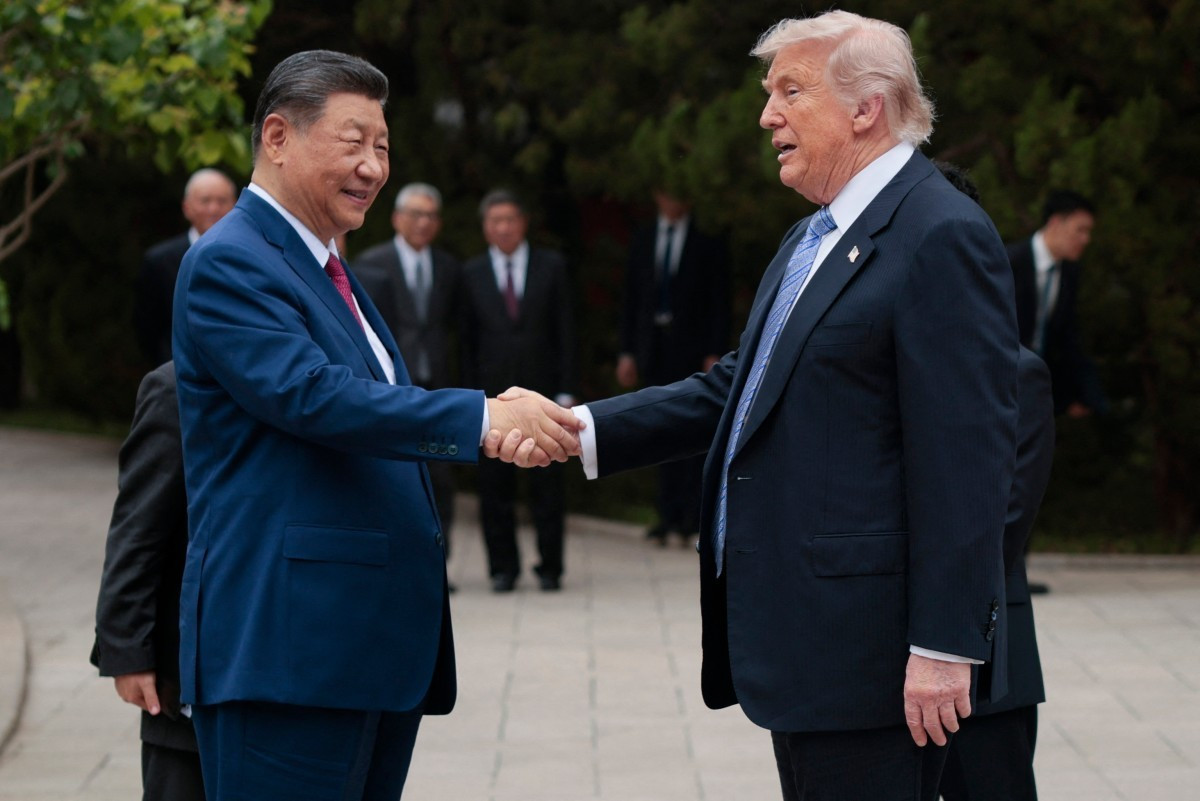 US President Donald Trump (right) shakes hands with China's President Xi Jinping on May 15 as he leaves after a visit to Zhongnanhai Garden in Beijing. (AFP/Evan Vucci))
F
or decades, major diplomatic initiatives were expected to pass through Washington, Brussels or other transatlantic capitals. Increasingly, however, global leaders are now turning to Beijing. From Middle Eastern diplomacy to crisis consultations among major powers, China is emerging as an indispensable diplomatic actor, raising a profound question: Is the center of global diplomacy moving east?
Recent geopolitical developments have exposed visible strains within the transatlantic alliance. Differences between Washington and several European partners over the management of Middle Eastern crises, trade disputes and strategic priorities have become increasingly pronounced.
Although the Western alliance remains intact, its cohesion can no longer be taken for granted. At the same time, countries across regions are diversifying their diplomatic options and intensifying engagement with Beijing.
The growing flow of world leaders to China reflects more than routine state visits; it signals a deeper transformation in the architecture of global order. Beijing is increasingly emerging not merely as an economic powerhouse, but as a strategic diplomatic hub where major powers seek consultation, negotiation and political reassurance.
A historical perspective is useful. During the Cold War, world politics revolved around two competing poles: the United States and the Soviet Union. Following the Soviet collapse, the transatlantic community emerged as the dominant force in international politics. In The End of History, Francis Fukuyama argued that liberal democracy had prevailed as the ultimate ideological model. For nearly three decades, Washington and its European allies remained the principal architects of global governance.
Yet the international landscape is changing. Growing disagreements between the United States and Europe over China, the Middle East, trade and defense burden-sharing have revealed underlying tensions within the Western camp. While these differences do not signify a rupture, they nevertheless create diplomatic space for other actors to assume larger roles.

China has been particularly adept at exploiting this opening. Beijing increasingly functions as a venue for strategic consultation — a role traditionally associated with Washington, Brussels or Geneva. Like a magnet, it attracts global leaders seeking dialogue, mediation and political coordination.