The Jakarta Post
Please Update your browser
Your browser is out of date, and may not be compatible with our website. A list of the most popular web browsers can be found below.
Just click on the icons to get to the download page.


Popular Reads
Top Results
No results found. Please check your search term and try again
Can't find what you're looking for?
View all search results
Popular Reads
Top Results
No results found. Please check your search term and try again
Can't find what you're looking for?
View all search resultsThe mirage of public trust
Behind the National Police’s glowing 82 percent public approval rating lies a much darker reality of corruption, violence and a desperate need for real reform.
Change text size
Gift Premium Articles
to Anyone
Share the best of The Jakarta Post with friends, family, or colleagues. As a subscriber, you can gift 3 to 5 articles each month that anyone can read—no subscription needed!
 Set as preferred source
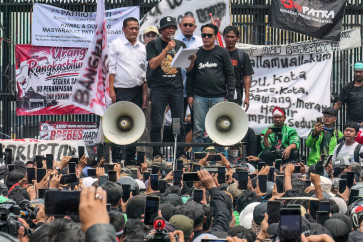
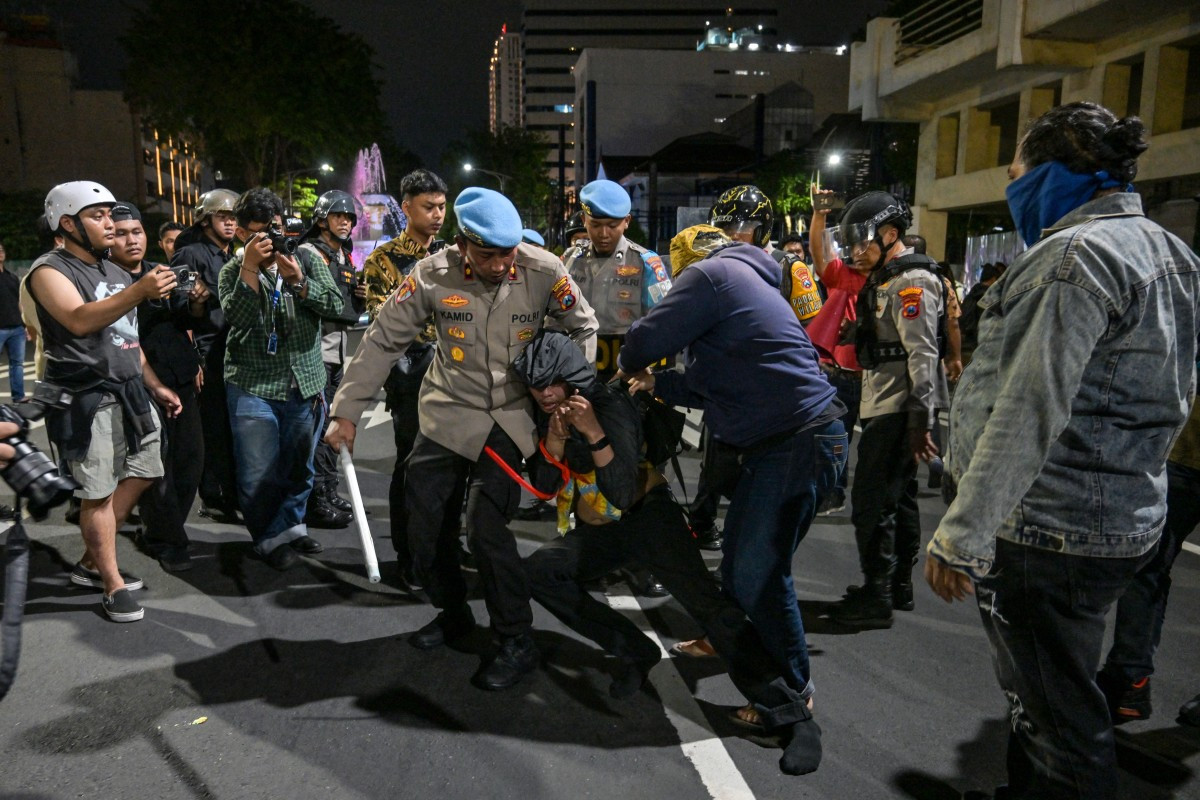 Police arrest a student following clashes on Friday during protest against a rise in nonsubsidized fuel prices, inefficient government spending and military involvement in civilian affairs and the government's free nutritious meal program, in Surabaya. (AFP/Juni Kriswanto)
A
head of its 80th anniversary which falls today, the National Police received a welcome morale booster. A recent survey by Litbang Kompas, the research arm of Kompas daily, shows public trust in the law enforcement agency climbing to a remarkable 82.4 percent, up from 76.2 percent last year.
While the police may be tempted to use these figures as a shield against criticism, resting on the laurels of popular opinion would be a grave mistake. Alternative data and expert evaluations reveal a starkly different reality: an institution still struggling with systemic vulnerability, a culture of violence and structural impunity.
The idea of a fully professional police force starts to wear thin when we look at actual governance metrics. Take the Corruption Eradication Commission’s (KPK) 2025 Integrity Assessment Survey (SPI). The police scored a meager 71.49, landing them squarely in the "vulnerable" category. In fact, they fell behind the national average of 72.32.
The police’s less convincing performance turns out to follow a pattern of stagnation, with a score of 70.99 in 2024 and 72.78 in 2023. For three consecutive years, the police have failed to cross into the "vigilant" tier, exposing a persistent deficit in internal oversight and anticorruption frameworks.
This gap between public perception and reality is exactly what experts have been warning about. While general opinion shifts depending on media narratives, those who study the institution closely see a broken foundation.
A study by the Setara Institute revealed that 61.1 percent of experts view the police’s operational performance as fundamentally poor or unsatisfactory. Even worse, over half - 51.2 percent - said despite being a civilian force, police conduct is neither democratic nor humanistic, and 58.7 percent gave the integrity of law enforcers a failing grade.

The most urgent manifestation of this flaw is the normalization of state-sanctioned violence. Data from the Indonesian Legal Aid Foundation (YLBHI) documented approximately 35 police shooting incidents between 2019 and 2024, resulting in 94 fatalities across various sectors, from agrarian disputes to political opposition.