The Jakarta Post
Please Update your browser
Your browser is out of date, and may not be compatible with our website. A list of the most popular web browsers can be found below.
Just click on the icons to get to the download page.


Popular Reads
Top Results
No results found. Please check your search term and try again
Can't find what you're looking for?
View all search results
Popular Reads
Top Results
No results found. Please check your search term and try again
Can't find what you're looking for?
View all search resultsAnalysis: Restoring confidence, squeezing the middle class
Change text size
Gift Premium Articles
to Anyone
Share the best of The Jakarta Post with friends, family, or colleagues. As a subscriber, you can gift 3 to 5 articles each month that anyone can read—no subscription needed!
 Set as preferred source
 Bank Indonesia Governor Perry Warjiyo speaks to reporters after a meeting with the House of Representatives budget committee in Jakarta on June 9, 2026. (Antara/Rizka Khaerunnisa)
B
ank Indonesia's (BI) decision to raise the BI Rate to 5.75 percent may help defend the rupiah, but someone will ultimately have to pay the price. Increasingly, that burden appears to be falling on Indonesia’s middle class.
Already grappling with weakening purchasing power and slowing consumption, many households now face the prospect of higher mortgage payments, more expensive vehicle loans and tighter access to credit as banks adjust lending rates. With investor concerns over fiscal risks and government spending continuing to linger, the latest rate hike raises a broader question: In the effort to restore market confidence, is Indonesia’s middle class once again footing the bill?
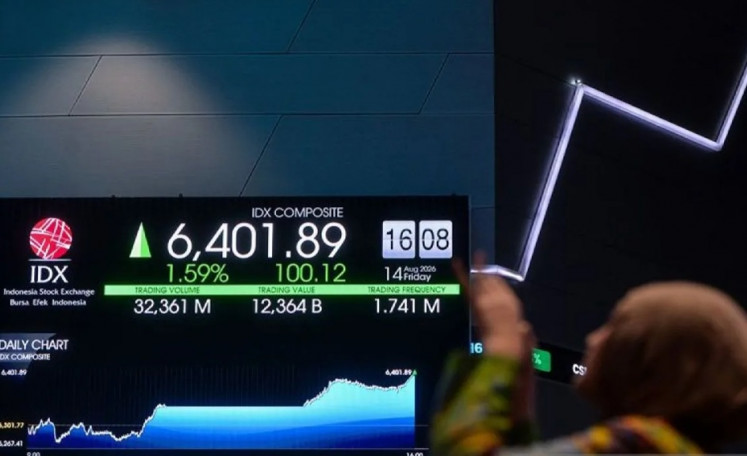
The pace of BI’s monetary tightening has been unusually aggressive. In less than a month, the central bank raised its benchmark interest rate by a cumulative 100 basis points to 5.75 percent, including an unscheduled increase on June 9 after the rupiah briefly weakened beyond Rp18,000 against the US dollar.
The strategy is economically defensible. Higher interest rates widen the yield differential with the US Federal Reserve, helping stabilize the rupiah by attracting foreign capital and anchoring inflation expectations. But monetary policy is never cost-free. While the benefits are shared across the broader economy through greater financial stability, the adjustment is likely to fall disproportionately on one group: Indonesia’s middle class.
For middle-class households, the impact of higher interest rates will be felt most directly through mortgages. Most home loans (KPR) begin with fixed promotional rates before shifting to floating rates, meaning the recent BI Rate hikes will gradually translate into higher monthly repayments as banks pass on rising funding costs. For a Rp 500 million mortgage with a 15-year tenor, a half-percentage-point increase from 10 percent to 10.5 percent would add roughly Rp170,000 to monthly repayments. The increase may appear modest, but it compounds alongside sluggish wage growth, persistently high food prices and a weaker rupiah.
The irony is that while lower-income households remain protected through subsidized FLPP mortgages with fixed interest rates of 5 to 6 percent, the middle class falls outside that safety net. Indonesia Property Watch CEO Ali Tranghanda estimates mortgage rates could rise by one to two percentage points, with every one-percentage-point increase reducing mortgage demand by 4 to 5 percent, making homeownership increasingly unattainable for aspiring middle-class families.

The burden extends beyond the housing market. Indonesia's automotive sector, another industry heavily dependent on financing, is also expected to come under pressure. While existing vehicle loans are generally protected by fixed-rate contracts, prospective buyers are likely to face higher borrowing costs as banks pass on rising funding costs to multifinance companies, which obtain most of their financing from bank loans.