The Jakarta Post
Please Update your browser
Your browser is out of date, and may not be compatible with our website. A list of the most popular web browsers can be found below.
Just click on the icons to get to the download page.


Popular Reads
Top Results
No results found. Please check your search term and try again
Can't find what you're looking for?
View all search results
Popular Reads
Top Results
No results found. Please check your search term and try again
Can't find what you're looking for?
View all search resultsAnarchy in royalty: Demystifying performing Rights
While global platforms seamlessly track millions of digital streams, Indonesia's music royalty system remains painfully manual, opaque and overly centralized. To understand why this structural gridlock persists, we must first demystify how music copyright actually works.
Change text size
Gift Premium Articles
to Anyone
Share the best of The Jakarta Post with friends, family, or colleagues. As a subscriber, you can gift 3 to 5 articles each month that anyone can read—no subscription needed!
 Set as preferred source
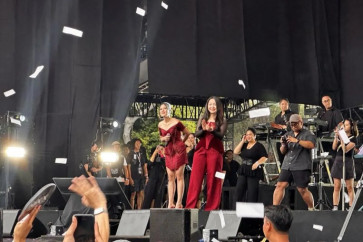
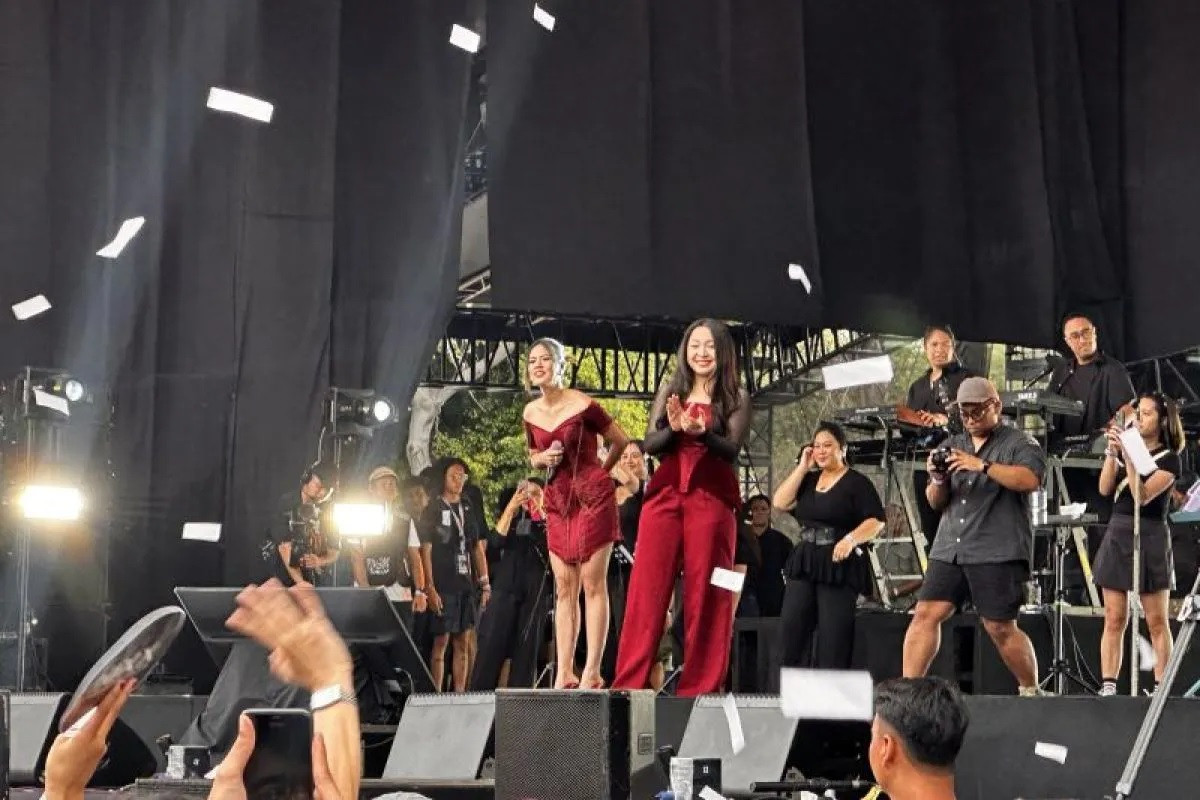 Pop singers Raisa (center left) and Bernadya perform during the Pestapora 2025 music festival at Gambir Expo & Hall D2 JIEXPO in Kemayoran, North Jakarta on Sept. 6, 2025. (Antara/Pamela Sakina)
W
hat is casually referred to as a "song" consists of two distinct intellectual properties: the composition (publishing), covering the underlying lyrics and melody, and the phonogram (master recording), encompassing the actual audio recording. Both properties generate independent revenue streams known as royalties.
Consider the hit single “Teman Hidup” by Tulus. As the songwriter, Tulus penned the composition. However, because he also independently funded and recorded the track, he retains ownership of the master recording. In this dual capacity, any commercial use of the track obligates users to pay royalties to both of his roles.
While music earnings span several categories, most notably synchronization and mechanical rights, the arena of performing rights presents the industry's deepest regulatory maze. Performing rights split down the middle based on the property used: composition performance rights, which are paid to songwriters, and neighboring rights, which are paid to performing artists, record labels and producers.
The friction begins when these rights collide. As a rule of thumb, whenever a master recording is played, users must pay both the composition and master owners. However, the inverse does not apply; the public usage of a composition alone never triggers master-use fees.
In the digital landscape, Digital Service Providers (DSPs) split into interactive platforms where users choose specific tracks (like Spotify) and non-interactive platforms where streams are automated (like digital radio). Both are legally bound to pay performing royalties, but the mechanics diverge.
Interactive DSPs only clear public performance rights for the composition; their "neighboring rights" are bundled directly into the master payouts sent straight to labels and distributors. Conversely, non-interactive platforms must pay both explicitly.

In a live concert setting, a fine line must be drawn: promoters pay performers for their physical presence, but they still owe songwriters for the music played. A performance fee strictly secures the live rendition on stage; it does not buy the right to use the underlying composition. Yet across the current live music circuit, these performance royalties remain a routinely ignored debt owed to the National Collective Management Organization (LMKN).