The Jakarta Post
Please Update your browser
Your browser is out of date, and may not be compatible with our website. A list of the most popular web browsers can be found below.
Just click on the icons to get to the download page.


Popular Reads
Top Results
No results found. Please check your search term and try again
Can't find what you're looking for?
View all search results
Popular Reads
Top Results
No results found. Please check your search term and try again
Can't find what you're looking for?
View all search resultsAnalysis: SAL reversal: Policy flexibility or policy uncertainty?
Change text size
Gift Premium Articles
to Anyone
Share the best of The Jakarta Post with friends, family, or colleagues. As a subscriber, you can gift 3 to 5 articles each month that anyone can read—no subscription needed!
 Set as preferred source
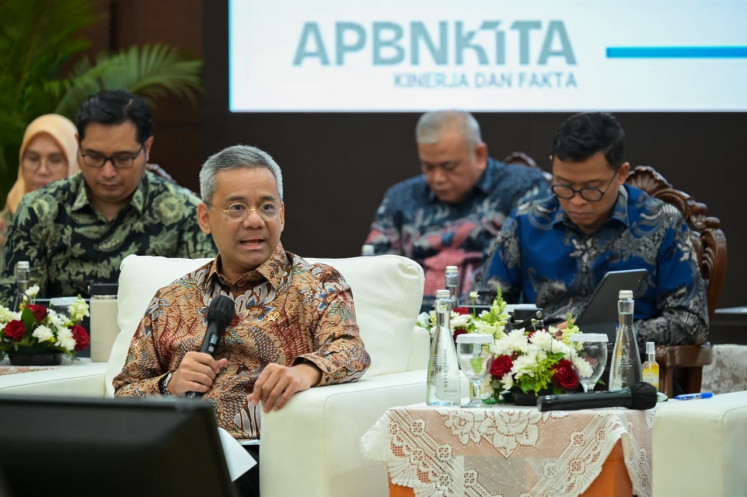
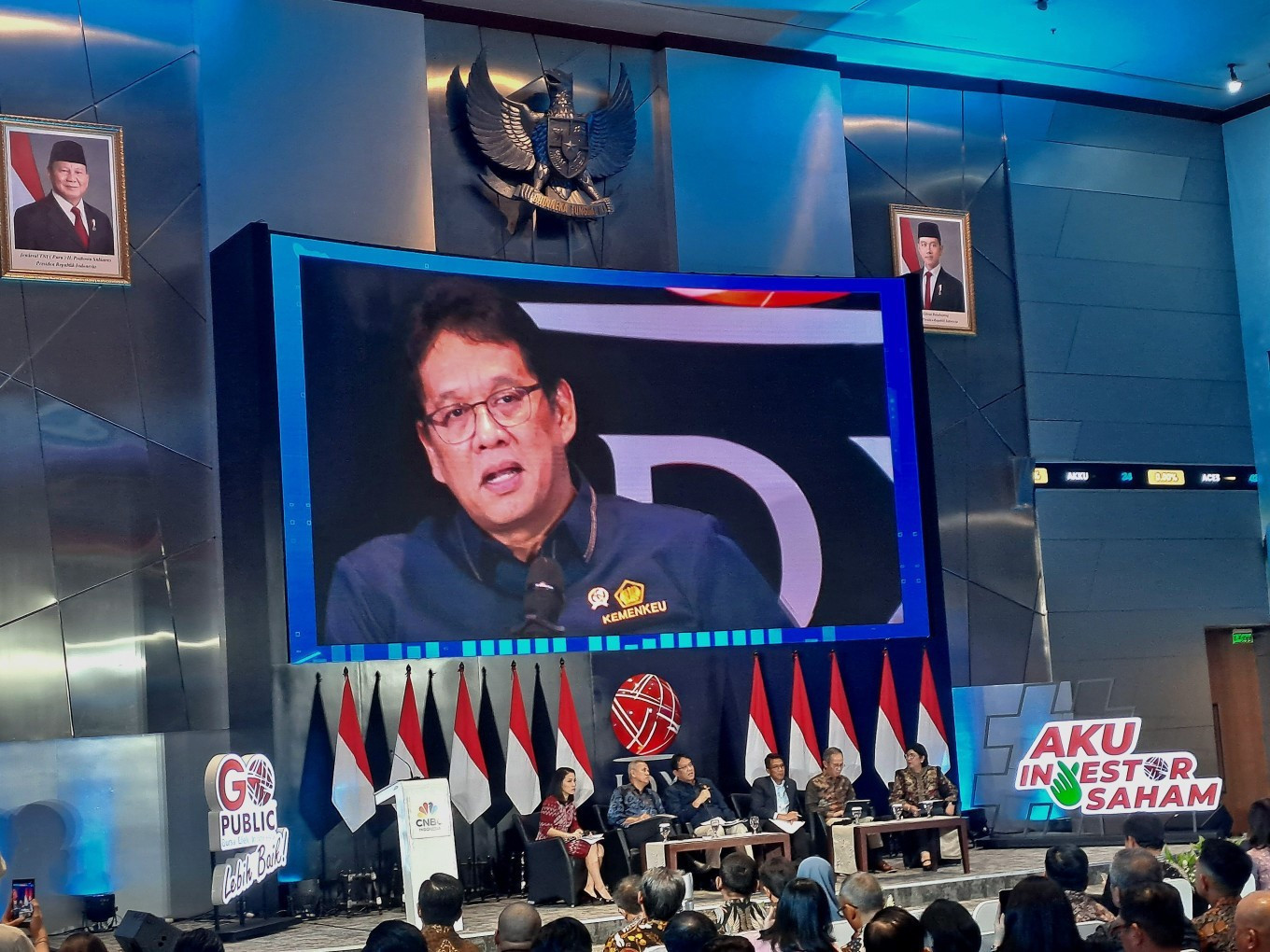 Finance Minister Purbaya Yudhi Sadewa's face is displayed on screen during his speech on Dec. 3, 2025, in the main hall of the Indonesia Stock Exchange (IDX) building in South Jakarta. (JP/Deni Ghifari)
F
inance Minister Purbaya Yudhi Sadewa's decision to reverse course on the placement of the budget surplus balance (SAL) warrants closer scrutiny. While the move may reflect policymakers' willingness to respond to changing market conditions, it also raises a more fundamental question: Does frequent policy recalibration strengthen confidence by demonstrating flexibility, or does it undermine the certainty that the financial system depends on?
The funds were never simply idle cash. Since September 2025, the Finance Ministry had gradually placed SAL in five state-owned banks to strengthen liquidity and sustain credit growth amid tightening financial conditions. By March 2026, the placement had reached Rp 376 trillion (US$21 billion). Three months later, however, the government began transferring part of the funds back to Bank Indonesia while also seeking to strengthen fiscal-monetary coordination in support of the rupiah. Yet the strategy quickly revealed its limits.
The reversal is particularly striking because it occurred at a time when Indonesia's banking sector appeared fundamentally sound. Credit growth accelerated to 11.5 percent year-on-year in May 2026, supported by strong deposit growth and ample system-wide liquidity, while Bank Indonesia remained confident that lending would continue expanding within its target range of 8 to 12 percent this year.
Yet aggregate indicators often conceal how individual institutions manage their funding. Over the previous year, SAL had evolved from a temporary fiscal placement into a stable source of liquidity for state-owned banks, becoming embedded in their funding and lending strategies. The longer the placement remained in place, the more difficult it became to unwind.
When the funds were withdrawn, the issue was not the resilience of Indonesia's banking system, but the adjustment required of banks that had come to rely on what was always intended to be a temporary arrangement. In that sense, the withdrawal did more than tighten liquidity. It exposed the gap between policy design and operational reality.
That dependence became apparent almost immediately. State-owned banks reportedly warned that funding conditions had tightened much faster than anticipated. Purbaya himself later acknowledged that once the funds were withdrawn, Himbara banks had "become dry" and had effectively run out of funding to support lending. Within days, Deputy Finance Minister Juda Agung announced that Rp 281 trillion would be returned to Himbara banks and that the placement would be extended through December, with an additional Rp 100 trillion held in reserve.

It is unusual for a finance minister to acknowledge the shortcomings of a policy so quickly. It is even rarer for those shortcomings to require an almost immediate policy reversal. Purbaya's remarks suggest that what had initially been presented as routine coordination between fiscal and monetary authorities had underestimated the extent to which the banking system had absorbed the government's liquidity injections.