The Jakarta Post
Please Update your browser
Your browser is out of date, and may not be compatible with our website. A list of the most popular web browsers can be found below.
Just click on the icons to get to the download page.


Popular Reads
Top Results
No results found. Please check your search term and try again
Can't find what you're looking for?
View all search results
Popular Reads
Top Results
No results found. Please check your search term and try again
Can't find what you're looking for?
View all search resultsTwo generals, one democratic corridor
As Indonesia honored its fallen soldiers alongside those of Timor-Leste last week, the occasion served as a reminder of the parallel journeys the two bordering neighbors have trod, not least in their leaders' approaches to maintain national defense and public security within the corridors of democracy.
Change text size
Gift Premium Articles
to Anyone
Share the best of The Jakarta Post with friends, family, or colleagues. As a subscriber, you can gift 3 to 5 articles each month that anyone can read—no subscription needed!
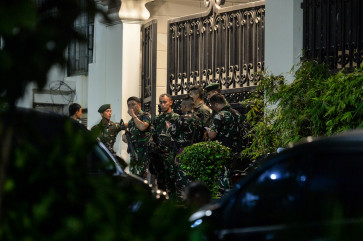
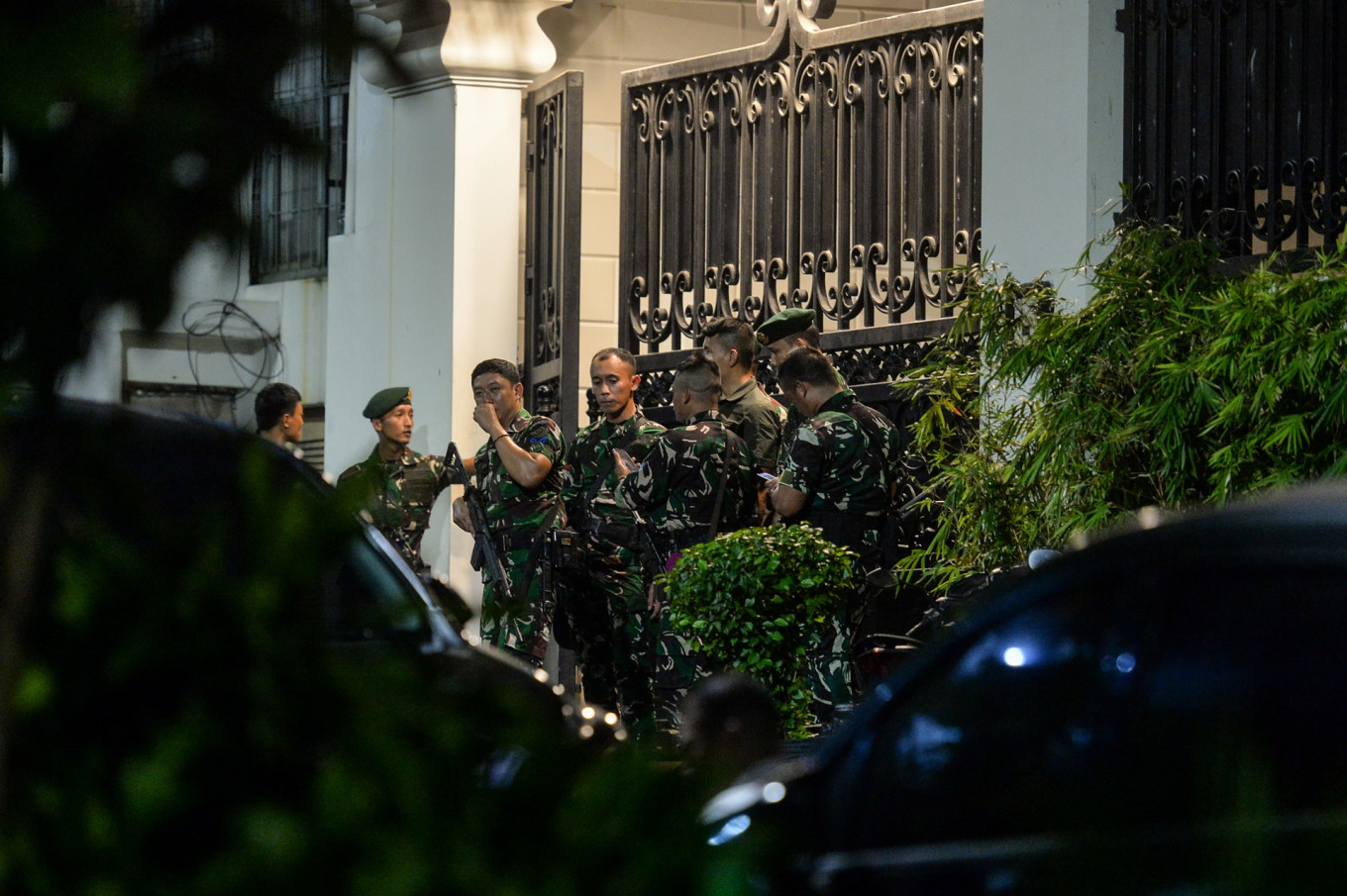 External reinforcements: A group of soldiers stands guard on Wednesday at the front gates of a luxury house in South Jakarta’s upscale Kebayoran Baru neighborhood identified as the private residence of Febrie Ardiansyah, who resigned as assistant attorney general for special crimes on Friday amid an ongoing corruption investigation by the National Police. (Antara/Putra M. Akbar)
R
ecently, I accompanied former president Megawati Soekarnoputri as she received the Grand Star of Timor-Leste from President Jose Ramos-Horta. In Dili, she also met Prime Minister Xanana Gusmao who, like President Prabowo Subianto, carries a military past. Both men must now keep their respective armed forces, the Timor-Leste Defence Force (F-FDTL) and the Indonesian Military (TNI), within the corridor of democracy.
That corridor is easier to name than to hold, as events in Jakarta showed. On the night of July 8, as police searched a dozen premises in a graft and money laundering inquiry, seizing 74 kilograms of gold and around Rp 476 billion (US$29 million) from one villa, dozens of soldiers took up position outside the home of Febrie Adriansyah, who later resigned as assistant attorney general for special crimes.
The Attorney General’s Office (AGO) and the National Police were openly at odds: Rumor held that the prosecutor's home would be searched next, and the soldiers were guarding it. The TNI called the detail a lawful protection duty, requested by the AGO and unrelated to the police raids.
The explanation was reasonable. Still, the image was hard to unsee: an army posted between one arm of the state and another.
That image touches one of Indonesian democracy's quiet achievements: a professional military, held apart from politics, from business and from the police. Such an army carries a temptation gentler than politics or profit: to become the guardian of one camp against another. Troops at a prosecutor's gate, amid a disagreement between the AGO and the National Police, come nearer than one would wish.
This achievement was written into law, patiently and in layers. The 1945 Constitution was amended four times between 1999 and 2002, and Article 30, recast in 2000, drew the founding line: the TNI as the instrument of external defense, the National Police as the guardian of internal security.

Two decrees of the People's Consultative Assembly in 2000, TAP MPR VI and VII, separated the forces and set out their roles. Statutes gave it substance: the defense and police laws of 2002 and the 2004 TNI Law, whose Article 76 asked the state to take over the armed forces' businesses. The 2011 State Intelligence Law also brought intelligence within an accountable frame.