The Jakarta Post
Please Update your browser
Your browser is out of date, and may not be compatible with our website. A list of the most popular web browsers can be found below.
Just click on the icons to get to the download page.


Popular Reads
Top Results
No results found. Please check your search term and try again
Can't find what you're looking for?
View all search results
Popular Reads
Top Results
No results found. Please check your search term and try again
Can't find what you're looking for?
View all search resultsDumpster fire no more
The country's recurring landfill disasters demand that we stop fighting fire with fire downstream and finally extinguish the waste crisis at its household source.
Change text size
Gift Premium Articles
to Anyone
Share the best of The Jakarta Post with friends, family, or colleagues. As a subscriber, you can gift 3 to 5 articles each month that anyone can read—no subscription needed!
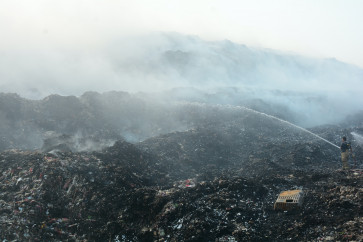
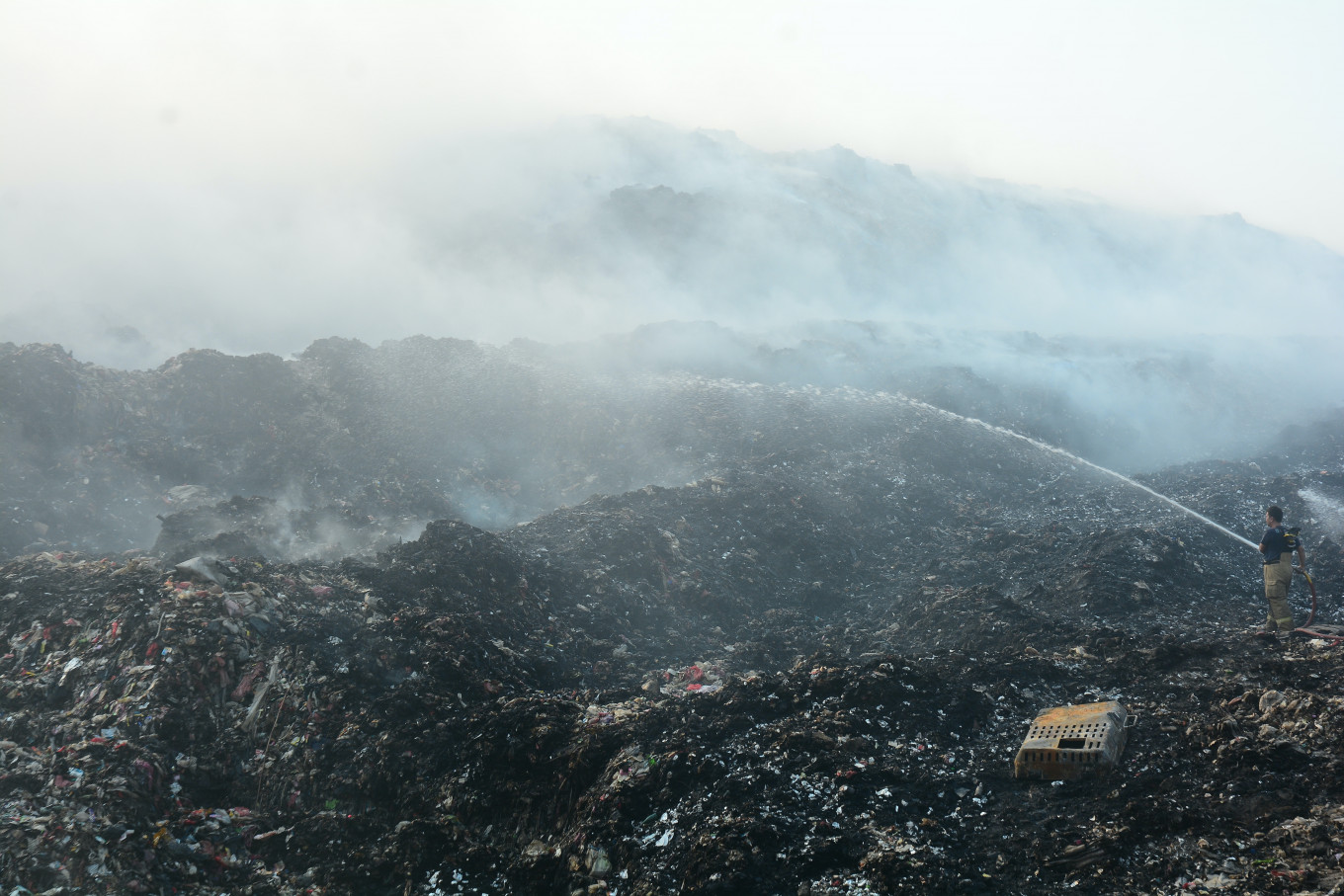 A firefighter battles a blaze at the Jatiwaringin landfill in Tangerang regency, Banten, on July 4, 2026. (JP/Iqro Rinaldi)
W
aste management has once again captured national headlines. Following recent crises where garbage piled up along many city streets, a more hazardous threat has emerged: landfills engulfed in flames for weeks.
On June 30, a massive fire broke out at the Jatiwaringin landfill in Tangerang regency, Banten, to the west of Jakarta. Although firefighters were immediately deployed, it took 10 days to fully extinguish the blaze. By then, roughly half of the 33-hectare facility had burned, releasing toxic fumes that caused acute respiratory infections in more than 300 nearby residents.
Local and national officials were quick to blame the prolonged high temperatures of the dry season and reported open burning adjacent to the facility. However, these environmental factors should have been better mitigated, especially since this kind of blaze is not unprecedented.
Just three years ago, amid a severe dry season driven by El Niño, the nearby Rawa Kucing landfill in Tangerang municipality burned for nearly a week. That fire generated thick smoke that disrupted operations at Soekarno-Hatta International Airport, the country’s primary international gateway. While Jatiwaringin is located further from the airport, it was mere luck that shifting winds prevented a repeat of the airport haze crisis this time.
As the Jatiwaringin fire shows, the core issue is a widespread failure to sort waste. At most facilities, organic waste is mixed with flammable inorganic garbage like paper and plastic. As this organic waste decomposes, it generates methane gas that is easily ignited when the weather is hotter and drier than average.
In open dumps, trapped methane transforms trash mountains into combustible hazards capable of exploding. This risk was tragically demonstrated at the Leuwigajah landfill in 2005, when a methane explosion triggered a trash landslide that killed 157 people.

Without immediate intervention, the Jatiwaringin incident could signal the beginning of a broader wave of landfill fires this year. During the 2023 El Niño cycle, Indonesia recorded 46 landfill fires, predominantly across Java.