The Jakarta Post
Please Update your browser
Your browser is out of date, and may not be compatible with our website. A list of the most popular web browsers can be found below.
Just click on the icons to get to the download page.


Popular Reads
Top Results
No results found. Please check your search term and try again
Can't find what you're looking for?
View all search results
Popular Reads
Top Results
No results found. Please check your search term and try again
Can't find what you're looking for?
View all search resultsWhy ASEAN Charter needs urgent reform
Nearly two decades later, the appropriate time for realistic yet necessary change has arrived.
Change text size
Gift Premium Articles
to Anyone
Share the best of The Jakarta Post with friends, family, or colleagues. As a subscriber, you can gift 3 to 5 articles each month that anyone can read—no subscription needed!
 Set as preferred source
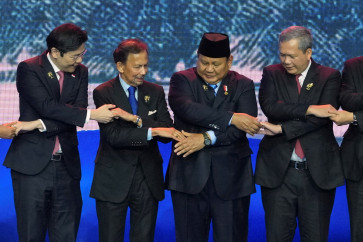
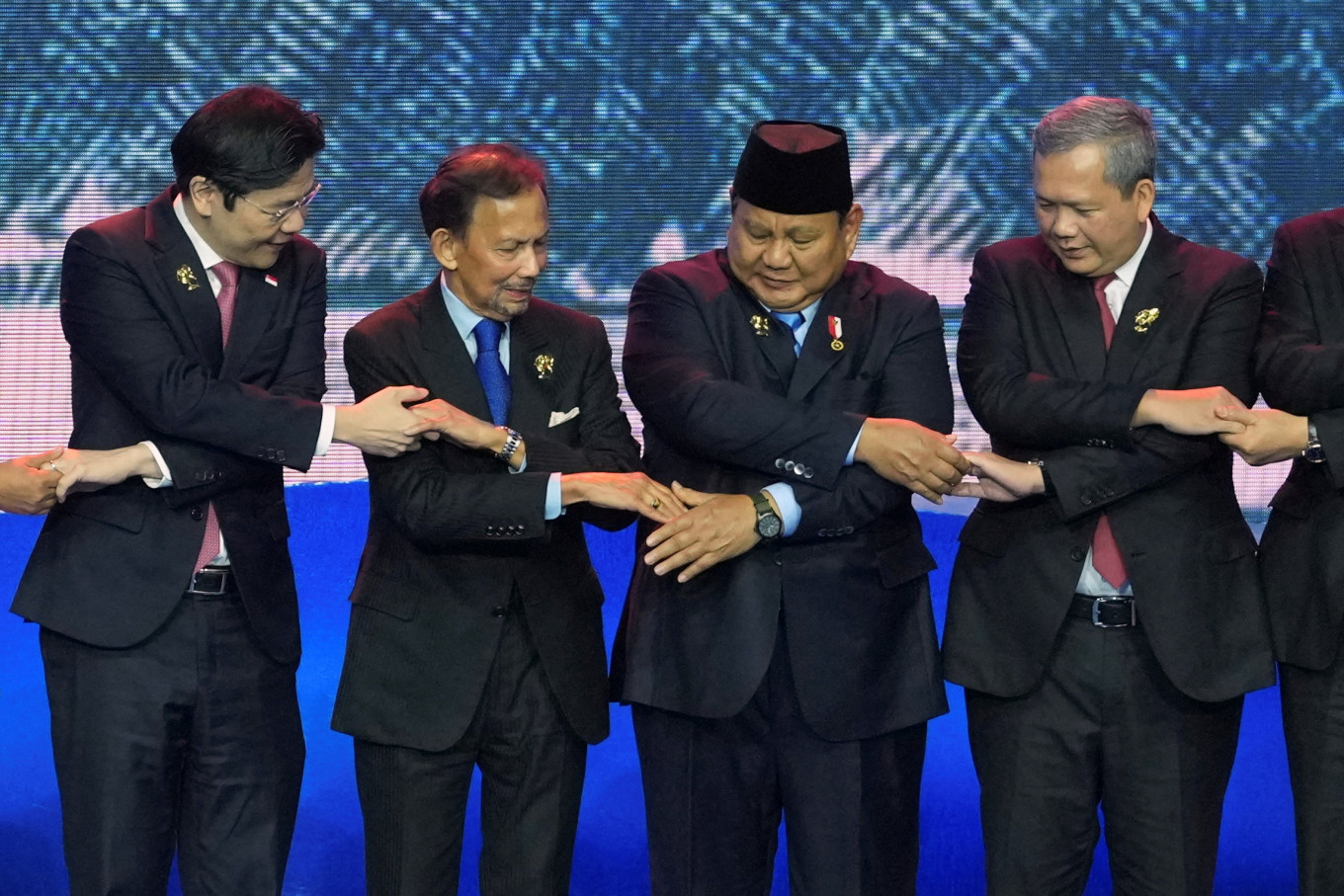 Singapore's Prime Minister Lawrence Wong (from left), Brunei's Sultan Hassanal Bolkiah, Indonesia's President Prabowo Subianto and Cambodia's Prime Minister Hun Manet hold hands for a group photo during the opening ceremony of the 48th ASEAN Summit and Related Meetings, in Cebu, Philippines, May 8, 2026. (Reuters/Aaron Favila)
D
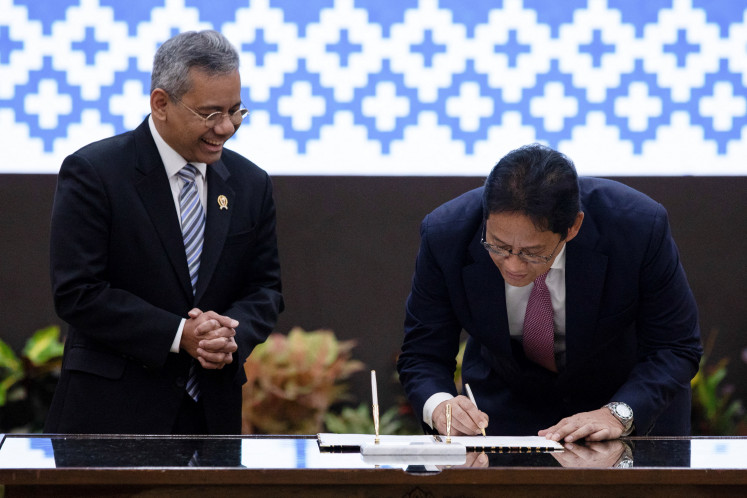
ays before the ASEAN Charter was signed in Singapore in November 2007, Ali Alatas, one of Indonesia’s and Southeast Asia’s most revered diplomats, who served on the grouping’s Eminent Persons Group that helped draft the document, spoke with The Jakarta Post inside a hotel in the city state, on how monumental the moment was, expressing quiet pride that ASEAN leaders had finally agreed to codify the grouping's informal understandings into a single constitutional framework.
For Alatas, who passed away just a year later, the Charter’s signing felt like the realization of a lifelong dream: transforming ASEAN from an unstructured regional association into a rules-based international organization. While acknowledging that the final document contained political compromises that failed to satisfy some external analysts, Alatas gave an assurance that the Charter was a baseline. It was a foundation, he insisted, that could be fixed at a more appropriate time.
Nearly two decades later, that appropriate time for realistic yet necessary change has arrived.
Despite fresh faces at the summit table, ASEAN remains fundamentally unchanged: a slow, elite-centered organization constrained by internal paralysis. From the catastrophic human rights violations in Myanmar and dangerous flashpoints in the South China Sea to transboundary haze and climate-induced environmental degradation, the bloc’s helplessness has been laid bare.
Compounding these crises are modern pressures that the 2007 Charter’s authors never anticipated: democratic backsliding, the rise of domestic digital authoritarianism, an increasingly assertive China expanding its regional footprint, and unpredictable global trade and diplomatic volatility driven by a re-energized United States under Donald Trump.
Nowhere is ASEAN's structural obsolescence more evident than in its response to the tragedy in Myanmar. The much-vaunted Five-Point Consensus, agreed upon in 2021, has utterly failed.

The root of this systemic paralysis is embedded directly within the text of the Charter itself. Article 20 mandates that all decisions be made strictly through consultation and unanimity, effectively granting rogue regimes or autocratic member states an absolute veto over regional policy.