The Jakarta Post
Please Update your browser
Your browser is out of date, and may not be compatible with our website. A list of the most popular web browsers can be found below.
Just click on the icons to get to the download page.


Popular Reads
Top Results
No results found. Please check your search term and try again
Can't find what you're looking for?
View all search results
Popular Reads
Top Results
No results found. Please check your search term and try again
Can't find what you're looking for?
View all search resultsWhy Danantara should stay out of KSSK
"KSSK Plus" introduces profound systemic, institutional and governance risks that threaten to undermine the very financial stability it seeks to enhance.
Change text size
Gift Premium Articles
to Anyone
Share the best of The Jakarta Post with friends, family, or colleagues. As a subscriber, you can gift 3 to 5 articles each month that anyone can read—no subscription needed!
 Set as preferred source
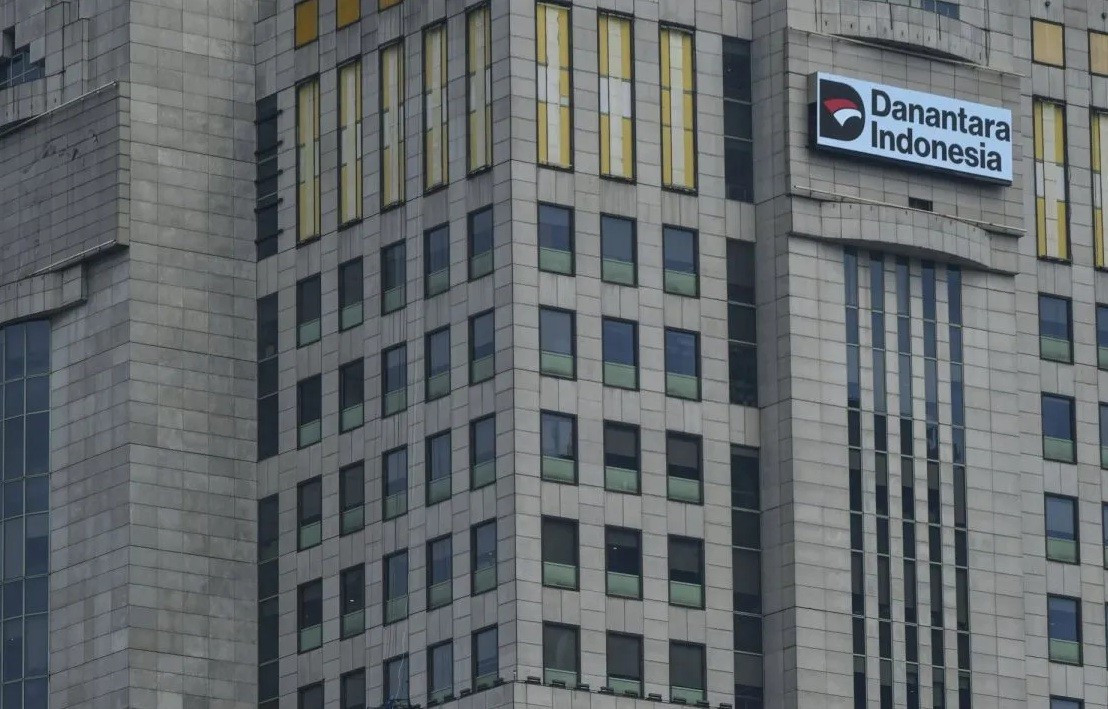 Wisma Danantara Indonesia stands out on Jl. Jenderal Sudirman, Central Jakarta, on July 8, 2025. (Antara/Hafidz Mubarak A)
O
n July 27, President Prabowo Subianto issued a directive instructing the Financial System Stability Committee (KSSK) to formally integrate state asset fund Danantara into its statutory decision-making process. Dubbed by the administration "KSSK Plus," this novel framework mandates that Danantara participate routinely in the macroprudential council’s monthly and quarterly coordination meetings.
According to administration officials, the objective of this integration is to ensure that macro-financial interventions transcend traditional monetary and fiscal levers, directly energizing the real economy, corporate investment and the broader business ecosystem. The overarching ambition is to forge a unified mechanism that links state asset management with systemic shock absorption.
Yet, this structural fusion represents an institutional anomaly in international financial architecture that lacks comparative precedent across major economies. Globally, macroprudential stability bodies are scrupulously designed to exclude sovereign wealth funds (SWFs) and state investment entities.
In the United States, the Financial Stability Oversight Council (FSOC) restricts its voting membership strictly to regulatory and supervisory authorities: the Department of the Treasury, the Federal Reserve Board, the Securities and Exchange Commission (SEC) and the Federal Deposit Insurance Corporation (FDIC). Similarly, the European Systemic Risk Board (ESRB), the United Kingdom’s Financial Policy Committee (FPC) and Australia’s Council of Financial Regulators maintain an unyielding operational separation between sovereign investment arms and regulatory guardians.
Even among peer emerging markets and state-capitalist models where sovereign funds serve as central economic drivers, this division of labor remains sacrosanct. In Singapore, Temasek Holdings operates strictly under arm’s-length commercial principles, leaving financial stability oversight entirely to the Monetary Authority of Singapore (MAS). In Malaysia, Khazanah Nasional does not sit on Bank Negara Malaysia’s Financial Stability Committee.
Across the Gulf states, sovereign funds such as Saudi Arabia’s Public Investment Fund (PIF), Abu Dhabi’s Mubadala and the Qatar Investment Authority (QIA) act as powerful economic development engines, yet their strategic alignment with national policy occurs at the cabinet or supreme economic council level, never within the statutory councils charged with banking supervision, macroprudential regulation and systemic liquidity defense.

By breaching this international consensus, President Prabowo’s "KSSK Plus" initiative introduces profound systemic, institutional and governance risks that threaten to undermine the very financial stability it seeks to enhance. The primary danger lies in the severe erosion of institutional checks and balances and the creation of an irreconcilable conflict of interest. The KSSK was established as an objective, dispassionate regulatory body tasked with supervising financial markets and mitigating systemic contagion.