The Jakarta Post
Please Update your browser
Your browser is out of date, and may not be compatible with our website. A list of the most popular web browsers can be found below.
Just click on the icons to get to the download page.


Popular Reads
Top Results
No results found. Please check your search term and try again
Can't find what you're looking for?
View all search results
Popular Reads
Top Results
No results found. Please check your search term and try again
Can't find what you're looking for?
View all search resultsASEAN centrality on display in Manila
At a time when ASEAN centrality is frequently questioned, the recent meetings demonstrated that ASEAN remains the principal convening platform of the Indo-Pacific.
Change text size
Gift Premium Articles
to Anyone
Share the best of The Jakarta Post with friends, family, or colleagues. As a subscriber, you can gift 3 to 5 articles each month that anyone can read—no subscription needed!
 Set as preferred source
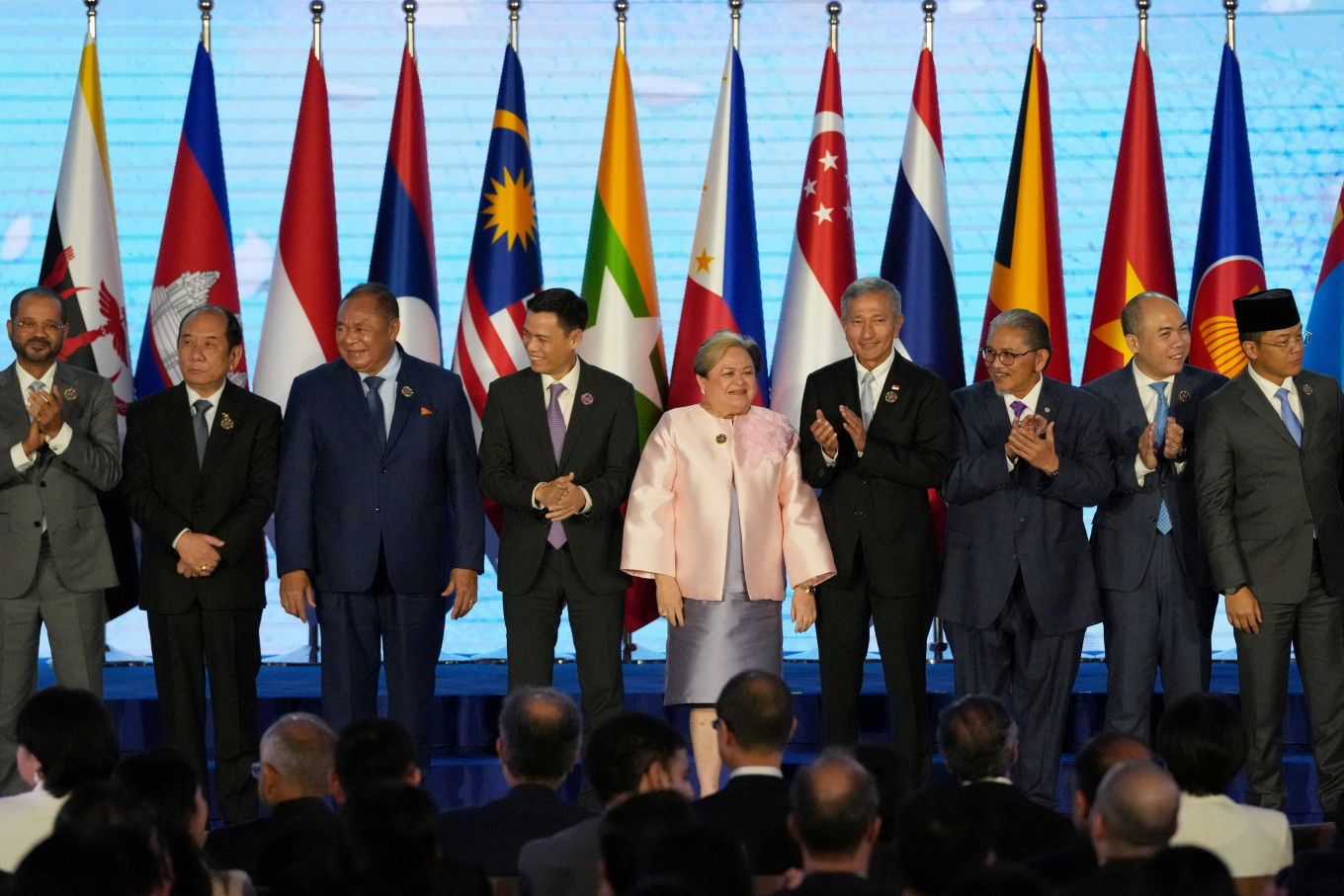 Philippines Foreign Secretary Theresa Lazaro and other leaders attend a group photo session during the High-Level Conference of the High Contracting Parties to the Treaty of Amity and Cooperation (TAC) on the sidelines of the ASEAN Foreign Ministers' Meeting in Pasay, Manila on July 24, 2026. (Pool via REUTERS/Aaron Favila)
T
he Philippines, as chair of ASEAN, hosted the ASEAN Foreign Ministers' and related meetings in Manila from July 20 to 24. At a time when ASEAN centrality is frequently questioned, the meetings demonstrated that ASEAN remains the principal convening platform of the Indo-Pacific. Regional and global powers gathered not only for ASEAN-led meetings but also for an intensive program of bilateral and plurilateral diplomacy on the sidelines.
The week brought together the ASEAN Ministerial Meeting (AMM), ASEAN Plus Three (APT), the ASEAN Regional Forum (ARF), the East Asia Summit (EAS) Foreign Ministers' Meeting and the Post-Ministerial Conferences (PMCs) with Dialogue Partners. Equally significant were the commemorative events marking the 50th anniversary of the Treaty of Amity and Cooperation (TAC), which reaffirmed ASEAN's enduring role as the region's diplomatic convenor.
The AMM Joint Communiqué did not unveil major new initiatives. Instead, it focused on managing strategic rivalry while reaffirming ASEAN unity, centrality and inclusiveness. The communiqué reflected ASEAN's determination to avoid being forced into a choice between the United States and China. It also placed economic resilience alongside traditional security concerns, highlighting food and energy security, digital transformation, resilient supply chains and climate-friendly growth.
ASEAN increasingly recognizes that strategic competition today is shaped as much by technology, supply chains and economic security as by military power.
Myanmar remained ASEAN's most difficult political challenge. Although Myanmar's Foreign Minister was again not invited, ASEAN reaffirmed its commitment to the Five-Point Consensus.
This reflects both the strengths and limitations of ASEAN diplomacy. While refusing to legitimize the military regime, ASEAN has kept channels of informal engagement open, preserving the framework for eventual political dialogue without completely isolating Myanmar.

The golden jubilee of the TAC was perhaps the week's most important symbolic event. The TAC remains ASEAN's principal normative instrument, committing its parties to the peaceful settlement of disputes, sovereign equality, non-interference and the renunciation of the use of force.