The Jakarta Post
Please Update your browser
Your browser is out of date, and may not be compatible with our website. A list of the most popular web browsers can be found below.
Just click on the icons to get to the download page.


Popular Reads
Top Results
No results found. Please check your search term and try again
Can't find what you're looking for?
View all search results
Popular Reads
Top Results
No results found. Please check your search term and try again
Can't find what you're looking for?
View all search resultsFighting forest fires starts with communities
Fire mitigation succeeds when risk is viewed as a shared responsibility. No single actor can tackle the threat of fire alone.
Change text size
Gift Premium Articles
to Anyone
Share the best of The Jakarta Post with friends, family, or colleagues. As a subscriber, you can gift 3 to 5 articles each month that anyone can read—no subscription needed!
 Set as preferred source
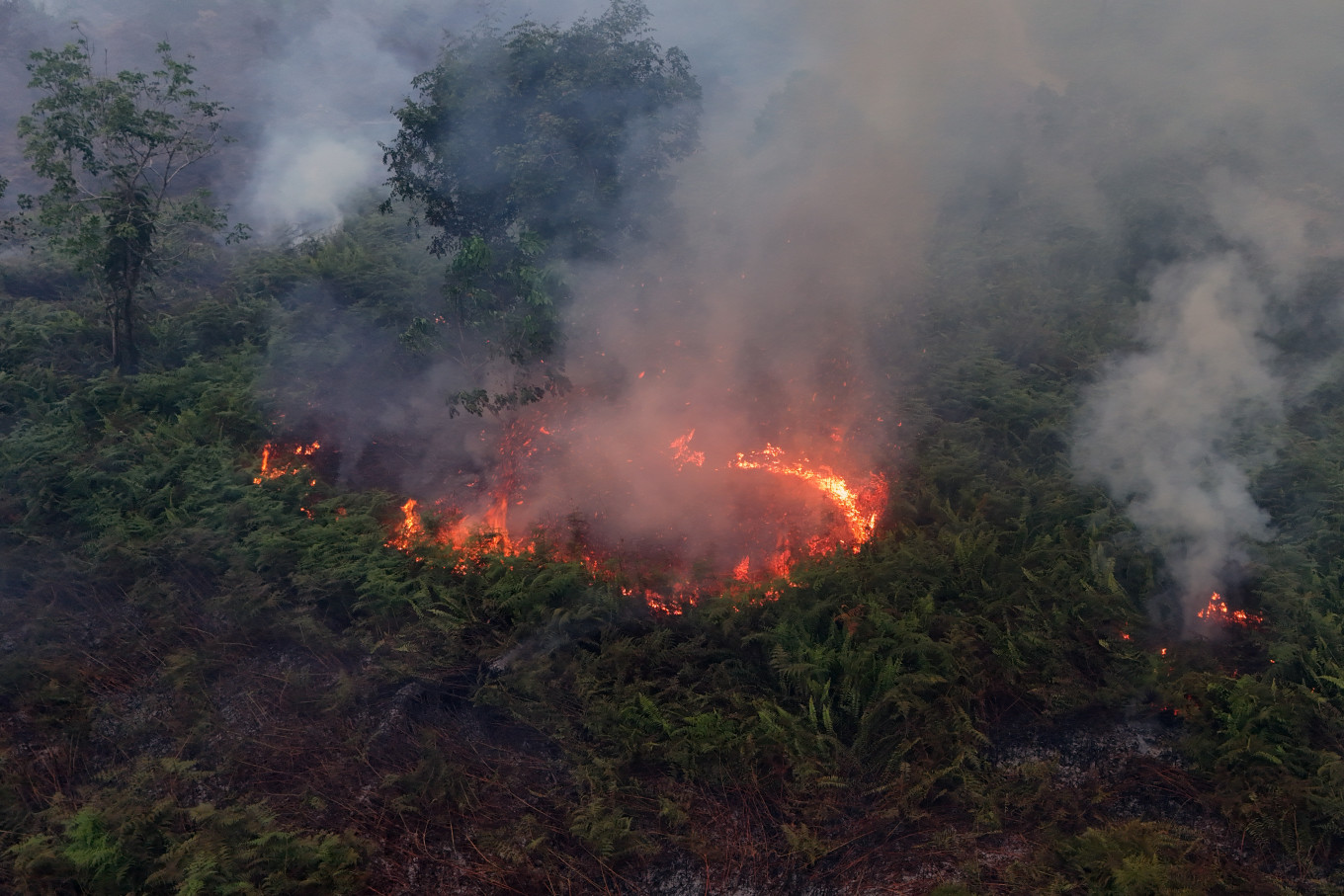 An aerial view shows a fire burning shrubs on peatland in Cot Seumeureng village, Samatiga district, West Aceh, Aceh, on July 19, 2026. (Antara/Syifa Yulinnas)
A
s climate experts warn of a prolonged El Niño that could potentially continue into early 2027, Indonesia once again faces a classic and daunting threat: forest and land fires. A prolonged El Niño will severely test Indonesia’s ecological resilience.
The Meteorology, Climatology and Geophysics Agency (BMKG) reports that the surge in hot spots has already entered the red zone. West Kalimantan recorded the nation’s most severe escalation with 1,083 hot spots burning thousands of hectares of land.
The socioeconomic and health impacts will not be confined to Indonesia but will also spread to neighboring countries, as this will heighten the risk of transboundary haze and spark an ecological crisis in the region.
Forest and land fires will directly impact the credibility of land-based commodities, which are often singled out as the culprits, particularly palm oil. Public discourse almost always follows the same pattern: narratives filled with clichéd and simplistic accusations that palm oil is the epicenter of the disaster, and searching for scapegoats to blame for the fires, rather than focusing on how to build more effective prevention systems. However, if we look at the actual data from the field, the reality turns out differently.
In many fire-prone villages, the success of conserving water and preventing fires is largely determined by the strength of local social networks. When villagers work together when a fire breaks out, the risk of disaster can be mitigated long before it escalates into a large-scale fire and haze crisis.
Various studies show that fires almost never occur due to climatic factors alone. Drought does indeed increase the risk, but the primary causes often stem from issues of land management, weak oversight of open areas, the high cost of clearing land without burning and a lack of collaboration among stakeholders.

In North Penajam Paser, East Kalimantan, near the future capital of Nusantara, for example, a number of hot spots that had raised concerns turned out to originate from traditional land clearing outside plantation areas. Similar patterns were also found in various other regions.