The Jakarta Post
Please Update your browser
Your browser is out of date, and may not be compatible with our website. A list of the most popular web browsers can be found below.
Just click on the icons to get to the download page.


Popular Reads
Top Results
No results found. Please check your search term and try again
Can't find what you're looking for?
View all search results
Popular Reads
Top Results
No results found. Please check your search term and try again
Can't find what you're looking for?
View all search resultsIs China really a beggar-thy-neighbor power?
When major economies are running at near full capacity, it is not clear that trade deficits should be a cause for concern, since they represent a transfer of purchasing power from surplus countries. Under the current circumstances, then, China’s widely criticized surpluses might as well be called enrich-thy-neighbor.
Change text size
Gift Premium Articles
to Anyone
Share the best of The Jakarta Post with friends, family, or colleagues. As a subscriber, you can gift 3 to 5 articles each month that anyone can read—no subscription needed!
 Set as preferred source
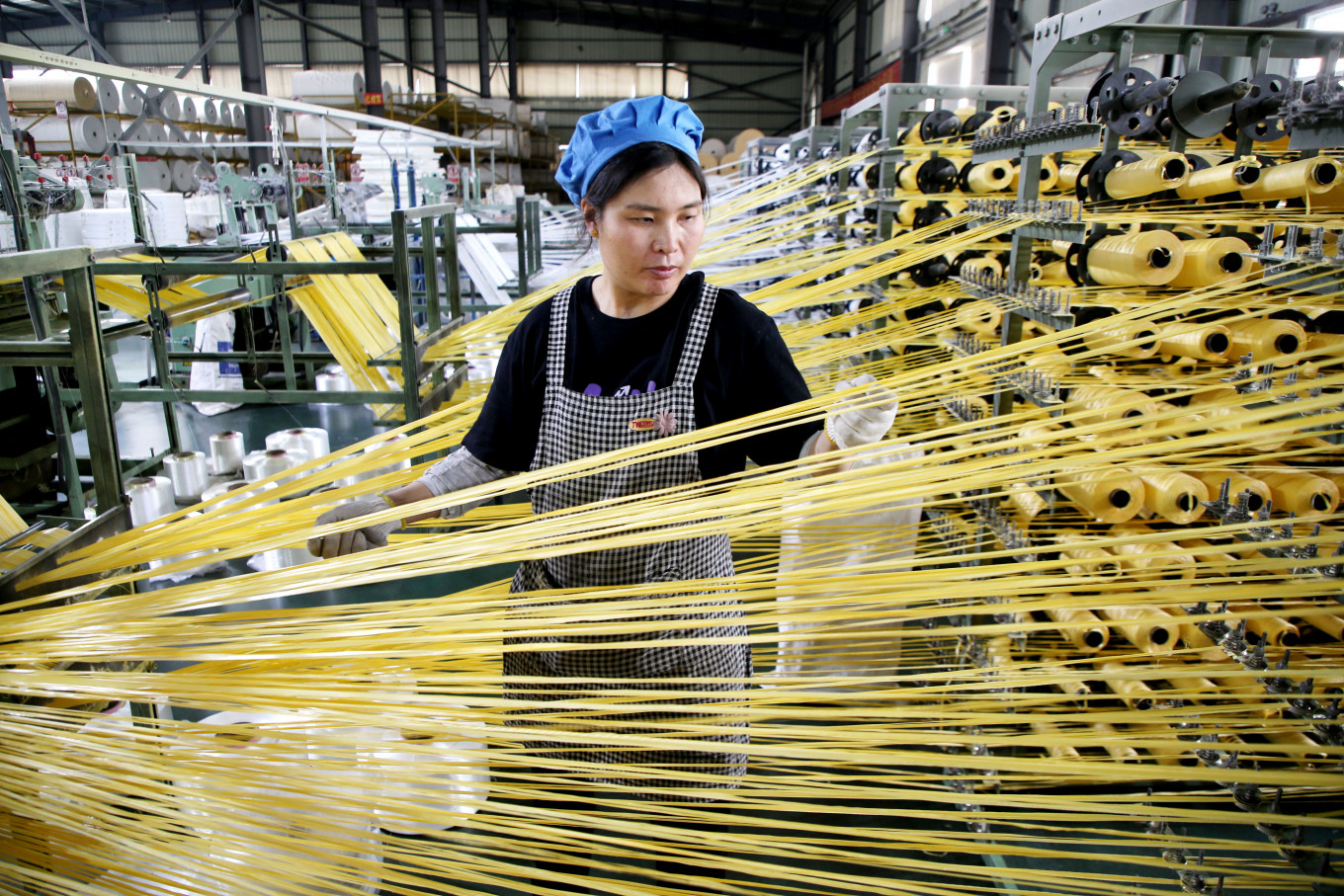 A worker monitors products for export at a packaging factory in Lianyungang, in China's eastern Jiangsu Province, on May 18, 2026. (AFP/STR)
A
s China continues to capture global markets in manufactures and its trade surpluses grow, it is increasingly viewed elsewhere as a country whose economic growth comes at the expense of the rest of the world. China’s industrial policies and growth model at large, the critics complain, are beggar-thy-neighbor.
The term “beggar-thy-neighbor” has an interesting history. It refers to an old children’s card game in Britain, as depicted in Charles Dickens’s 1861 novel Great Expectations, where the objective is to win all the cards in the deck. It made its first appearance in economics in Adam Smith’s portrayal of mercantilist thought in Wealth of Nations. Mercantilists mistakenly taught nations, wrote Smith, “that their interest consisted in beggaring all their neighbors.”
But it was Joan Robinson, the Cambridge economist and contemporary of John Maynard Keynes, who popularized the term in an essay written in the 1930s. Robinson wrote at a time of generalized unemployment caused by a collapse of aggregate demand, what we would subsequently call Keynesian unemployment. Many governments deployed mercantilist policies, such as import tariffs or currency depreciations, that they hoped would improve the home country’s trade balance. The goal was to increase domestic employment by diverting demand from foreign goods and services to domestic ones.
As Robinson pointed out, these policies were zero-sum from a global perspective. A country could increase its trade surplus or reduce its trade deficit only if other countries’ trade balances were changed by the same amount in aggregate. Mercantilism could help employment in one country only at the expense of greater unemployment in others. Robinson called these policies “beggar-my-neighbor.” The term eventually transmuted into “beggar-thy-neighbor,” which came into use in the late 1960s and eventually supplanted the original version.
Superficially, Robinson’s description would seem to apply to China’s policies, since its export surplus requires other countries to run trade deficits. The big difference, however, is that we are no longer in a world of deficient aggregate demand. Unemployment rates are 4.2 percent and 6.3 percent in the United States and Germany, respectively, compared to 25 percent and 30 percent at the height of the Great Depression. Boosting aggregate demand and employment is not a policy priority in any of the world’s major economies.
When economies run near full capacity, it is not clear that trade deficits should be a cause for concern. After all, they represent a transfer of purchasing power from surplus countries (China), which can lead to higher consumption or, more desirably, investment. By this logic, China’s surpluses might as well be called enrich-thy-neighbor.

What, then, would make China’s surpluses a problem? First, macroeconomic imbalances can create financial instability and increase the risk of a crisis. Second, insofar as they produce “excess capacity” and “over-production” in many manufactured sectors, China’s surpluses may promote industrial decline in deficit countries. And third, they can aggravate distributional and social problems in deficit countries.