The Jakarta Post
Please Update your browser
Your browser is out of date, and may not be compatible with our website. A list of the most popular web browsers can be found below.
Just click on the icons to get to the download page.


Popular Reads
Top Results
No results found. Please check your search term and try again
Can't find what you're looking for?
View all search results
Popular Reads
Top Results
No results found. Please check your search term and try again
Can't find what you're looking for?
View all search resultsWhoosh debt is not gone, only moved around
The decision to move the consortium's stake to the fiscal authorities is effectively an admission that the domestic SOE structure has reached its limits.
Change text size
Gift Premium Articles
to Anyone
Share the best of The Jakarta Post with friends, family, or colleagues. As a subscriber, you can gift 3 to 5 articles each month that anyone can read—no subscription needed!
 Set as preferred source
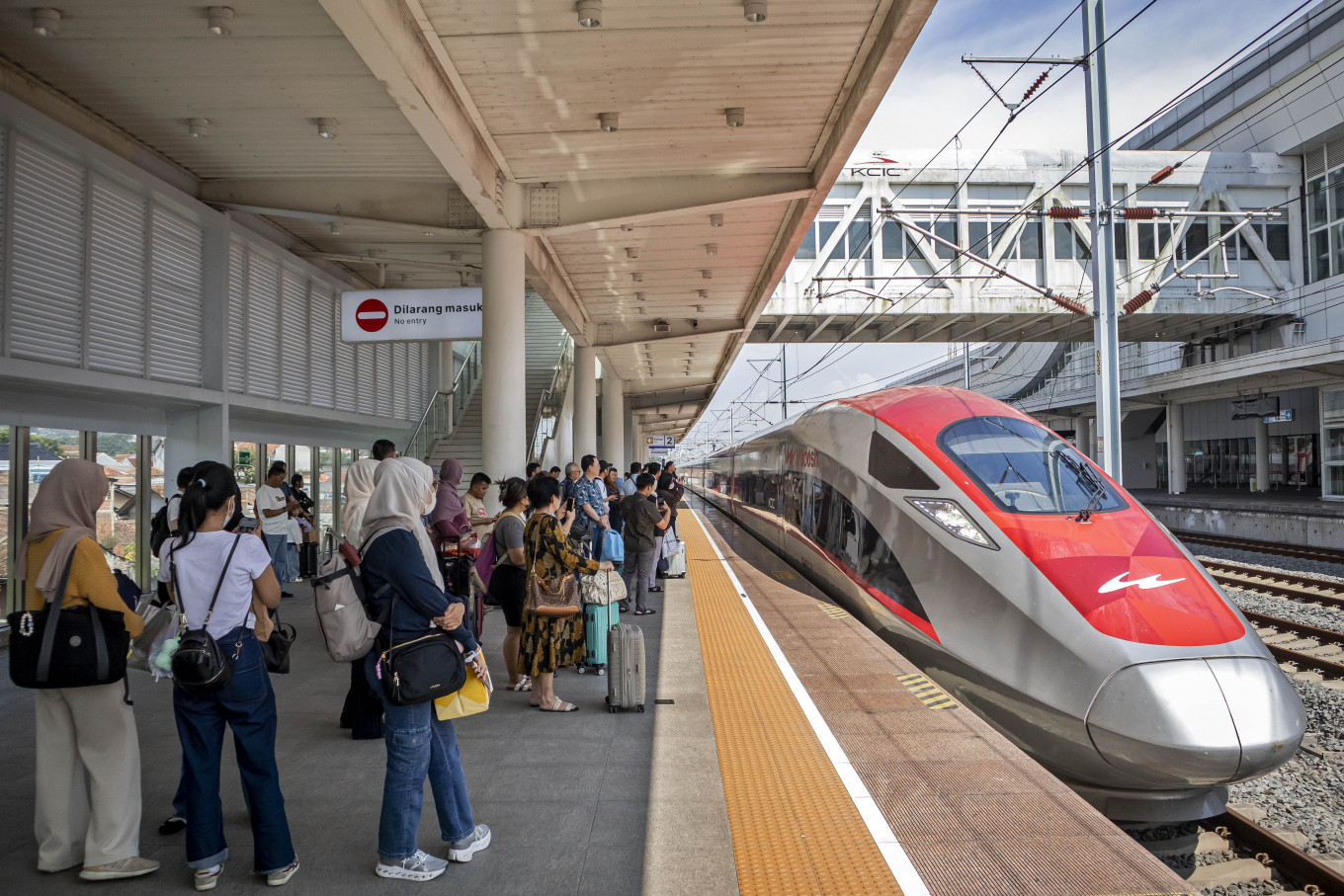 Prospective passengers wait for the arrival of the Whoosh high-speed train on March 15 on the platform at Whoosh Padalarang Station in West Bandung regency, West Java. (Antara/Abdan Syakura)
T
he August agreement between Finance Minister Purbaya Yudhi Sadewa and Danantara Indonesia Chief Operating Officer Dony Oskaria marks a consequential new chapter in the troubled finances of the Whoosh high-speed railway.
Under the plan, a 60 percent equity stake in PT Kereta Cepat Indonesia China (KCIC), together with its liabilities, will be transferred from the state-owned enterprise (SOE) consortium to the Finance Ministry by mid-September.
The official message is reassuring, that rescuing Whoosh will not cost the State Budget a single rupiah. But this claim deserves much closer scrutiny. The transfer may remove the burden from the balance sheets of SOEs, but it does not make the underlying debt disappear. It merely changes where the risk sits and ultimately, who may have to absorb it.
The decision to move the consortium's stake to the fiscal authorities is effectively an admission that the domestic SOE structure has reached its limits. PT Kereta Api Indonesia (KAI) and PT Wijaya Karya (WIKA) have suffered severe financial deterioration from the project, while Danantara, which controls a large share of aggregate SOE dividends, has been unwilling to use its corporate earnings to cover Whoosh's persistent cash-flow deficits. With the original risk bearers no longer able to carry the burden, transferring the liabilities became a way to prevent the problem from spreading further across the SOE system.
The mechanism chosen is a Special Mission Vehicle (SMV), such as PT Sarana Multi Infrastruktur (SMI), operating within the Finance Ministry's institutional orbit. The SMV would absorb the equity and manage KCIC's obligations, relying on internal dividends, retained earnings and available equity capacity. The SOE consortium receives relief without an immediate cash injection, while Danantara can protect its wider portfolio from the project's financial deterioration.
Yet describing this arrangement as simply "budget-neutral" is misleading. From a public-finance perspective, moving liabilities from SOE balance sheets to an SMV does not eliminate the state's exposure. It creates a form of quasi-fiscal or contingent liability. The government may avoid an immediate expenditure entry in the State Budget, but the sovereign remains exposed if the transferred asset cannot generate sufficient cash to meet its obligations.

The numbers explain why. Whoosh's construction cost rose from an initial estimate of US$6.05 billion to $7.26 billion, reflecting a $1.21 billion overrun. Under the original financing structure, 75 percent came from loans provided by China Development Bank (CDB), while 25 percent was equity. For Indonesia's 60 percent stake, the accumulated CDB debt is estimated at roughly $3.2 billion, or Rp 53 trillion-Rp 54 trillion.