The Jakarta Post
Please Update your browser
Your browser is out of date, and may not be compatible with our website. A list of the most popular web browsers can be found below.
Just click on the icons to get to the download page.


Popular Reads
Top Results
No results found. Please check your search term and try again
Can't find what you're looking for?
View all search results
Popular Reads
Top Results
No results found. Please check your search term and try again
Can't find what you're looking for?
View all search resultsAnalysis: Whoosh's mounting financial burden is now govt’s problem
Change text size
Gift Premium Articles
to Anyone
Share the best of The Jakarta Post with friends, family, or colleagues. As a subscriber, you can gift 3 to 5 articles each month that anyone can read—no subscription needed!
 Set as preferred source
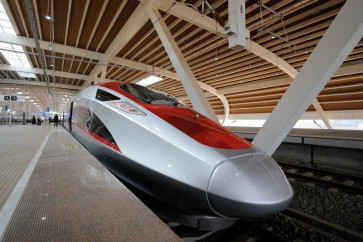
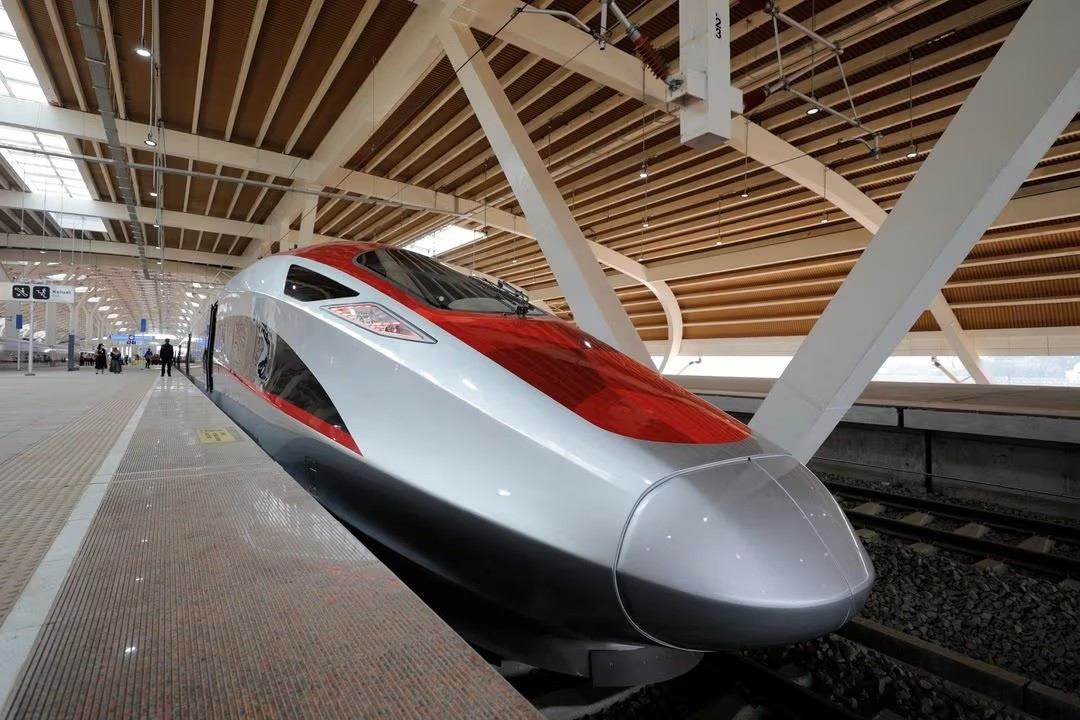 A China-backed high-speed railway train connecting Jakarta and Bandung called “Whoosh“ is parked on Oct. 2, 2023, at Halim station in East Jakarta ( Reuters/Willy Kurniawan)
T
he government's decision to take over the debt restructuring of the Whoosh Jakarta-Bandung high-speed railway marks the end of one of Indonesia's largest business-to-business (B2B) infrastructure experiments. A decade after promising the project would not rely on the state budget, the government has been forced to step in. The rescue raises a broader question: If the existing line has yet to prove financially sustainable, why extend it to Surabaya?
The Whoosh, owned and operated by PT Kereta Cepat Indonesia China (KCIC), was originally designed as a B2B project, with a consortium of Indonesian state-owned enterprises under PT Pilar Sinergi BUMN Indonesia (PSBI) holding a 60 percent stake and Beijing Yawan HSR Co., Ltd. owning the remaining 40 percent. However, KCIC's mounting losses have placed increasing financial strain on the SOEs that make up PSBI, effectively undermining the very B2B model on which the project was built.
The Whoosh has been controversial since its inception. The project's estimated cost rose from an initial US$5.5 billion to $7.27 billion, with around 75 percent financed through loans from the China Development Bank (CDB). Total debt reached approximately Rp 79 trillion (US$4.5 billion), carrying an initial annual interest rate of 3.4 percent, equivalent to roughly $121 million in annual interest payments. The project's estimated payback period is between 30 and 40 years.
Financial pressures intensified even before commercial operations began in 2023. As state-owned construction company PT Wijaya Karya (WIKA) faced mounting financial difficulties, leadership of the PSBI consortium was transferred to state-owned railway operator PT Kereta Api Indonesia (KAI) in 2021. By the end of 2025, KAI held a 58.53 percent stake in PSBI, followed by WIKA (33.36 percent), toll-road operator PT Jasa Marga (7.08 percent) and plantation company PTPN VIII (1.03 percent).
According to the Supreme Audit Agency (BPK), the consortium is expected to remain loss-making until at least 2029. The government injected Rp 3.2 trillion (US$183 million) in state capital into KAI in 2023 and later refinanced approximately Rp 16 trillion in debt through additional CDB loans. Despite these measures, KCIC's financial position has continued to deteriorate.
The losses are now weighing heavily on the consortium's shareholders. PSBI recorded losses of Rp 5.13 trillion in the first half of 2026 alone, exceeding its total loss of Rp 4.99 trillion for all of 2025. As the majority shareholder, KAI absorbed around Rp 3 trillion of those losses. Although KAI's revenue increased by 6.6 percent during the period, its net profit plunged by 73.5 percent, from Rp 1.18 trillion to just Rp 314 billion. WIKA faces an equally difficult situation. After posting losses of Rp 1.67 trillion in 2025, the company recognized an additional Rp 1.77 trillion loss from its investment in PSBI during the first half of 2026, further weakening its already fragile financial position.

Equally concerning, PSBI's total liabilities of Rp 21.55 trillion have now exceeded its total assets of Rp 21.53 trillion, leaving the company with negative equity. In other words, its assets are no longer sufficient to cover its obligations. This marks a sharp deterioration from the end of 2025, when PSBI still reported positive equity of around Rp 5.1 trillion.