The Jakarta Post
Please Update your browser
Your browser is out of date, and may not be compatible with our website. A list of the most popular web browsers can be found below.
Just click on the icons to get to the download page.


Popular Reads
Top Results
No results found. Please check your search term and try again
Can't find what you're looking for?
View all search results
Popular Reads
Top Results
No results found. Please check your search term and try again
Can't find what you're looking for?
View all search resultsThe token economy requires collective data governance
Millions of people continuously generate the raw material on which AI is trained, yet almost none shares in the wealth it creates.
Change text size
Gift Premium Articles
to Anyone
Share the best of The Jakarta Post with friends, family, or colleagues. As a subscriber, you can gift 3 to 5 articles each month that anyone can read—no subscription needed!
 Set as preferred source
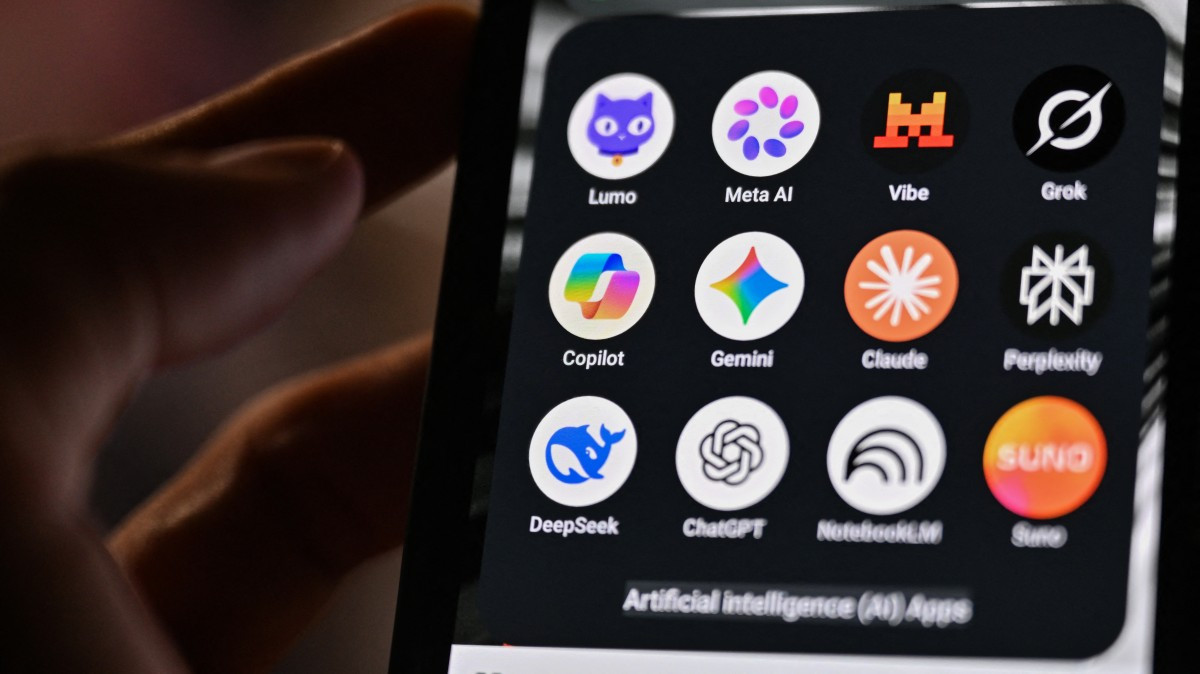 A man holds a handheld smartphone on July 15, 2026, displaying the icons of some of the major artificial intelligence LLMs, chatbots and generative AI apps, in Paris, France. (AFP/Martin Lelievre)
F
or more than two decades, digital platforms have monetized our attention and social interactions. But today’s AI models extract value from another source: our collective knowledge. Every article, photograph, code, video and online comment can be turned into training data, trillions of so-called tokens and ultimately into value.
I call this new phase of digital capitalism the “token economy”. The attention economy extracted value by capturing attention; the token economy extracts value by transforming human knowledge and creativity into data for training AI models.
Because the token economy is built on content produced by millions of internet users, the rules governing AI training data cannot be left to a handful of tech firms. If collective human knowledge has become one of AI’s indispensable sources of value, it should be governed as a digital common. New institutions are needed to negotiate collective access to that resource and ensure that the value it creates is shared more fairly.
While some individuals could theoretically exercise their licensing rights or consent for AI training, no user has the power to negotiate directly with OpenAI, Anthropic, Google or Meta. They are simply too weak to confront tech firms with enormous market power, much like a single worker cannot bargain on equal terms with a large employer.
Collective-management organizations emerged over a century ago to fill this need. They have negotiated licenses on behalf of millions of authors and artists, collected royalties and redistributed revenues according to transparent rules. Because of their ubiquity in creative industries, the idea of a well-known musician negotiating a separate agreement with every radio station and streaming platform that plays their songs seems absurd.
The token economy requires a comparable institutional response to govern the digital commons. One approach is to establish data cooperatives representing internet users, creators and other rights holders. They could negotiate access to the content being fed to large language models, determine how the resulting value will be shared and ensure that tech companies respect their members’ choices.

But their role could extend beyond compensation. The central question is no longer only who gets paid, but also who gets to decide. Through these cooperatives, members could collectively determine the conditions under which AI developers can access their data, helping shape the values embedded in these systems and ensuring that they serve the public interest. Instead of being passive sources of data, citizens would become stakeholders in AI governance.