The Jakarta Post
Please Update your browser
Your browser is out of date, and may not be compatible with our website. A list of the most popular web browsers can be found below.
Just click on the icons to get to the download page.


Popular Reads
Top Results
No results found. Please check your search term and try again
Can't find what you're looking for?
View all search results
Popular Reads
Top Results
No results found. Please check your search term and try again
Can't find what you're looking for?
View all search resultsIndonesia's shrinking digital freedom: From rubber articles to four-hour censorship
Despite years of constitutional reform and judicial intervention, the state's reflexive tendency to criminalize criticism of those in power remains alive and well.
Change text size
Gift Premium Articles
to Anyone
Share the best of The Jakarta Post with friends, family, or colleagues. As a subscriber, you can gift 3 to 5 articles each month that anyone can read—no subscription needed!
 Set as preferred source
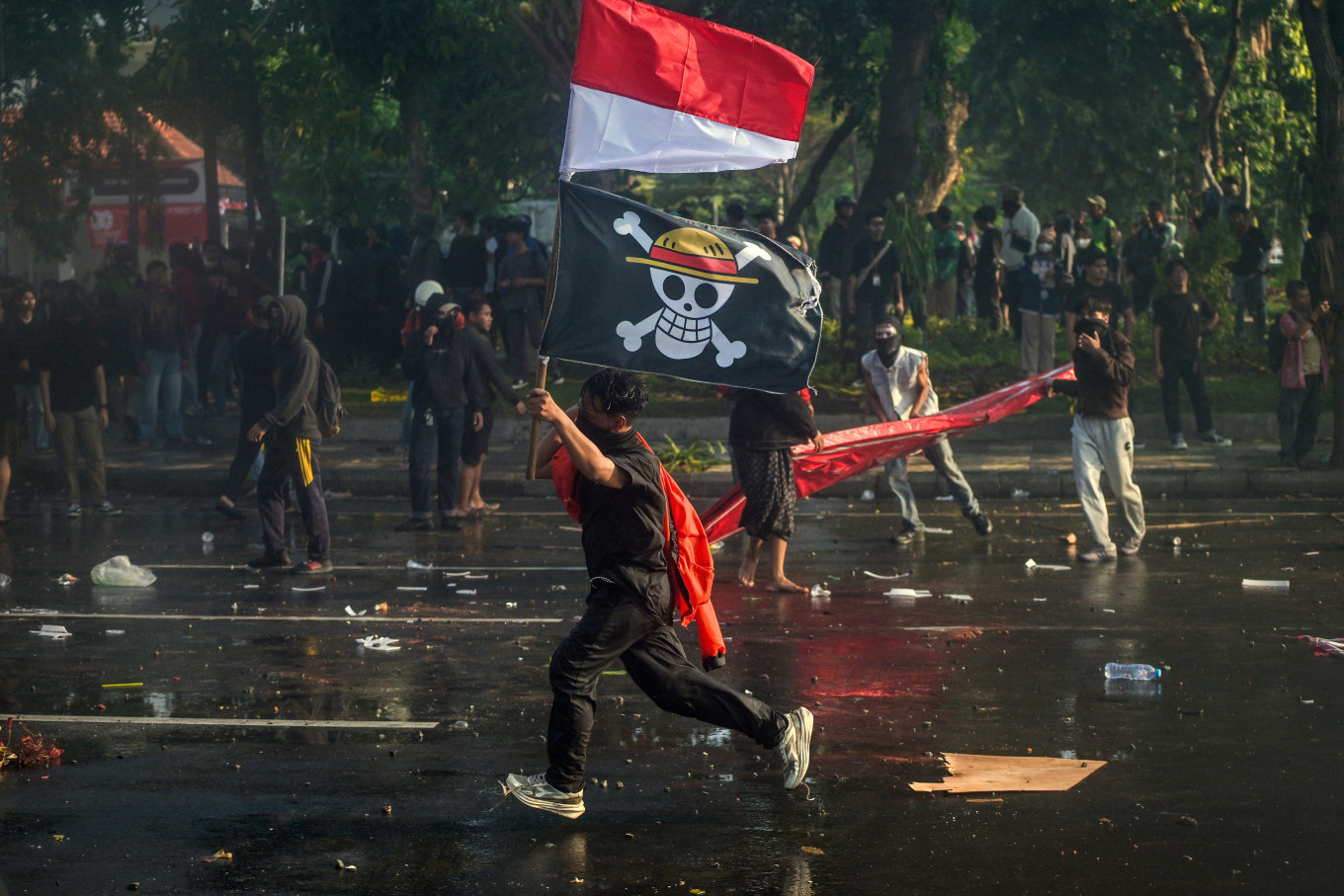 A demonstrator carries Indonesia’s national flag alongside a pirate flag from the Japanese anime One Piece, an internet symbol of protest against government policies, on Aug. 29, 2025, during a rally outside the residence of the Governor of East Java, in Surabaya. (AFP/Juni Kriswanto)
W
hen West Java Police arrested two social media users for mocking President Prabowo Subianto's claim that Iran has nuclear weapons, it was more than another bizarre headline - it was a warning sign. Despite years of constitutional reform and judicial intervention, the state's reflexive tendency to criminalize criticism of those in power remains alive and well.
The irony is striking. Even as the Constitutional Court has moved to narrow speech-related offenses under the Electronic Information and Transactions (ITE) Law, law enforcement and regulators appear to be finding new ways to achieve the same result: suppressing criticism and discouraging dissent.
The controversy began when Prabowo publicly stated that Iran possessed nuclear weapons. The remark drew criticism from foreign policy observers and prompted a response from the Iranian Embassy in Jakarta, which denied Tehran had developed or sought nuclear capabilities.
Two social media users who reposted and commented on the matter were subsequently arrested by West Java Police over allegations of provocation and incitement under the ITE Law and the Criminal Code.
The state has a legitimate interest in addressing genuine threats of violence.
What is troubling here is the readiness of law enforcement to transform political commentary into a criminal matter. Criticism, satire, outrage and even offensive rhetoric are inherent features of democratic discourse. If questioning a president's public statement can trigger arrest, the line between political debate and criminal liability effectively disappears.

These arrests appear to conflict with the Constitutional Court's landmark 2024 ruling No. 115. In April 2025, the court ruled that the term kerusuhan (riot or unrest) in Articles 28(3) and 45A(3) of the ITE Law must be interpreted narrowly - referring to physical disturbances of public order, not online controversy, agitation or debate.