The Jakarta Post
Please Update your browser
Your browser is out of date, and may not be compatible with our website. A list of the most popular web browsers can be found below.
Just click on the icons to get to the download page.


Popular Reads
Top Results
No results found. Please check your search term and try again
Can't find what you're looking for?
View all search results
Popular Reads
Top Results
No results found. Please check your search term and try again
Can't find what you're looking for?
View all search resultsIndonesia can fight fires. It must govern climate risk, too
The 2026 forest and land fires reveal a paradox: Indonesia can mobilize after ignition, but climate justice depends on institutions that govern risk before smoke appears.
Change text size
Gift Premium Articles
to Anyone
Share the best of The Jakarta Post with friends, family, or colleagues. As a subscriber, you can gift 3 to 5 articles each month that anyone can read—no subscription needed!
 Set as preferred source
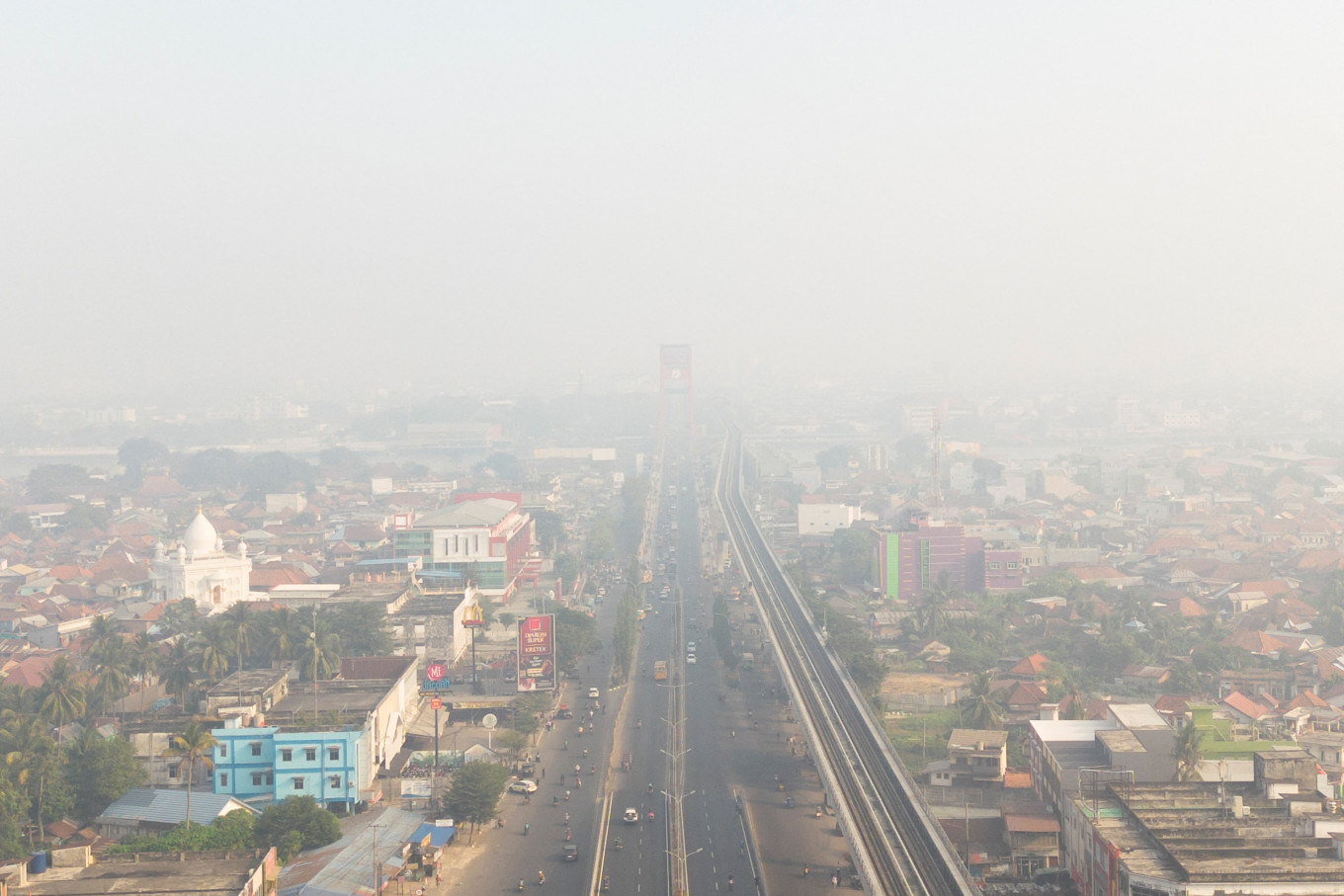 The Ampera Bridge sits shrouded in haze from wildfires on Aug. 23 in Palembang, South Sumatra. (REUTERS/Abriansyah Liberto)
I
ndonesia is once again battling severe fires amid a punishing dry season. On Aug. 24, the Meteorology, Climatology and Geophysics Agency (BMKG) reported that El Niño had reached peak intensity. By Aug. 20, the National Disaster Mitigation Agency (BNPB) had logged 1,487 hotspots across Kalimantan alone, with blazes flaring from Papua across the archipelago and drought warnings blanketing East Nusa Tenggara (NTT), Kalimantan and Papua.
These numbers are alarming, but they point past the real issue: If Indonesia can mobilize water-bombing helicopters, cloud seeding, police, military units and thousands of emergency responders once a blaze breaks out, why does a predictable climate hazard keep spiraling into a national crisis?
Framing the problem this way avoids a common analytical trap. Climate change does not spark every blaze, nor does El Niño erase human agency. While climate stress raises the odds and severity of burning, governance determines vulnerability—deciding which landscapes are restored and protected, and which are left neglected.
The core issue is not an absence of state capacity. The 2026 response proves the opposite: Government agencies have deployed aircraft, ground crews, weather modification operations and extensive field personnel across Kalimantan.
The capacity clearly exists; the problem is its timing. The state flexes its muscle after the smoke appears, yet fades during the quiet months and years when zoning decisions, water management, restoration funding and regulatory enforcement actually determine whether a landscape turns into a tinderbox.
This is precisely where wildfire intersects with climate justice. Climate justice is not simply about who gets disaster relief. It is about who holds the power to create risk, who has the resources to mitigate it, and who ends up paying the price in lost health, disrupted schooling and destroyed livelihoods when prevention fails.

Scholars have flagged these structural shortcomings for years. A 2020 study in Global Environmental Change reviewed 60 peat-fire interventions across Indonesia and found that most leaned heavily on rigid regulatory edicts while failing to target high-risk periods and major landholders. The takeaway is sobering: a government can draft endless regulations without ever changing the conditions that fuel fires.